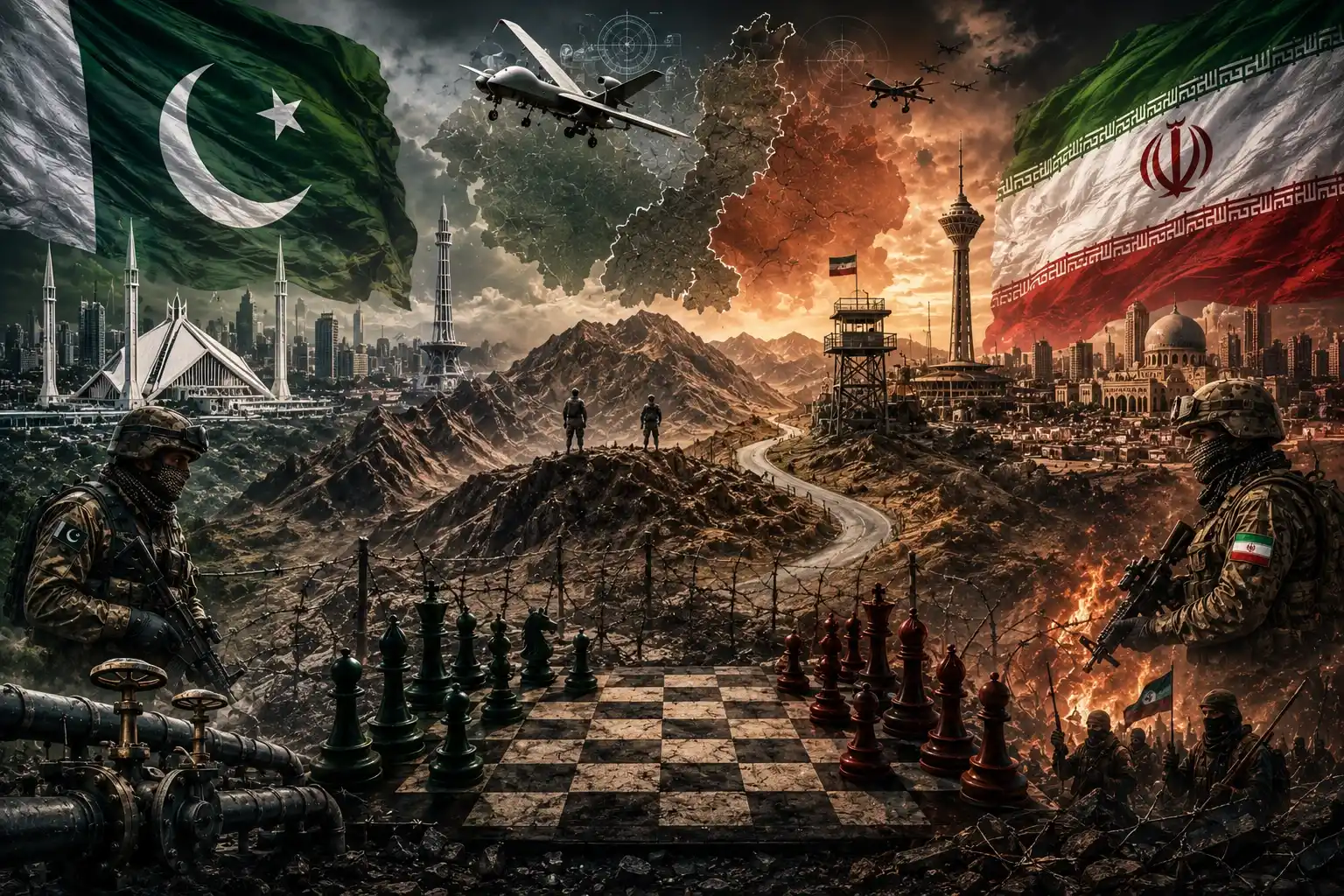
There is a familiar pattern in every major geopolitical crisis. Whenever even the faintest possibility of diplomacy begins to emerge, the war lobby responds with leaks, media pressure, selective outrage, and carefully manufactured narratives designed to poison negotiations before they can mature
That is precisely what appears to be unfolding now.
The recent Drop Site piece targeting Pakistan, specifically Field Marshal Asim Munir, is not an isolated investigative effort operating in a vacuum. It is the latest salvo in a broader information campaign aimed at discrediting Pakistan’s role as a potential mediator between the United States and Iran at a time when regional tensions remain dangerously volatile.
The timing alone is telling.
Within days, multiple synchronised narratives surfaced across Western and regional media ecosystems: a CBS report sensationalising the presence of a single Iranian RC-130 aircraft on a Pakistani airbase, leaks regarding Benjamin Netanyahu’s reported secret visit to the UAE, and stories implying Saudi and Emirati participation in military operations alongside the United States and Israel against Iran. Each development was amplified disproportionately by pro-Israel commentators and hawkish policy circles.
Individually, these stories may appear disconnected. Collectively, however, they point toward one strategic objective. Derail any diplomatic opening and pressure Donald Trump toward reviving a maximalist military posture resembling “Operation Epic Fury.”
That objective aligns perfectly with Netanyahu’s long-standing strategic calculus.
It is hardly a secret that the Israeli prime minister has consistently pushed for direct American military action against Iran’s nuclear and strategic infrastructure. What Netanyahu fears most is not war fatigue in Washington; it is a negotiated settlement that leaves the present Iranian state intact and operational. Any arrangement preserving Iran’s governing structure would represent a strategic failure for the hardline camp that has spent years advocating escalation as the only acceptable outcome.
Seen through that lens, Pakistan’s emergence as a possible intermediary becomes deeply inconvenient.
I say this with clarity that I am no apologist for Pakistan’s establishment. Criticism of state institutions is both legitimate and necessary in any functioning society. But criticism and propaganda are not the same thing. The Drop Site article is sophisticated propaganda masquerading as analytical journalism. Its purpose is not to understand Pakistan’s role; it is to delegitimise peace efforts by portraying mediation itself as sinister.
The contradictions within the article are glaring.
At one point, the piece cites an Iranian national security spokesperson allegedly arguing that Pakistan is unsuitable as a mediator because Islamabad supposedly prioritises Trump’s interests. Yet later, the article claims pro-Israel voices in Washington are simultaneously lobbying to remove Pakistan from any mediation role.
If both Tehran-aligned voices and pro-Israel hawks believe Pakistan is insufficiently aligned with their respective interests, that is not evidence of failure. It is, in fact, evidence of neutrality. That is what credible mediation looks like. A mediator is not supposed to become an extension of either side’s agenda.
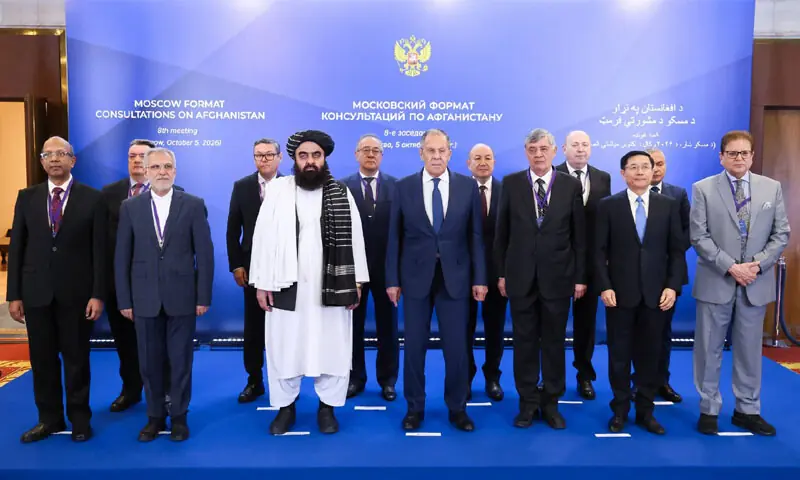
But herein lies the actual problem for the war lobby. There is currently no obvious alternative mediator capable of maintaining working channels simultaneously with Washington, Tehran, Beijing, Riyadh, and Gulf capitals. If Pakistan’s mediation efforts collapse, the diplomatic vacuum automatically strengthens advocates of military escalation. That is precisely why such efforts are now being targeted.
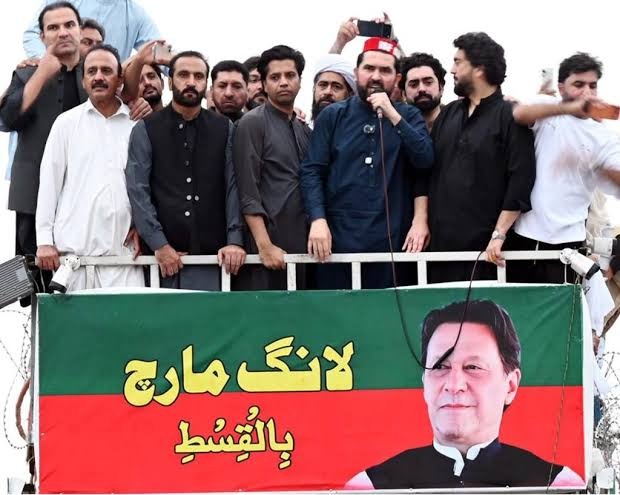
The article further weakens itself through its extensive reliance on allegations long circulated by Pakistan Tehreek-e-Insaf (PTI) and Imran Khan supporters against Field Marshal Asim Munir, allegations that are repeated without adequate corroboration or scrutiny of their internal inconsistencies.
At several points, the language reads less like investigative reporting and more like political messaging imported directly from partisan talking points.
Take the claim that Asim Munir “engineered” Imran Khan’s removal in 2022.
This framing deliberately ignores Pakistan’s political realities at the time. Imran Khan’s government was never a dominant parliamentary administration. It was a fragile coalition dependent on multiple smaller parties from the very beginning. His government faced sustained opposition not only from the Pakistan Muslim League-Nawaz (PML-N) and Pakistan Peoples Party (PPP) but also from Jamiat-e-Ulema-e-Islam Pakistan (JUI-F) and numerous regional actors almost immediately after assuming office.
Within the first year of Khan’s tenure, JUI-F launched a massive anti-government march on Islamabad, culminating in a two-week sit-in demanding fresh elections. Roughly two years later, Maryam Nawaz had already begun mobilising large political rallies across Pakistan’s major cities against the PTI government. Eventually, coalition partners abandoned Khan’s administration, collapsing its parliamentary majority.
What followed was not a coup, nor a military takeover, but Pakistan’s first successful removal of a prime minister through a constitutional vote of no confidence.
Yet only Imran Khan managed to simultaneously describe the episode as an “American conspiracy,” a “London Plan,” an “establishment conspiracy,” and a “judicial conspiracy,” often depending on the political mood of the moment.
The Drop Site article goes even further by alleging that Asim Munir travelled to London to coordinate Khan’s removal with Nawaz Sharif.
The timeline alone renders the accusation deeply questionable.
Imran Khan was voted out on April 9, 2022. Asim Munir did not become Army Chief until the last week of November 2022, over seven months later. Before that appointment, he was serving as Quartermaster General. The suggestion that a serving Quartermaster General independently possessed the authority, political leverage, and institutional power to orchestrate the removal of an elected prime minister stretches plausibility beyond reason.
The chronology becomes even more problematic when the article implies that Munir imprisoned Khan “months after assuming appointment of Army Chief.”
In reality, Imran Khan was convicted and jailed in the long-running Toshakhana case in August 2023, nearly nine months after Munir assumed command. One may debate the merits or fairness of the legal process, but compressing timelines to create political impressions is not analysis.
Equally unconvincing is the claim that Munir was earlier removed as Director General, Inter-Services Intelligence (ISI), because of disagreements with Imran Khan over Iran policy.
That is simply not how Pakistan’s military command structure operates.
Pakistan’s security establishment functions through a centralised institutional policy framework shaped by the serving Army Chief. It is implausible that a DG ISI would independently pursue a strategic line on Iran fundamentally opposed to the position of the sitting Army Chief, General Qamar Javed Bajwa, at the time. Such portrayals misunderstand, or deliberately distort, the nature of institutional decision-making within Pakistan’s security apparatus.
The article also frames Pakistan’s outreach to Washington as inherently suspicious, as though maintaining relations with the United States were evidence of a hidden alignment.
This ignores decades of Pakistani strategic behaviour.
Throughout its history, Pakistan, under both civilian and military leadership, has consistently pursued working relations with Washington, largely driven by security competition with India and chronic economic vulnerabilities. Simultaneously, Pakistan has maintained deepening ties with China. Islamabad has historically balanced between major powers rather than fully subordinating itself to one bloc at the expense of another.
That balancing act may frustrate ideological purists, but it is neither new nor unusual.
Similarly weak are the insinuations that the current Pakistani dispensation is intentionally stalling the China-Pakistan Economic Corridor (CPEC) to appease Washington. Such claims rest more on assumption than evidence. Pakistan’s economic difficulties, bureaucratic inertia, internal security challenges, and structural governance issues provide far more grounded explanations for delays than simplistic geopolitical conspiracy theories.
Perhaps the most irresponsible element of the article is its attempt to raise an alarm regarding Pakistan’s nuclear command structure.
The piece misleadingly suggests that Field Marshal Asim Munir exercises unchecked personal control over Pakistan’s nuclear arsenal. This is factually inaccurate.
Pakistan’s nuclear assets operate within a layered institutional command system. A four-star general serves as commander of the Strategic Plans Division, while the Prime Minister chairs the National Command Authority, the apex body responsible for nuclear policy, deployment oversight, and strategic decision-making. The architecture includes procedural, institutional, and military checks rather than arbitrary personal authority.
But sensationalism sells better than nuance.
And that, ultimately, is the core issue here.
This is not merely about Pakistan, Asim Munir, or Imran Khan. It is about the increasingly aggressive weaponisation of media narratives to sabotage diplomacy in favour of escalation. The modern information battlefield no longer requires fabricated documents or crude propaganda. Selective framing, strategic omission, emotionally loaded insinuations, and manipulated chronology are often sufficient.
The tragedy is that such narratives emerge precisely when the region can least afford another catastrophic war.
The Middle East is already balancing on a razor’s edge. Any serious diplomatic opening, however imperfect, deserves scrutiny, certainly, but it also deserves protection from coordinated attempts to bury it beneath ideological warfare and geopolitical score-settling.
Because once diplomacy collapses, history suggests that the people demanding “credibility,” “strength,” and “decisive action” are rarely the ones who pay the price for war.

Ibrahim Khalil is an independent writer who covers regional politics, society, and security with a clear-eyed, grounded approach. His work blends traditional insight with a sharp, questioning tone, offering concise commentary on the issues shaping South Asia today.