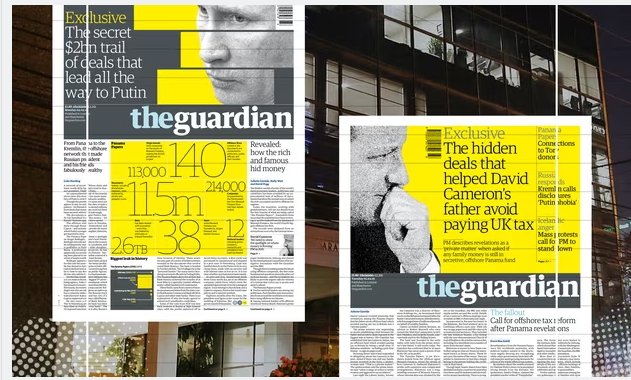
Released on April 3rd, 2016, by the newspaper Süddeutsche Zeitung, Panama Papers went on to become the world’s most scandalous leak in history. The leaks exposed individuals, organizations, parties, and companies from over 200 countries as it showed their possession over offshore companies. The documents were procured through an anonymous whistleblower from the Panama Law Firm Mossack Fonseca.
2.6 terabytes record with 11.6 million documents, it publicized 214,000 tax havens around the world that were possessed by people in over 200 countries. It not only included politicians and businessmen, but also their families as well as companies, media sensations and, sportsmen and women. To release this record in systematic order, Süddeutsche Zeitung worked with the International Consortium of Investigative Journalists (ICIJ) to publicize this.
The main thing about this whole record is that keeping offshore companies is not illegal, but the records show that illicit procedures were followed to set up the companies. This included tax evasion, tackling sanctions, cash embezzlement, and much more.
From South Asia, it named a hundred individuals alongside companies. Panama Papers caused quite a stir in the politics of the subcontinent, notably in Pakistan where a former head of state and at that time, a prime minister got disqualified due to this. The leaks named notable politicians from South Asia such as Former Head of State Nawaz Sharif and Benazir Bhutto from Pakistan and, Ravindra Kishore Sinha of the ruling BJP from India. It also included world-famous media sensation, Amitabh Buchan and his daughter-in-law, Ashwariya Rao and spiritual leader Dilyak Drupon Rinpoche, known as Tulku by the 16th Gyalwang Karmapa from Bhutan
It also included big names from the corporate sector such as Vijay Mallya from India, Chairman HBL Ali Allana from Pakistan, Bangla Trac owner Aminul Haque from Bangladesh, Yapa Hetti Pathirannahalage Nissanka Yapa Senadhiathi of Avant-Garde Private Ltd. from Sri Lanka, and Arun Kumar Chaudhary, the Managing Director of Chaudhary Group from Nepal.
Panama Papers not only saw several accountability trials across the world but also saw the delay in justice regarding such scandal. The world biggest leak exposed not only the network of tax havens and offshore companies, but also exposed the illicit procedures that were, and could be, followed to establish such a source of revenues for powerful figures.

Muhammad Abdullah Kayani is a budding scholar with a keen interest in current affairs and news reporting. With a passion for uncovering and analyzing events shaping our world, he aims to inform and engage audiences through insightful commentary and diligent reporting.