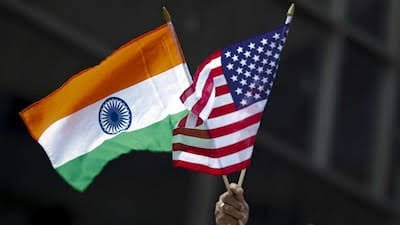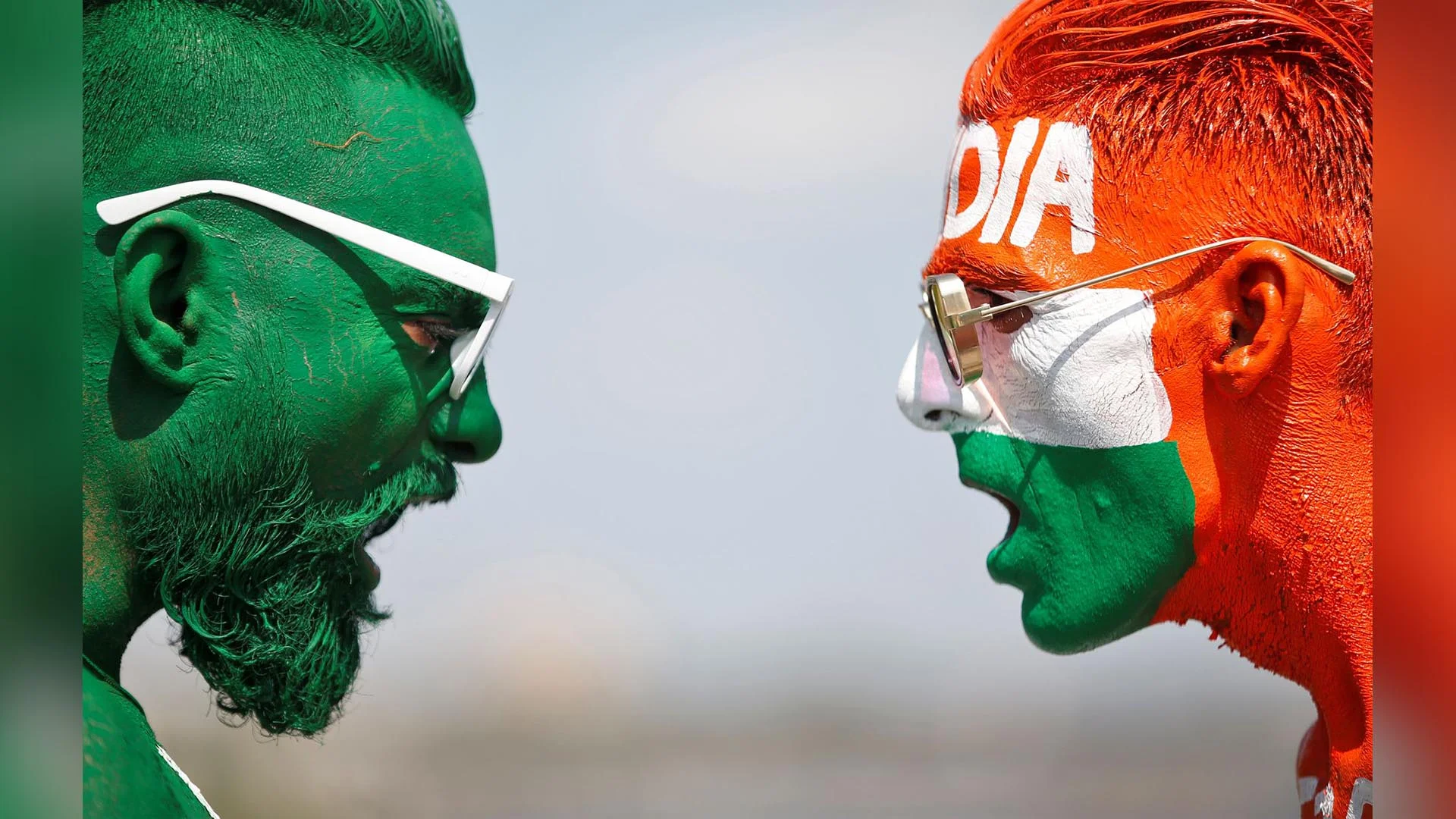
Was that a No ball? What do the international cricket rules say? Before answering that, a few fundamentals about rules and laws in an international environment require a mention.
Rules and laws are essential. They make life certain. They inject an element of stability in an otherwise chaotic world. They are the sentinels guarding Lady Justice against robbers and thieves.
Very true, right? But, a few questions abound. Who has the legitimacy to make the rules? Once made, who will enforce them? What if the thieves and robbers gain the power to make the rules? What if the thieves and robbers gain the power to bend, break, and selectively apply the rules to their advantage? Would such a “rules-based order” supply justice to anyone and everyone?
Who Makes the Rules?
The answers are contained within these questions. The keywords in these questions are “power” and “legitimacy”. Who has the legitimacy? Well, only those who can enforce the rules can maintain legitimacy. What is the essential quality for enforcing rules? Is it the quality of being just? No, it isn’t. Even thieves and robbers can enforce rules if they have power. They just, if they lack power, can’t stop the thieves and robbers from bending and breaking the rules.
The key element is the power which is defined as the ability to make others do or say things that they otherwise wouldn’t.
Whoever thinks that “Lady Justice” is blind to see power is sadly mistaken. They are mistaking utopia for reality. Will Durant has explained in his book “The Lessons of History”:
“Nature smiles at the union of freedom and equality in our utopias. For freedom and equality are sworn and everlasting enemies, and when one prevails the other dies.”
It’s weak who want equality before the law because they cannot enforce their will even if it is just. On the other hand, it’s strong who favor freedom before the law because they can enforce their will even if it isn’t just. Since the latter has the key elements of power, it is they who get their way “legally” inside the “rules-based order”.
Free USA vs Sanctioned Russia
That is why in International affairs and even in international sports competitions, the rules and laws are applied not with equality but with freedom. Consider the case of the United States of America and Russia. The USA invaded Iraq in 2003. The “just” cause for the US invasion of Iraq was to “save” the world from Saddam’s Weapons of Mass Destruction (WMDs). It is a well-known fact now that the US lied. But the US triumphantly competed in all sports events like the Olympics. They weren’t sanctioned or censured by the international community and its “rules-based order”. On the other hand, Russia has been banned by FIFA and the likes after invading Ukraine. It has been severely sanctioned and censured by the very same international community.
Sports are an important part of today’s globalized world. People who wouldn’t know or care about FATF or Siachen or the 1971 invasion of Pakistan by India would be discussing the question of Mohammad Nawaz’s “No ball” with great interest and emotion. It is, therefore, pertinent to elaborate on the sinister process of the ‘enforcement’ of International Law in the case of South Asia.
What’s a NO BALL?
Now finally the “No ball”. International cricket rules state,
“Any delivery, which passes or would have passed, without pitching, above waist height of the striker standing upright at the popping crease, is unfair. Whenever such a delivery is bowled, the umpire shall call and signal No ball.”
Following are the essential points here:
- Any delivery which passes or “would have passed”. It means if the delivery was interrupted early in its trajectory, it would be judged not on the point of interception but on the point where it “would have passed”.
- “Would have passed” where? The law says “above the waist height of the striker standing upright at the popping crease”. It means that the height of the ball would be judged according to the height of the batsman “standing upright” at the popping crease.
Now consider the case of Nawaz vs Kohli. Kohli wasn’t standing upright; he was bending forward, which means his waist would appear to be lower than the position described in the law. Kohli interrupted the delivery, which was on a downward trajectory, at a considerable distance from the popping crease. If the delivery’s trajectory and Kohli’s waist height while standing upright at the crease are used in the calculation, it is clear to everyone that the delivery is clearly legal and not a No ball.
So, why did the umpire give it a No ball then? Well, he didn’t. At least not at first. Only when Kohli, the Indian prince, threw a hissy fit and began forcefully declaring the delivery a No ball, the umpire gave it a No ball. After all, the umpires have families as well and they have to feed them.
Denying Kohli at such a critical juncture in an India-Pakistan game in front of more than a billion watchers could cost the umpires their careers.
So, they took an understandable U-turn and did as Kohli bid them.
The Partiality of Lady Justice
Objective realities must be appreciated. Even the Chairman of the Pakistan Cricket Board (PCB) knows that 90% of the ICC’s funding comes from India whereas 50% of PCB’s funding comes from the ICC. Beggars can’t be choosers, right?
Now that it is elaborated, this was not just a No ball and the game of cricket. But there are far more serious and similar matters between the two countries as well.
Why did Pakistan languish in FATF’s grey list for years despite outdoing most countries of the world regarding financial reforms? Why is Pakistan a “dangerous” country owing to its nukes whereas it is in India where Uranium theft is a usual occurrence? Why doesn’t India get censured for bombing Balakot and sponsoring terror in Balochistan through the likes of Kulbuhushan Yadav? Why was Pakistan severely censured by the international community for the Kargil adventure whereas a pin-drop silence was observed when India invaded Siachen in 1984 and East Pakistan in 1971? Why wasn’t India sanctioned for training and sending terrorists into East Pakistan for fueling a civil war there but Pakistan was sanctioned severely at that time for trying to suppress a rebellion inside its own sovereign territory?
Why is Lady Justice so partial to India whether it’s a No ball decision in a cricket match or a raging war over snowy peaks?
The key element and the common denominator that answers all of it is power. As Iqbal said:
Taqdeer ke Qazi ka ye Fatwa hai azal se
Hai Jurm-e-Zaeefi ki saza Marg-e-Mufajat
Translation: It is the eternal decree of the Judge sitting in Judgement on destinies—
That weakness is a crime punishable by death.
Power and Justice – The Intrinsic Duo
Pakistan’s Founding Father also believed in the utopia of justice and equality between nations. But, seeing Lady Justice’s love affair with the Hindu nation of India over the Muslim nation of India, he got dejected and disgusted. Being a just and wise man himself, he sought to gain power for the Muslim nation. That is how Pakistan was made, which is why today 360 million Muslims in Pakistan and Bangladesh don’t have to worry about their rights getting trampled by Hindus inside their countries. But being weak, Pakistan is understandably unable to acquire any sort of justice from the international bodies be it the United Nations, FATF, or the ICC. The same law applies whether it’s a trivial case of a No ball or a matter of life and death, freedom, and slavery for the millions of Muslims in Indian Illegally Occupied Jammu and Kashmir (IIOJK).
Instead of merely crying over the injustices, the Pakistani nation should follow its Quaid and try their utmost to remedy the root cause of these injustices. Instead of weeping, wailing, and pleading to the oppressors for justice like a slave, Pakistan must act with resolve, courage, unity, faith, and discipline like Iqbal’s Shaheens and true Muslims to develop the required strength to take the oppressors to the task.
“Our motto should be discipline, unity, and trust in the power of our nation. If there is not sufficient power, create that power.”
Quaid-e-Azam Mohammad Ali Jinnah
The views expressed in this article are the author’s own. They do not necessarily reflect the editorial policy of the South Asia Times.
Also See: Sports Landscape in Pakistan

Dr. Hassan Bokhari, a professional with expertise in medicine, history, and research, offers a unique perspective shaped by his passion for history and contemporary affairs. He can be reached on X @SHBokhari13.