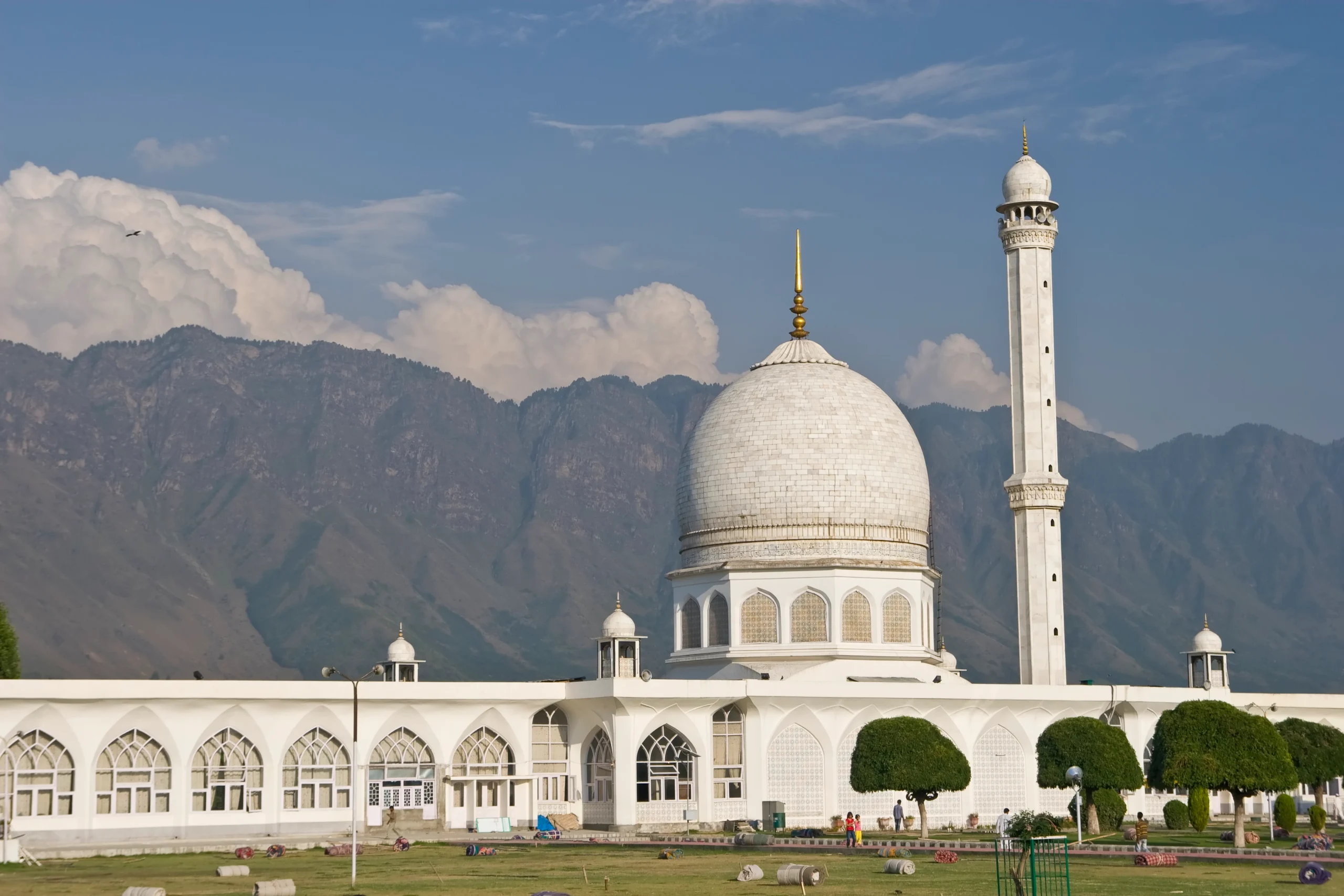
The state of Jammu and Kashmir, often referred to as the “paradise on Earth,” is notable for its rich cultural heritage and profound religious legacy. The state has been a hub of a remarkable blend of civilizations, along with a rich cultural and artistic tradition. However, it has also experienced periods of political unrest and foreign invasions, which have impacted its historical course. The region and name of Kashmir symbolize a blend of various cultures, civilizations, and religions.
According to the author, “Pandit Kahlan, the great historian, states in his book ‘Raajtarangni’ (the river of Kings) that the history of Kashmir is 4.5 thousand years old.” The origin and name of Kashmir are connected to many stories, traditions, myths, civilizations, and linguistic roots. Different historians and linguistic groups have also given various names to Kashmir based on their perspectives. According to prehistoric myth, Hindu mythology says that Kashmir was once a great lake (Sati-Sar Lake), drained by a pious man, “Kashyap Rishi,” and inhabited by his descendants, who later called it “Kashyap Mar.”
Muslim mythology recounts that Prophet Suleiman’s caravan passed through Kashmir, inspired by a beautiful lake, and he ordered a jinn named Kashyap to drain it. As a reward, the jinn Kashyap married a fairy named Meera, and they settled in Kashmir. The place was named after their marriage, “Kashyap-Meera,” and was converted into Kashmir. Both mythological versions suggest that Kashmir’s original name was “Kashyap Mar,” which later evolved into “Kashmar” and finally “Kashmir.”
The etymology that the word “Kashmir” is derived from the words “Kas-Mir” (Kas: water channel) and “Mir” (mountains), referring to a place of mountains and channels or streams.
Historians attribute the name Kashmir to the settlement of the “Kash” or ” Khasha” tribe, which was later locally known as Kasheer or Kashir. It is also acceptable because many place names are rooted in tribal names, all over the world, especially in South Asia’s Himalayan region.
The name of Kashmir has roots in various religions, mythologies, and tribes. Over different periods, travelers and tourists, enchanted by its beauty, have referred to it by various names. Chinese tourists, Sung-Yuan, referred to the name of Kashmir as “Shie-mi” and “Kia-Shi-mi-lo” by Hieun Tsiang. Kashmir, once known as “Khachul” by Tibetans, “Kashrat” in Dardistan, “Kasperia” by Greeks, and “Kasheer” by locals, is now widely used globally. Kashmir or Kasheer, also spelled as Cashmere, is a popular and sought-after brand in the United Kingdom, where Cashmere wool Shawls have been a trademark for generations.
Geological research confirms that Kashmir was once submerged under water, with geologists like Drew and Austin suggesting it was once a lake or covered in water. Geologists believe the valley was once a vast sea 200-250 million years ago, characterized by intense terrestrial volcanic activity, as evidenced by the Shankar Acharya and Hariparbat hills in the surrounding mountain ranges. Karewas, or Wuders, is another fascinating geological flat plain in Kashmir formed by the emptying of a huge lake. These alluvial deposits, covering over 2,500 square kilometers, provide insights into Kashmir’s geological past and explain the flourishing of agriculture.
The name of a region is a combination of ancient mythology, language origins, and interpretations provided by historians and travelers over the years. Many people have been attracted to Kashmir and left their mark, including sages and academics, monarchs, and explorers. Despite its 4,500-year history, the region’s culture, architecture, and social fabric continue to be influenced by these ancient civilizations.
All of the civilizations that have inhabited Kashmir, from ancient to the medieval and current periods, have left their imprint, molding the territory with their distinct cultures and practices. These influences persist in some form, but persistent strife is gradually diminishing the sparkle of those old legacies. After the partition of the subcontinent in 1947, the region has been embroiled in an ongoing conflict that persists to this day. This prolonged turmoil has overshadowed Kashmir’s rich social, political, and cultural heritage, a remarkable blend of civilizations that is now fading. Conflict not only claims lives but also destroys civilizations and traditions.
For 78 years, Kashmir has been in Indian illegal occupation, home to various tribes, which add to its uniqueness worldwide, whether through its natural beauty, diverse culture, or rich cuisine. This illegal Indian occupation is working under its Hindutva agenda to alter the region’s landscape. From changing its demography to eroding its identity and cultural heritage, much has been done under the BJP’s Hindutva agenda. Indian so-called democracy has left no stone unturned to dismantle all of this, yet the people of Kashmir remain resilient in their struggle for the right to self-determination. The demographic engineering threatens to weaken and ultimately eradicate Kashmir’s unique cultural heritage.
Every tribe has contributed to Kashmir’s rich cultural heritage, but Kashmiriyat stands out as the most important. Kashmir is incomplete without Kashmiriyat and Kashmiris, who have preserved this magnificent blend of civilizations. But India’s illegal attempt to erase this Kashmiriyat is at its peak. This conflict not only takes lives, but it erodes the legacy of a millennia-old culture. The conflict is not only ruining its natural beauty and killing people, but it is also inflicting the slow death of culture and tradition, which are icons of the identity of a nation. The world must take this matter seriously, as Indian government policies are actively transforming the region’s demography. The international community should not only show serious concern in preserving this rich heritage, but also pressure India to grant the people of Kashmir their rightful freedom. The fading legacies of the region’s cultural and linguistic diversity must be preserved before they vanish forever. An urgent and serious international effort is required to preserve this rare cultural heritage before it is lost to history.
The views expressed in this article are the author’s own. They do not necessarily reflect the editorial policy of the South Asia Times.

The author is a Research Officer at the Center for International Strategic Studies, Azad Jammu & Kashmir (CISS-AJK), holds an M.Phil. in Kashmir Studies from the University of Azad Jammu and Kashmir, and is also an alumna of the Near East South Asia (NESA) Center for Strategic Studies and the Nuraa Women’s Institute, Indonesia (NWI).