India Records First Suspected Mpox Case Amid Global Outbreak

India reports its first suspected mpox case, isolating the patient as concerns grow over the global mpox outbreak.

India’s health ministry says it has recorded a suspected case of mpox. The case involves a man who recently traveled from a country experiencing an mpox outbreak.

The ministry said in a statement on Sunday that they have isolated the young male patient in a hospital. He is in stable condition. They added that the world’s most populous nation has implemented “robust measures.”

“The case is being managed in line with established protocols, and contact tracing is ongoing to identify potential sources and assess the impact within the country,” the health ministry added.

The ministry did not specify which strain of the mpox virus the patient might have, but they are conducting tests to confirm the infection.

Global Concern over Mpox Variant

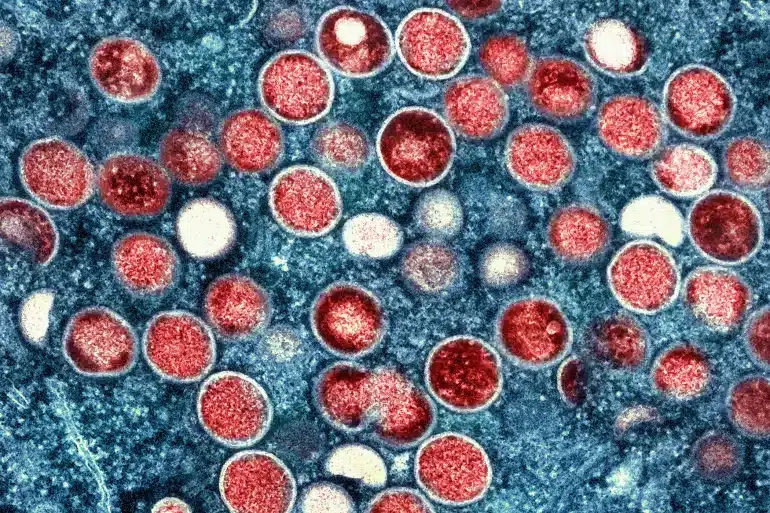
The clade 1b variety of mpox has triggered global concern because it seems to spread more easily through routine close contact.

Last week, Sweden confirmed a case of the variant and linked it to a growing outbreak in Africa. India has detected 30 cases of an older strain, known as clade 2, between 2022 and March 2024.

Formerly called monkeypox, researchers discovered the virus in 1958 in Denmark, in monkeys kept for research. Scientists first detected it in humans in 1970. The virus transmits to humans from infected animals and can also spread between humans through close physical contact.

Usually mild, it is fatal in rare cases. It causes flu-like symptoms and pus-filled lesions on the body.

Last year, the World Health Organization (WHO) changed the name monkeypox to mpox, saying the name of the disease appeared to be “racist”. Last month, the global health body declared the outbreak a public health emergency of international concern after identifying the new variant.

But the WHO added that the mpox outbreak is not another COVID-19.

According to the WHO, the Democratic Republic of the Congo (DRC) has reported more than 17,500 mpox cases and 629 deaths since the start of the year. Both strains – clade 1b and clade 1a – are present in the country.

The DRC has received its first batch of mpox vaccines, which health authorities hope will help curb an outbreak that has prompted the United Nations to declare a global public health emergency.

Researchers have also detected the virus in Pakistan, the Philippines, and Thailand.

This news is sourced from Aljazeera and is intended for informational purposes only.

SAT Web Administrator

Recent

The Istanbul dialogue between Pakistan and the Afghan Taliban collapsed over the TTP issue, exposing the limits of regional diplomacy and mediation.

The Istanbul Dialogue: How the Taliban’s Intransigence Doomed Diplomacy

The highly anticipated Istanbul dialogue, facilitated by Turkey and Qatar, has ended in deadlock. The Taliban’s refusal to act against the Tehrik-e-Taliban Pakistan (TTP) and their introduction of provocative counter-demands have effectively derailed the diplomatic process, underscoring the ideological rigidity driving Kabul’s foreign policy.

Read More »
Centralized Power and the Core–Periphery Divide in Afghanistan

Centralized Power and the Core–Periphery Divide in Afghanistan

The Islamic Emirate of Afghanistan’s return in 2021 brought rapid consolidation of power, but also the revival of a historical flaw. By concentrating authority in the hands of southern Pashtun elites, the Taliban have recreated the core–periphery divide that has destabilized every Afghan regime since the 19th century. This hyper-centralization, rooted in ethnic exclusivity and Kandahar dominance, risks a repeat of past collapses as non-Pashtun regions turn toward functional autonomy.

Read More »
Broken Promises: The Taliban’s Betrayal of Global Commitments

Broken Promises: The Taliban’s Betrayal of Global Commitments

Nearly three years after seizing power, the Taliban’s systematic violation of their international commitments under the 2020 Doha Accord has transformed Afghanistan into a sanctuary for terrorism, entrenched an autocratic regime, and institutionalized gender apartheid. Beyond moral failure, this deceit poses a grave threat to regional stability, international counterterrorism efforts, and the credibility of global diplomacy. Holding the regime accountable is now a strategic necessity, not a choice.

Read More »
Do You Remember 6/11/ 1947?: A Forgotten Jammu Genocide and the Continuing Erasure of Kashmiriyat

Do You Remember 6/11/ 1947?: A Forgotten Jammu Genocide and the Continuing Erasure of Kashmiriyat

On November 6, 1947, one of South Asia’s earliest genocides unfolded in Jammu, where hundreds of thousands of Muslims were massacred or forced to flee. Yet, unlike other global tragedies, this atrocity remains buried in silence. The Jammu Genocide not only reshaped the region’s demography but laid the foundation for India’s ongoing campaign of identity erasure in Kashmir. From demographic engineering to cultural censorship, the spirit of Kashmiriyat continues to face systematic annihilation.

Read More »
India’s Climate Policy after COP28: Net Zero 2070 — A Fair Promise or a Risky Postponement?

India’s Climate Policy after COP28: Net Zero 2070 — A Fair Promise or a Risky Postponement?

India’s Net Zero 2070 target reflects a delicate balance between development equity and climate urgency. While progress in renewables, green finance, and adaptation is visible, the absence of clear interim milestones risks turning ambition into delay. The real challenge lies in translating a distant horizon into measurable, near-term climate action before 2030.

Read More »