A series of mysterious fires in Iran

Mysterious fires erupt in Iran

Seven ships caught fire when a fire broke out at a shipyard in Iranian port city Bushehr. According to semi-government news agency Tasnim, no casualties were reported. Moreover, the head of crises management organization simply claimed that a fire had broken out at a shipyard. Furthermore, he also responded that the firefighting crew reacted swiftly. They were assisted by crews from the nearby Bushehr nuclear power plant. The shipyard is used to build fibreglass hulls.

Additionally, this fire incident is one of the latest mysterious fires and explosions in Iranian strategic installations. Iranian authorities have not yet disclosed origins or causes of these incidents.

Who is Responsible for the Fires?

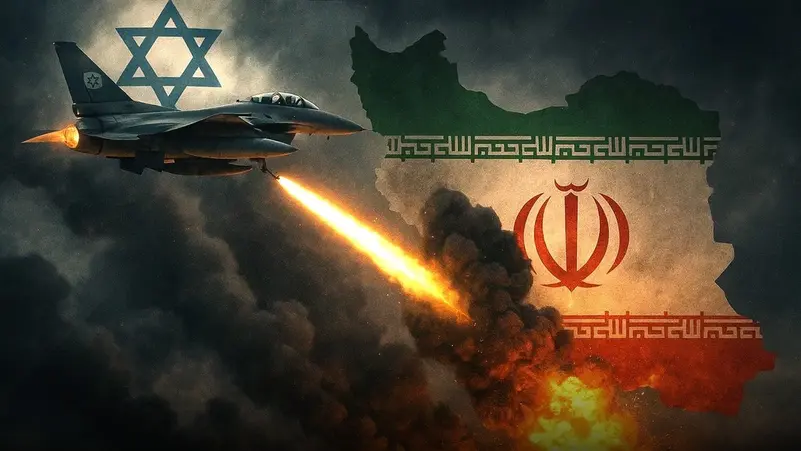
Although they have indirectly blamed the US and Israel for these sabotaging their operations. In a rare acknowledgement, Iran\’s state news agency Irna said the fire at Natanz could have been the result of sabotage \”by hostile countries, especially the Zionist regime [Israel] and the US\”.

Moreover, Iran\’s civil defence chief has vowed to \”respond\” if it turns out Iran was a victim of a cyber-attack.

BBC\’s version

According to a BBC report after Natanz nuclear site explosion “Just after midnight on 30 June, an email dropped into my inbox. It claimed to be from an unknown group calling itself the Homeland Cheetahs. The group said it had attacked the major Iranian nuclear site at Natanz some two hours earlier, at 02:00 local time. In the detailed message, it claimed it had blown up a facility and that the Iranian regime would not be able to hide it”

Also, in recent weeks fire incidents have been reported at a missile factory, a power plant, a medical clinic and a nuclear complex.

Timeline of recent major mysterious explosions in Iran:

26 June: Explosion near Parchin military site Tehran.

30 June: \”Gas explosion\” at a health clinic in Tehran.

2 July: \”Incident\” near Iran’s Natanz nuclear facility damaged building.

10 July: Large explosions in “an IRGC camp, west of Tehran”.

3 July: Large fire in Shiraz

4 July: Explosion and fire in a power plant in Ahwaz; chlorine gas leak at Karoun petrochemical plant in Mahshahr

15 July: seven boats have caught fire at a shipyard in the port of Bushehr


News Desk

Your trusted source for insightful journalism. Stay informed with our compelling coverage of global affairs, business, technology, and more.

Recent

AQAP’s Threat to China: Pathways Through Al-Qaeda’s Global Network

AQAP’s Threat to China: Pathways Through Al-Qaeda’s Global Network

AQAP’s threat against China marks a shift from rhetoric to execution, rooted in Al-Qaeda’s decentralized global architecture. By using Afghanistan as a coordination hub and relying on AQIS, TTP, and Uyghur militants of the Turkistan Islamic Party as local enablers, the threat is designed to be carried out far beyond Yemen. From CPEC projects in Pakistan to Chinese interests in Central Asia and Africa, the networked nature of Al-Qaeda allows a geographically dispersed yet strategically aligned campaign against Beijing.

Read More »
The Enduring Consequences of America’s Exit from Afghanistan

The Enduring Consequences of America’s Exit from Afghanistan

The 2021 US withdrawal from Afghanistan was more than the end of a long war, it was a poorly executed exit that triggered the rapid collapse of the Afghan state. The fall of Kabul, the Abbey Gate attack, and the return of militant groups exposed serious gaps in planning and coordination.

Read More »
The Afghan Crucible

The Afghan Crucible

Recent reporting underscores Afghanistan’s transformation into a strategic hub for transnational jihadist networks. Far from being a localized security problem, the Afghan landscape now functions as an ideological, logistical, and digital anchor linking extremist affiliates across Africa, Southeast Asia, and beyond, signaling the collapse of regional containment and the rise of a globalized threat architecture.

Read More »
Economic Statecraft and the New Geography of Power in Regional Politics

Economic Statecraft and the New Geography of Power in Regional Politics

Strategic competition has moved beyond decisive wars toward a subtler synthesis of economic leverage, proxy networks, and calibrated force. Infrastructure, finance, and trade routes now function as instruments of power, quietly reshaping regional orders while preserving the façade of restraint. In this environment, security is no longer confined to the battlefield but embedded in supply chains, data networks, and development choices, forcing states to rethink deterrence, sovereignty, and resilience.

Read More »
The Manufacturing of a False Equivalence

The Manufacturing of a False Equivalence

As scrutiny mounts over the Taliban’s tolerance of TTP sanctuaries, Kabul has attempted to deflect blame by alleging that ISIS-K operates from Pakistan. This false equivalence ignores the historical origins of ISIS-K in eastern Afghanistan, its sustained campaign of violence against Pakistan, and verified intelligence showing that the group’s operational depth remains rooted inside Afghan territory.

Read More »