Nineteen years ago, the Genocide Convention resurfaced as a precedent-setting signpost to question Serbia’s responsibility in the Srebrenica Massacre. The current case of Gaza has drawn multiple parallels with Srebrenica; it offers a systematic linkage to the defined scope of the genocide from its 2007 judgment for two major reasons. First, the Convention allowed the International Court of Justice (ICJ) to question Serbia’s obligation to prevent the genocide and punish the actors involved. Second, the International Criminal Tribunal for the former Yugoslavia (ICTY) convicted figureheads of the Bosnian Serb Forces, who committed grave violations of the Convention. In contemporary application, the Netanyahu administration shows targeted aggression but averts genocidal attribution by instituting the 10th stage of Stanton’s Genocide Model: Denial. The Srebrenica replication offers a justified application of the Convention to Gaza, but requires an investigation of Dolus Specialis (specific intent). The ongoing conflict has raised legal questions. Could Israel be held responsible for committing genocide, or could its state security figures be tried in a separate tribunal? Decades down the line, does international law view Dolus Specialis as a legal predicament, as states continue to weasel out?
Srebrenica and Gaza: What’s Shared?
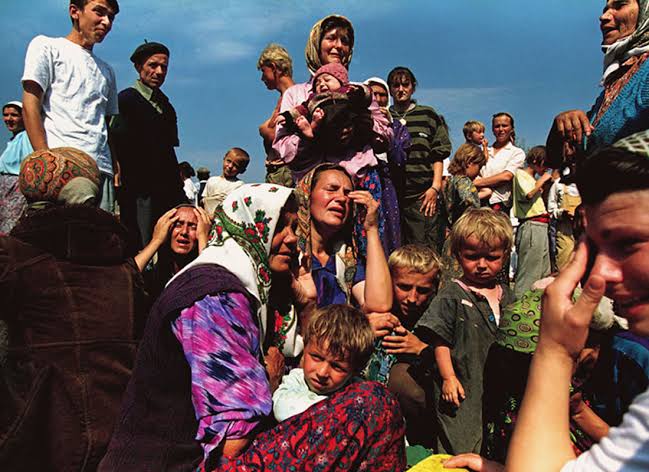
The military dynamics in Srebrenica were politically defined and geographically specific; thus, they reached the threshold of genocide. As 8000 Bosniaks were killed, Srebrenica forced the world to create a political commitment of Responsibility to Protect (R2P), which also became a weak show in Gaza. Radovan Karadzic, Radislav Krstic, and Ratko Mladic became the major reprobate figures of genocide and faced criminal prosecution from the ICTY. Despite the mushrooming political-military aggression in the Bosnian War, a signal legal principle could not be broadly applied to Serbia, as a multiplicity of war crimes did not constitute Dolus Specialis. This dynamic separated genocidal acts from the population scale and geographical scope of a conflict zone: it articulated that a genocide can be localized and numerically confined in nature. A comparative analysis would place the Israel-Palestine conflict in line to dissect the conjunction of the Israeli Defense Forces with the Netanyahu administration to understand the manifestation of genocidal acts. As the conflict has multiple layers and actors, applying the principles of the convention and practices from Srebrenica requires proper attribution, separation, and distinction of genocidal acts. The question of state obligation and individual responsibility remains unaddressed and clashes with the legal argument of Israel’s right to self-defense against Hamas. This dynamic clashes with a state’s national security and its international political obligation to regulate its military conduct in an armed conflict. The Netanyahu administration continues to block humanitarian aid, bomb civilian infrastructure, and show active complicity with the IDF, which shows effective operational control. The acceptability of shared intent to prevent a national security meltdown has displayed one glaring factor: a humanitarian crisis as an acceptable loss in asymmetrical warfare.
The case filed by South Africa added its value to the international genocide discourse. Despite the televised nature of the crisis, courts have not attributed genocide directly to Israel but have offered observations to prevent the acts of genocide, halt military engagement, and punish the actors involved. The ICJ also found the case to be ‘plausible’ for thorough investigations into Israel’s aggressive conduct in Gaza. Similarly, in 2001, Srebrenica left us with a concrete interpretation of the Genocide Convention through circumstantial evidence of pinpointed targeting of a specific group in a defined area. This interpretation took years to finalize the question of intent and the factor of attribution. This highlights an important legal practice: substantial evidence is necessary and is narrowed down to the pattern of conduct. The entire Bosnian War had major acts of war crimes, but the specific, identified targeting remained contested till Srebrenica. Comparably, the Palestine conflict has major war crimes and has become the most intractable obstacle to the Middle East’s stability, yet it faces contestation on crucial legalities. The courts have a legal scramble to deal with, as the case includes aggressive verbal statements of Israel’s state officials, and finalizing the intent question would require two quintessential factors: direct evidence (statements and declarations) or circumstantial evidence (pattern of conduct and scale of violence).
Israel and Serbia: Drawing Parallels for Intent
Drawing parallels from genocide case laws requires a dissection of the sociological scope, numerical scale, and pattern consistency. In Bosnia, the ICJ and ICTY created a clear definition of how ethnic cleansing does not constitute genocide, despite being a major part of the complete exercise. Serbia also argued that it lacked ‘effective control’ over the operational directives of the armed groups, despite offering political support and financial assistance. Hence, the ‘haven’ raised questions over the assessments of ‘serious risks’ by Serbia and its inability to identify the underlying triggers leading to a broader conflict. This exact methodology could not be applied to Israel and its forces. Legal denial and national defense stand as critical factors to protect domestic stability and evade international criminality. This method not only acted as a political obstruction to legal resolution but also highlighted Israel’s proclivity to periodically break free from international directives. The IDF operates directly under the defense ministry and continues to target Gaza by instituting systematic aerial campaigns, consistent political aggression, and ethnic cleansing. Such forceful removal and destructive bombing have been historically supported by Netanyahu’s aggressive political rhetoric. The UN commission has identified the four genocidal acts committed by the administration, out of five in total, indicating a high genocidal threshold. The violation of Articles II and III of the Genocide Convention by Israel has been thoroughly labeled by genocide scholars as a palpable manifestation of the aggressive political and military narrative of Tel Aviv, backed by biblical references, signaling a rancorous intent. The applicability of the convention still relies on the question of Dolus Specialis and the conditions required for proper attribution, as no written statements to fit the criterion of Article III are present, and reliance on verbal narratives persists. Serbia, like Israel, was reluctant to comply with the international courts over the conduct of the case, and scrambled for legal loopholes by integrating the political situation to fly the coop. Also, no written orders were found regarding the execution of a genocide. The ICJ, thus, did not label Serbia a genocidal state, so whether Israel would evade the tag depends on the pinpointed aggression in the Israel-Palestine conflict. It also depends on the threat assessment, effective control, declared intent, and investigative reports on Israel’s armed conduct. The International Association of Genocide Scholars (IAGS) issued the following observations: for group targeting, the official statements are referred to, preventing births is linked to the bombing of hospitals, destructive conditions are joined with the weaponization of starvation, and severe harm is associated with the destruction of civilian infrastructure.
Issues and Lessons from Srebrenica
The issues in the Srebrenica Genocide taught us five lessons that hold relevance today in multiple genocide case laws; ethnic cleansing is a ‘part’ of genocide, not the deciding factor, political influence over armed forces is not to be confused with an effective control, due diligence is a state’s legal responsibility in armed conflicts, a genocide can be localized, which does not require a large numerical condition but a defined intent, and the ICJ enforced matter of interpretability or applicability by declaring violations, not by punishing states. Much like Serbia and Israel share commonalities over denying genocide and bringing notions of either a protection of national security or an absence of effective control, Srebrenica and Gaza also require a similar revisit to how they highlight the failure of ‘never again’. R2P also appears to be heavily constrained by political realism; the political commitment has offered weak performances in spaces dominated by crisis spirals and power co-sharers. The interests of states regularly collide with the compromises of the international system: this creates a structural dilemma for international law, as vetoes block resolutions or interventions for their geopolitical power holders, and laws view states as rational actors for independent course correction in their backyards.
Nineteen years down the line, the narrow application of genocide in the General List No. 91 continues to face substantial censure from genocide scholars. The Bosnian War was not legally labeled as a genocide, despite offering the mass atrocities enough to constitute one. This legal isolation of Srebrenica through multiple frames of reference was viewed as a structural constraint of the legal body. This also underlines issues for the broader Palestine conflict, as the world’s attention is diverted to the ongoing atrocities only in Gaza. Three decades after the Bosnian War, the world has witnessed more genocide applications. From Rwanda to Darfur, and Croatia to the Rohingya, genocide applications have increased, so have the conflicts and interpretations. The element of intent has remained the point of contention, with less room for legal relearning. Multiple decades are enough to understand that a cyclical repetition of states politicizing Dolus Specialis to avoid international criminality would create a genocidal event with unimaginable proportions of no moral return.