A critical evaluation of Western alarmist literature, China’s post-2025 strategic footprint, military expansion in the Western Pacific, and the economic realities of CPEC Phase II
“Do not impose on others what you do not wish for yourself.” — Chinese proverb. A familiar pattern accompanies all major changes of power in modern history. It was expected that the Soviet Union would export revolution across continents, but it did not. In the 1980s, Japan’s economic rise was meant to permanently hollow out the American industry, but it did not. It is China today that occupies that rhetorical territory: regularly portrayed as the “threat” to the liberal international order, which is preparing to destroy it from its very foundations. There’s a certain logic in the argument. But it needs a lot more precision than is generally given.
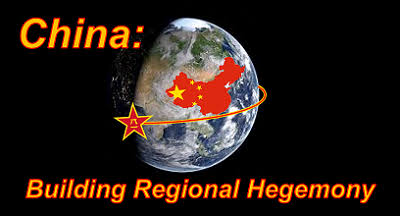
Since the financial crisis of 2008 revealed the structural weaknesses of the economic core of the Western world, a separate alarmist literature has started to emerge. Some have suggested that the Chinese Communist Party (CCP) is systematically implementing a decades-long policy to oust the United States from its role, while others argue that it is a militarily revisionist actor, destined to engage in an “apocalyptic” conflict with the US. For example, the book titled ‘The Long Game’ by Rush Doshi (2021) argues that China is actively practicing a decade-long strategy to displace US primacy, to construct an illiberal world order, designed by an amoral Marxist-Leninist party. Similarly, ‘Danger Zone’ by Michael Beckley and Hal Brands (2022) goes further: portraying China as a militarily emboldened, revisionist menace, heading towards an “apocalyptic” conflict with the United States. Both pieces arrive at the same conclusion: China must be contained and, if possible, ‘cut-to-size’ before the opportunity slips away.
They are serious scholars, making serious arguments, and they deserve to be engaged on their merits. However, both of these assumptions are worthy of careful consideration: that China is an inherently aggressive power, and that the rise of China is inherently destabilizing. The concepts of “authoritarianism,” “ideological rigidity,” and “anti-democratic expansionism” are Cold War terminology invoked against the USSR. Epistemic humility should be included on that list. Assessments of threats, based mainly on ideological binaries, are not very successful.
What does the evidence support? China’s economy is a force to be reckoned with. The IMF projects China’s GDP at $19.4 trillion in 2025 and about 16.6 percent of world GDP in nominal terms in the October 2025 World Economic Outlook. The IMF and World Bank report that China’s GDP was 18.3 percent of the world’s GDP in purchasing power parity (PPP) in 2025. With lower-than-expected tariffs on Chinese exports and macroeconomic policies that are more stimulative, the IMF is predicting the Chinese economy will grow 5.0 percent in 2025 and 4.5 percent in 2026. It’s a steady rate of growth that has been causing strategic concern in Washington, of course. But economic wherewithal and hegemonic intent are not the same thing.
In terms of the military side, the scene is just as complicated. SIPRI figures suggest that China has spent around $336 billion on defense in 2025, the highest annual increase in defense spending in a decade, and 7.4 per cent more than in 2024, continuing an unbroken trend of thirty-one years of annual increases. That figure reflects SIPRI’s own methodology, which includes the items that are off-budget, such as military R&D, Foreign procurement, and paramilitary expenditure, which China deliberately excludes from its official declarations. Beijing has officially set the defense budget for 2026 at RMB 1.91 trillion ($276.7 billion), representing a nominal 7 percent increase from 2025, and the trend of single-digit annual increases in the current defense budget has continued. The gap between SIPRI’s estimates and China’s own official announcement is worth examining analytically: it reflects deliberate ambiguity China has maintained regarding its defense expenditures, forcing the U.S. Department of Defense to conclude that China’s spending is 32 to 63 percent higher than China’s declared figures. These are not numbers you’ll find on a page of trivia. But China’s military modernization progress is distinctly geared towards particular contingencies, including Taiwan, the prevention of U.S. operational access in the Western Pacific, and the control over key maritime chokepoints. Where China is lacking and structurally cannot match at this moment is in the capacity for a projection of its force beyond the boundaries of Southeast Asia and the Middle East, reminiscent of American global force projection. It is, however, the design of the system China is constructing, not a technical flaw. Even at the heyday of its civilizational power, China did not embark upon a rampage to conquer distant lands; it portrayed itself as the ‘Middle Kingdom ‘, whose cultural superiority must be acknowledged. In sum, it wanted cultural-economic supremacy, not military-strategic dominance in the form of ‘client governments’ or overt occupation.
The security competition in the Western Pacific is growing, concentrated, and intensifying over time. On 17th December 2025, the PLA’s Eastern Theater Command held “Justice Mission 2025”, a joint service military exercise that tested army, navy, air force, and rocket force units in a series of drills across the Taiwan Strait and five zones around it, focusing specifically on integrated sea-air combined patrol, port blockade, and multi-domain deterrence. In 2025, the number of aircraft incursions around Taiwan has increased by over 100-fold from 380 in 2020 to a record-high 5,709, and Taiwan’s military spending has risen by 14 percent to $18.2 billion. Those that downplay this aspect of Chinese behavior are doing the debate a disservice. The Taiwan Strait remains the most sensitive flashpoint in contemporary international security, and the strategic outlook for both sides has changed greatly.
The alarmist thesis stretches itself, however, past that point. It is the Western Pacific that is at the heart of the battle of security competition. But in all the other theatres, China has extended its power in another way: railroads, ports, power grids, not through brigades and bases.
That influence is primarily through the Belt and Road Initiative (BRI), the current reach of which involves more than 140 countries. This is the case with the China–Pakistan Economic Corridor (CPEC). So far completed energy projects under CPEC are contributing over 9,504 MW to the national grid of Pakistan, which will be able to generate over 13,000 megawatts by 2026, through coal, wind, hydel, and solar sources valued at over $15 billion. In January 2025, the New Gwadar International Airport was inaugurated, and Gwadar is beginning to grow into a strategic deep-sea port on the maritime trade routes of the Arabian Sea in the region between the Middle East, Central Asia, and East Africa. The CPEC Phase II started from the 14th meeting of the Joint Coordination Committee held in September 2025 and is based on a bilateral Action Plan for industrial cooperation, Special economic zones, modernization of the agricultural sector, maritime development, and flagship connectivity projects including ML-1 Railway and the realignment of the Karakoram Highway. These infrastructure projects are generational commitments which Western financial institutions have not offered on a comparable scale and on comparable terms.
The overall behavior of China is crystal clear: it maintains productive economic engagements along different sets of ideologies; there is no ‘ideological condition’ attached when making economic partnerships. Moreover, China has explicitly stayed away from nation-building projects or regime-change interventions that characterized much of American influence since the Cold War. That restraint is part due to civilizational principles and part due to pragmatism. The costs of such ventures are clear in history.
But none of this is to suggest that there will be a ‘benign Chinese hegemony’, and no serious academician must argue this way. It will compete aggressively for influence in Asia–Pacific and along its vital shipping routes, will maintain coercive pressure on Taiwan, and will press for its claims in the South China Sea. The security competition in that domain is real, which demands serious attention. But a coherent strategy will be to differentiate, rather than conflate.
Deterrence equilibrium in the Western Pacific and economic partnerships elsewhere is not a contradiction; it reflects the real reading about where Chinese interests reside.
The more sober assessment of China is as a nation-state with geographically limited interests: its priority would be the primacy in the Asia–Pacific strategic environment, freedom of access to vital waterways, and the eventual resolution of the Taiwan issue. China entrenches its influence in other theaters using connectivity and trade, not through brute force or occupation. For the global south countries that are stuck in global power politics, it is a real alternative. Real outcomes of CPEC energy projects and infrastructure building can be assessed, rather than descending into abstract debates about ‘debt dependency.’
History rarely produces a monster that fearmongering requires. China is a formidable rival, and its military expansion and its seaward advancements must be taken seriously. It is a state with interests, calculations, and constraints that require careful analysis rather than abstract alarmism, a state whose primary method to engage globally is economic, rather than military.

Muhammad Mahad Samija is a scholar at the Department of Political Science, Government College University Lahore.

Memoona Asmaar
Memoona Asmaar is PhD Scholar in International Relations at Lahore College for Women University.