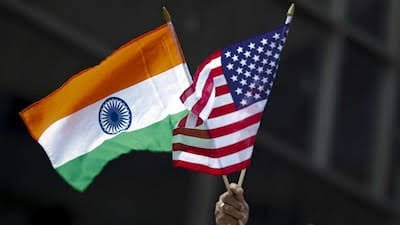
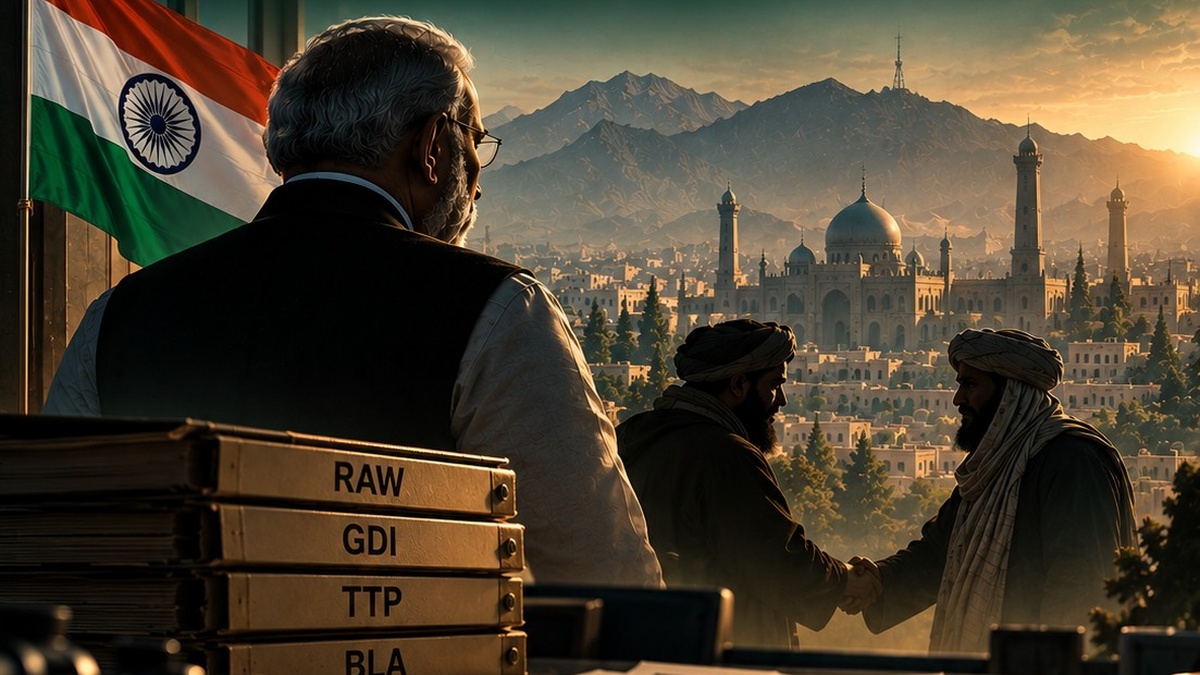
A country is more than just land, it is a strategic space. When a state hollows out, as Afghanistan has through decades of invasion, civil war, and instability, that space does not remain empty for long. It becomes a vacuum, drawing in the ambitions and agendas of regional powers. For decades, India has leveraged this Afghan vacuum. Evidence suggests a systematic effort to utilize Afghan territory as a forward base for a sophisticated hybrid war aimed at destabilizing Pakistan, a strategy that has adapted to the shifting political landscapes of the last forty years by consistently exploiting the core weakness of the Afghan state itself.
The Cold War Precedent
The playbook for this strategy has historical roots. During the Soviet occupation of Afghanistan from 1979 to 1989, India adopted a stance supportive of the Soviet-backed Kabul government. This was a calculated move that created a strategic pincer against Pakistan. This era established a clear precedent for using Afghan territory as a staging ground. It became a sanctuary for anti-Pakistan groups, including the Balochistan Liberation Army (BLA), which received training and support, demonstrating how a friendly or dependent government in Kabul could be used to project influence and pressure onto Pakistan.
The Post-2001 Theater: Consulates and Chaos
This strategy was refined and expanded in the post-9/11 era. Between 2001 and 2021, following the fall of the first Taliban regime, India launched a major diplomatic and economic offensive under the guise of reconstruction. It became the largest regional aid donor, funding high-profile projects like the new Afghan Parliament and the Salma Dam. This soft power approach was underpinned by a significant physical footprint: a large embassy in Kabul and four consulates in the strategic cities of Herat, Kandahar, Jalalabad, and Mazar-i-Sharif.
While publicly framed as developmental support, this extensive network served a dual purpose. In a country where the central government’s authority barely extended beyond Kabul, this footprint provided an ideal platform for intelligence operations. The consulates, particularly those near the Pakistani border, served as hubs for India’s intelligence agency, RAW, to cultivate assets, funnel support to proxies, and coordinate anti-Pakistan activities. Throughout this period, Pakistan persistently raised alarms, presenting dossiers and proof at international forums detailing India’s role in orchestrating terrorism in Pakistan.
A State in Transition and Renewed Proxy Warfare
The Taliban’s return to power in August 2021 initiated a complex and ongoing process of consolidation. The current regime is still in a phase of transitioning from a loosely organized armed group into a coherent state structure. Beset by immense domestic challenges and international isolation, its writ and control across the vast territory remains tenuous. This environment of incomplete state formation is the primary condition that external actors continue to exploit.
For Pakistan, this has created a strategic problem. The Afghan Taliban’s victory was a force multiplier for their ideological brethren, the TTP. Emboldened by their success and gaining access to a vast arsenal of abandoned NATO weaponry, the TTP has dramatically escalated its terror campaign against the Pakistani state. This new reality presented a clear opportunity for India to intensify its proxy war. After a brief pause, New Delhi executed a pragmatic pivot, reopening its embassy in Kabul in June 2022. While publicly framed as humanitarian outreach, this re-engagement provided the perfect cover to re-establish and strengthen its networks. Evidence on the ground and a surge in sophisticated attacks by BLA and TTP, point to a renewed campaign of Indian support. The ungoverned spaces of Afghanistan are once again being actively used by RAW to provide sanctuary, funding, advanced weaponry, and operational guidance to different terrorist groups. In response, Islamabad has not only resorted to kinetic action but has also amplified its diplomatic efforts, raising its concerns both globally at forums like the United Nations and directly with the Afghan government in Kabul, demanding they take action against these proxy groups operating from their soil.
A Call to Dismantle the Theater of War
From the Soviet era to the current Taliban regime, Afghanistan has remained a theater for a long and damaging shadow war. While the methods have evolved, the underlying motive has remained unchanged. This reality poses a grave threat that extends far beyond the region. A state still struggling to establish control, used as a battleground for proxy wars, will inevitably export terror, narcotics, and instability. Therefore, it is incumbent upon the international community to recognize this danger and focus its efforts on fostering a stable Afghan state that possesses the capacity to finally govern its own territory and pressure India to cease its nefarious activities that risk the growth and peace of the entire region. Until the world works to dismantle this theater of war, the shadow of conflict will continue to loom over the entire region and beyond.

Your go-to editorial hub for policy perspectives and informed analysis on pressing regional and global issues.