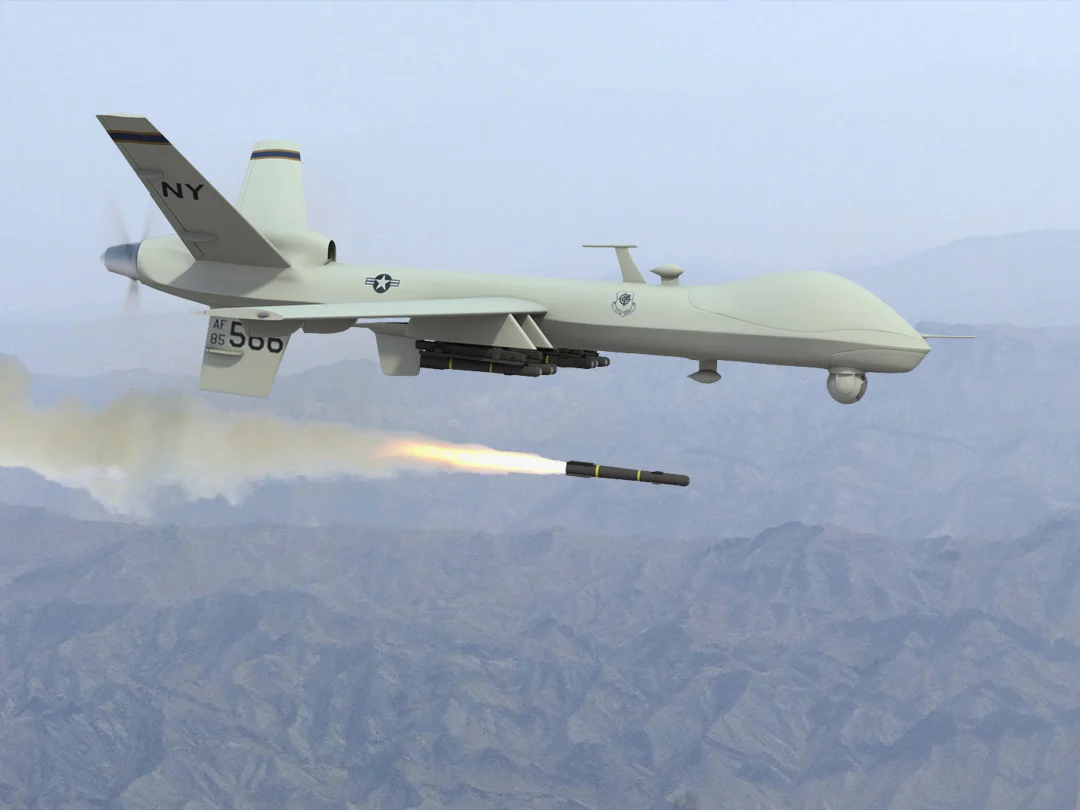
“Justice has been delivered, and this terrorist leader is no more,” proclaimed the President of the United States while addressing the nation. The proclamation came after the United States successfully launched a drone strike on a house in downtown Kabul. The house allegedly was hosting Ayman-al-Zawahri, the most wanted leader of Al-Qaeda, who has been eliminated as a result of the concerned strike.
Given the precarious situation in Afghanistan, the elimination of such a high-profile figure in the wake of the US drone strike raised an important question about the near future of the conflict-ridden country: What the strike has in its store for Afghanistan?
The Strike: Pros & Cons for Afghanistan
The strike, as it seems, carries both pros and cons for Afghanistan. We can start with the pros, however, before plunging into its details, there is a crucial fact that could serve as an important precursor to understanding this whole discussion. The said fact, as is widely reported now, is that the United States carried out the strike with the collaboration of the Islamic Emirate of Afghanistan. The lack of mention of the Taliban in Joe Biden’s address, and the Taliban’s cold response to the strike is hardly a matter of coincidence. Moreover, it can further be validated by the fact that since the withdrawal of the United States from Afghanistan, time and again, the Taliban leadership has shown its desire of establishing a relationship with the United States.
Now the question that arises is, had the Taliban corroborated with the United States in the drone strike what it has or will likely gain in return for the said cooperation?
The question drove us back to the original question of pros and cons.
The Pros
To start with the question of, what the Taliban have to gain or alternatively what are the pros for Afghanistan of the concerned US drone strike, many analysts opined that in return for the cooperation, the United States may ramp up the process of unfreezing the frozen foreign reserves of Afghanistan held in the central bank of the United States. Recently, progress has been made toward this end, and now it’s only a matter of when rather than if. It is pertinent to mention that these frozen reserves can provide a lifeline to the stagnant economy of the cash-strapped Islamic Emirate of Afghanistan. Besides it, observers also held that in return for the cooperation, the United States may turn a blind eye toward the Human Rights violation perpetrated by the Taliban since they took over last year. After all, the United States has an effective record of ignoring human rights violations when it comes to its potential allies. Consider the case of India for that matter.
The Cons
Where Islamic Emirate under the Taliban can gain from its cooperation with the United States on the drone strike on one hand, on the other hand, it can also lose much. There are two main reasons for the said assertion. The first reason is that as a matter of fact, the ruling Afghan Taliban is not a monolithic group. To put it bluntly, the Taliban should not be perceived as a single organization from a monolithic lens as they are divided into various groups on a range of issues. One such divisive issue in this regard is: how to deal with Al-Qaeda.
There are groups or at least some key figures from the top echelon of Taliban leadership, who have a soft corner for Al-Qaeda. These respective groups, after the drone strike, can defect from the central command of the Taliban and can turn against the latter. What can be ensued is internecine strife which can exact a heavy toll on the law-and-order situation of Afghanistan, which has hardly been restored recently. The second reason for being pessimistic about this new dynamic of cooperation between the Islamic Emirate and the United States is that the strike can estrange Al-Qaeda from the Taliban. Consequently, it can catapult the former into the arms of ISKP.
The ISKP Factor
To put it in other words, for the sake of survival and for avenging the killing of its revered leader, Al-Qaeda, as a whole or at least some of its fighters may join the ISKP. This doomsday scenario may strengthen the ISKP, which according to a recent report of the UN Security Council has already established a foothold in some parts of Afghanistan.
Thus, in tandem with Al-Qaeda, ISKP can unleash a new wave of terrorism across Afghanistan and in the neighboring region.
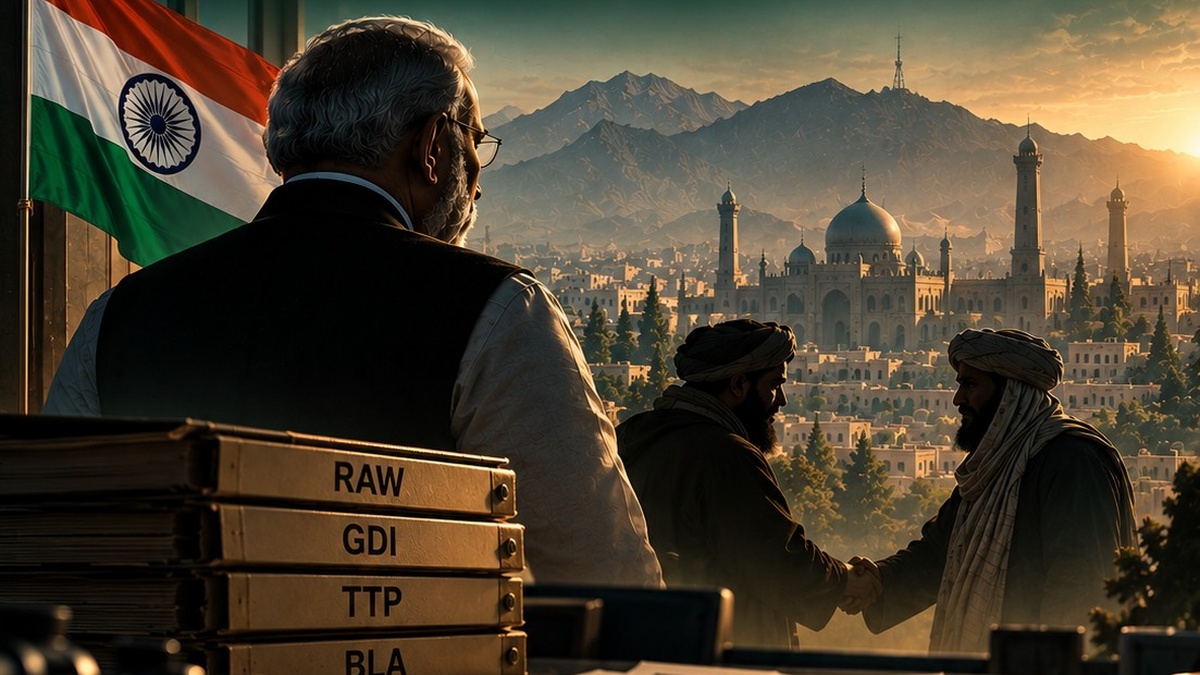
There are netizens who negate the said possibility by invoking the ideological difference between the ISKP and Al-Qaeda, however, little do they know that everything is possible in the realm of possibility. Considering the case of the conflict-affected Pak-Afghan region, if Baloch Liberation Army (BLA) with its ultra-nationalist ideology can merge its operations with the ultra-religious Tehreek-e-Taliban Pakistan (TTP), why can’t Al-Qaeda with the ISKP, especially given the fact the latter emerged from the ashes of the former?
Thus, in sum, both the pros and cons are associated with the recent drone strike. Only time will tell us, which side the camel will sit on.

Your go-to editorial hub for policy perspectives and informed analysis on pressing regional and global issues.