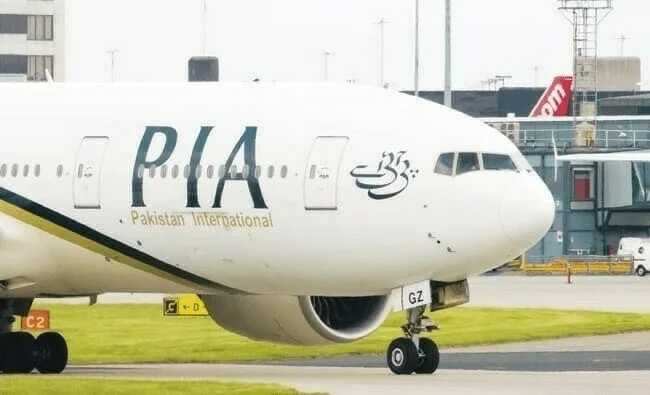
New Woes for Pakistan International Airline

New Woes for Pakistan International Airline

Pakistan’s national carrier, Pakistan International Airline (PIA), on Thursday, issued a statement announcing its decision to ground 150 pilots after a probe following last month’s plane crash in Karachi which claimed 97 lives. The spokesperson for the airline, Abdul Hafeez, reiterated that safety was PIA’s top priority and that a process to scrutinize pilots unfit to fly had been initiated.

Pakistan International Airline made this announcement after the aviation ministry released appalling figures. As per Ghulam Sarqar Khan, the aviation minister, 262 out of 860 pilots were holding fake licenses.

Such a statement caused quite a stir in the country, especially for the families of those who perished in the crash. It is important to keep in mind that Pakistan has one of the highest numbers of air crashes over the past decade as compared to any other country.

No details about alleged cheating methods or issuance of bogus certificates from the PCCA, the Pakistan Civil Aviation Authority was released following the statement. However, some officials, who spoke anonymously, have shed light on how many pilots have bribed their way through exams-implying that they have the skills to fly aircraft, but lack the relevant technical knowledge. They also gave details of four pilots fired from PIA over false certifications.

After the outcry on the crash, Pakistan announced further investigations into the matter. The ministry released its preliminary findings on Wednesday. About the crash, the Aviation Minister said that both, the pilot as well as the first officer of the plane, were qualified and medically fit to fly. However, the pilot failed to complete a landing attempt and ignored repeated warnings from the Air Traffic Control. Upon his second attempt, he ignored the warnings. It is also apparent that ATC did not inform the pilot of the damage caused to the aircraft’s engines after it’s the first failure landing failure. The PIA spokesperson also mentioned that notices were being issued to pilots whose paperwork seemed incomplete or shady.

News Desk

Your trusted source for insightful journalism. Stay informed with our compelling coverage of global affairs, business, technology, and more.

Recent

Afghanistan’s Trade Boycott: Strategic Miscalculation With Fiscal Consequences

Afghanistan’s Trade Boycott: Strategic Miscalculation With Fiscal Consequences

Afghanistan’s 2025 trade boycott of Pakistan exposes a strategic miscalculation. Despite efforts to shift toward Iran and Central Asia, Kabul remains structurally dependent on Pakistan’s mature trade corridors, customs revenue, labour mobility, and logistical efficiency. Alternative routes carry higher costs, sanctions risks, and operational delays, leaving the Taliban with mounting fiscal losses and regional constraints.

Read More »
The Defund Taliban Campaign

The Defund Taliban Campaign

The Defund Taliban Campaign examines how indirect US funding and a $7 billion abandoned arsenal have turned the Taliban into a regional force multiplier for militant groups.

Read More »
The Taliban’s new fatwa banning foreign militancy signals a shift in doctrine, but rising regional attacks and ideological fractures raise questions about its enforceability.

Doctrine vs Reality: Can the Taliban Enforce Their Ban on Foreign Militants?

The Taliban’s new fatwa banning foreign militants has been hailed by officials in Kabul as a decisive theological shift. But rising attacks in the north, continued TTP operations, and mounting pressure from Washington expose a widening gap between doctrine and reality. As regional powers demand proof of enforcement, the decree risks becoming another symbolic gesture unless it translates into measurable action on the ground.

Read More »
Deconstructing the Pakistan-Afghanistan Economic Crisis

Deconstructing the Pakistan-Afghanistan Economic Crisis

The Pakistan-Afghanistan trade freeze is widely framed as a punitive economic move, yet its roots lie in a severe security breakdown emanating from Afghan territory. Pakistan’s transit closures are reactive, not aggressive, and Afghanistan’s deep logistical dependence on Pakistani routes exposes the crisis as geopolitical, not commercial.

Read More »
Criminalising Dissent: How New Laws and “Public Order” Politics Are Shrinking Democratic Space in India

Criminalising Dissent: How New Laws and “Public Order” Politics Are Shrinking Democratic Space in India

India is witnessing a steady erosion of democratic freedoms as broad security laws, digital surveillance, and administrative restrictions redefine dissent as a threat rather than a constitutional right. From expanded use of UAPA and IT Rules to routine protest crackdowns and shrinking academic space, the cumulative impact is a quieter and increasingly constrained civic sphere.

Read More »