Hyundai Motor India shares fell 7.2% on their market debut on Tuesday. Retail investors gave a lukewarm reception to the country’s biggest ever initial public offering (IPO). Concerns about a lofty valuation and an auto industry slowdown contributed to this reaction.
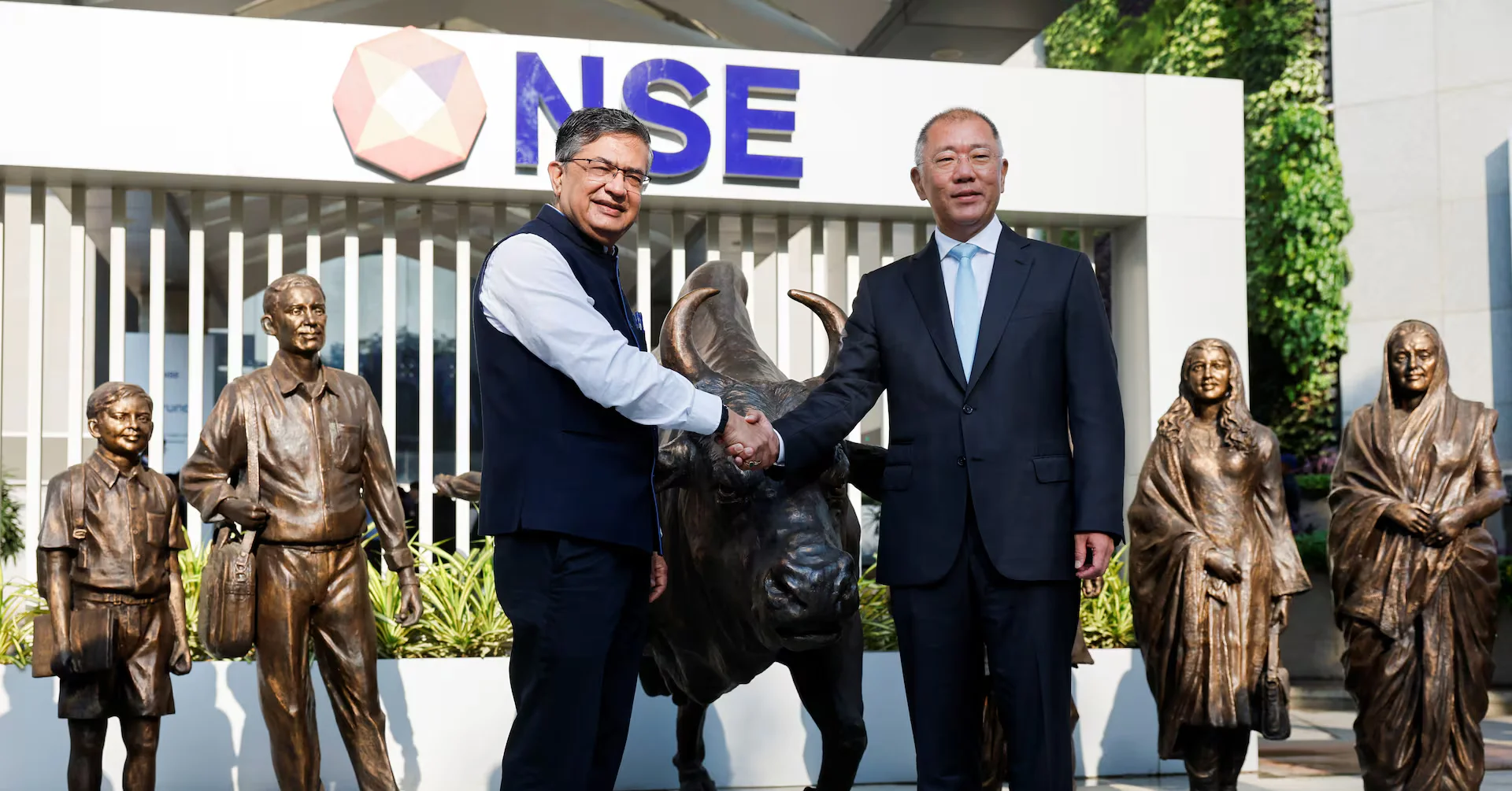
The stock listed at 1,934 rupees on the National Stock Exchange. This price was below its offer price of 1,960 rupees. It fell as much as 7.6% before closing at 1,819.60 rupees. That valued the company at 1.48 trillion rupees ($17.6 billion).
Hyundai Motor is India’s No. 2 carmaker, holding a market share of 15%. The company was targeting a valuation of $19 billion through the offering.
The record $3.3-billion IPO attracted more than two-fold oversubscription last week, driven largely by institutional investors. However, concerns about the high share price compared to future earnings deterred retail investors. They worried that they would not make gains on the listing.
Including Hyundai, seven of India’s 10 biggest IPOs have seen share price falls on their first days of trading, according to Dealogic. Losses have ranged from 5% to 27%, the data showed.
Hyundai Motor India’s IPO Struggles
Analysts said Hyundai’s weak debut reflected a high valuation. They noted near-term weakness in car sales and an increase in the royalty rate paid by the company to its South Korean parent.
Arun Kejriwal, founder of Kejriwal Research, stated that “Hyundai’s issue has stiff pricing, which seems to weigh down on its listing as well.”
“Besides, only institutional investors have driven the volumes seen so far, which are rather poor for an IPO of Hyundai’s size.”
The Mumbai listing is Hyundai Motor’s first outside South Korea. The IPO was the world’s second-largest this year.
“Price, of course, will always be determined by the investors,” Hyundai India’s Chief Operating Officer Tarun Garg told reporters, when asked about the market reaction.
He also dismissed concerns over the royalty rate increase to 3.5% from 2.5%, terming it “in-line with market benchmark”.
Hyundai’s market valuation is much lower than Indian sector leader Maruti Suzuki’s $45 billion. However, analysts point to a narrower gap in their price-to-earnings (P/E) ratios.
The IPO valued Hyundai at 26 times its earnings for the fiscal year ended March, not far off Maruti’s multiple of 29.
Also See: India’s Bajaj Auto posts higher Q2 profit as motorcycle sales jump
INDUSTRY SLOWDOWN
Shares of Indian rivals have also slipped in recent weeks as car sales slow after two years of record highs, with customers delaying purchases amid stubborn inflation.
Hyundai’s sales in India from April to September fell 2.6% compared to the same time a year earlier. In contrast, overall car sales rose just 0.5%, according to the latest industry data.
Garg, however, said the recent slowdown was “nothing to worry too much” over, attributing it to seasonality, and he expects the industry to rebound.
Maruti’s shares fell 2.1% on the day, while Tata Motors dropped 2.6%, with the Nifty Auto index down 2.5%.
Hyundai Motor plans to use proceeds from the sale of a 17.5% stake in the Indian unit to invest in research and launch new products as it competes with Tata Motors and Mahindra & Mahindra.
“We shall leverage our deep understanding of consumer preferences to successfully expand our passenger vehicle portfolio,” Garg said at the listing ceremony.
LONG-TERM BET
Some major brokerages see long-term value in the stock.
Nomura started coverage of Hyundai with a “buy” rating and price target of 2,472 rupees. The brokerage said it liked the large number of SUVs in Hyundai’s product range, which accounted for 67% of sales in the April-June quarter.
Macquarie analysts began coverage with an “outperform” rating and price target of 2,235 rupees, saying Hyundai’s focus on SUVs commanded a P/E premium.
This news is sourced from Reuters and is intended for informational purposes only.

Your trusted source for insightful journalism. Stay informed with our compelling coverage of global affairs, business, technology, and more.