What if the most consequential funding relationship in the Ukraine war is not between Washington and Kyiv, but between Washington and Moscow?
Follow the money. Follow the equipment. Follow the documented record of what American taxpayer resources have produced in Afghanistan since 2021. Tim Marshall wrote that geography is a prison nations cannot escape. George Friedman built careers on the argument that strategy follows logic, not intention. Both would recognise what has happened here, not as conspiracy, but as consequence.
At the end of that chain sits a Taliban government that has just signed a military cooperation agreement with Russia, the same Russia that American taxpayers are simultaneously funding Ukraine to resist.
Every link in this chain is documented. Most of it comes from the United States government’s own watchdog.
The thesis is stated plainly through three traceable mechanisms, that are, military equipment abandoned in 2021, humanitarian aid systematically looted since then, and a strategic vacuum exploited by Moscow. American taxpayers have materially strengthened a Taliban government that has now formalised military ties with Russia. The chain is indirect. The documentation is not.
Layer One: The Largest Armed Gift in History
Start with the equipment.
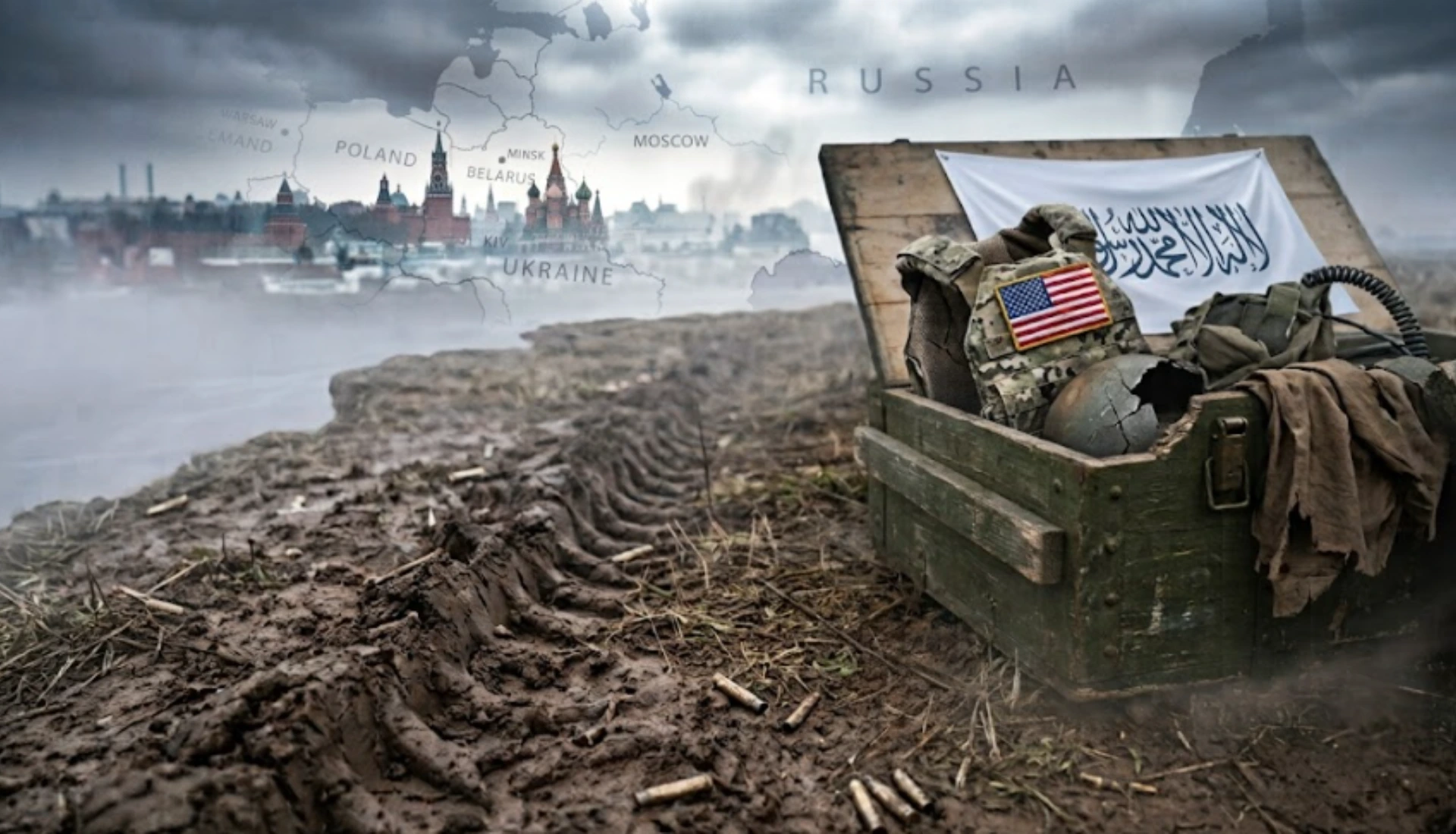
In August 2021, the United States withdrew from Afghanistan. It left behind approximately seven billion dollars worth of military hardware. Humvees, Black Hawk helicopters, M16 rifles, night vision devices, communications equipment were part of it. The Taliban seized it within days.
The equipment did not sit idle. The United Nations Analytical Support and Sanctions Monitoring Team confirmed in its 2025 annual report that TTP militants, operating with Afghan Taliban acquiescence and at times active support, are using “NATO-calibre and other weapons obtained in Afghanistan to target Pakistani military border posts.” Those weapons were left there by American forces.
Now comes the critical development. The Taliban’s inherited arsenal of American equipment creates maintenance requirements that neither the Taliban nor any Western partner can easily meet. Russia can.
In late May 2026, Taliban Defense Minister Mullah Mohammad Yaqoob travelled to Moscow and signed a military-technical cooperation agreement with Russian Security Council Secretary Sergei Shoigu. Russian officials described it as focused on Soviet-era equipment maintenance. What they did not volunteer is that Russian technical engagement with the Taliban’s arsenal now includes hardware originally manufactured and paid for by American taxpayers. Moscow gains a technical intelligence window into American military systems. Washington paid for it.
Layer Two: The Aid Machine That Feeds the Regime
The second layer is financial, and here the documentation is, if anything, more damning.
Since 2021, the United States has been the single largest donor of humanitarian assistance to Afghanistan. By March 2025, Washington had disbursed approximately $3.83 billion through UN agencies and NGOs. Former SIGAR chief John Sopko confirmed before Congress that over $21 billion has flowed to Afghanistan since the Taliban takeover, with weekly transfers continuing even after formal aid suspensions.
The intent was humanitarian. The outcome was not purely so.
SIGAR’s January 2024 report documented how the Taliban intercepts this aid systematically: infiltrating United Nations-partnered Non-Governmental Organisations, imposing taxes on humanitarian workers, directing aid to Taliban officials, and taxing Afghan recipients at rates reportedly reaching sixty to one hundred percent of aid received. SIGAR concluded only thirty to forty percent of all aid sent reaches those truly in need.
A senior State Department official told Semafor in August 2025: “We knew that US funding was, in specific and direct ways, benefiting the Taliban. What shocked me was the extent to which so many NGOs, especially the UN, were involved in this diversion and corruption.”
The SIGAR July 2024 report warned Congress that US dollar shipments to Afghanistan allow the Taliban to “reallocate financial resources to other priorities, including the security ministries.” On that point, leaked documents from Afghanistan’s Green Trend disclosed that the Taliban’s Ministry of Defence weapons and tactics directorate budget surged from 625 million Afghanis in 2023 to 21 billion Afghanis in 2024. A regime with no formal tax base and no legitimate international financing doubled its defence budget. SIGAR identified where the money came from.
Sopko testified to the House Oversight Committee: “I cannot assure this committee or the American taxpayer we are not currently funding the Taliban.” That testimony was delivered in 2023. The money kept flowing for two more years.
Layer Three: The Proxies Washington Is Indirectly Bankrolling
The third layer is the most strategically significant.
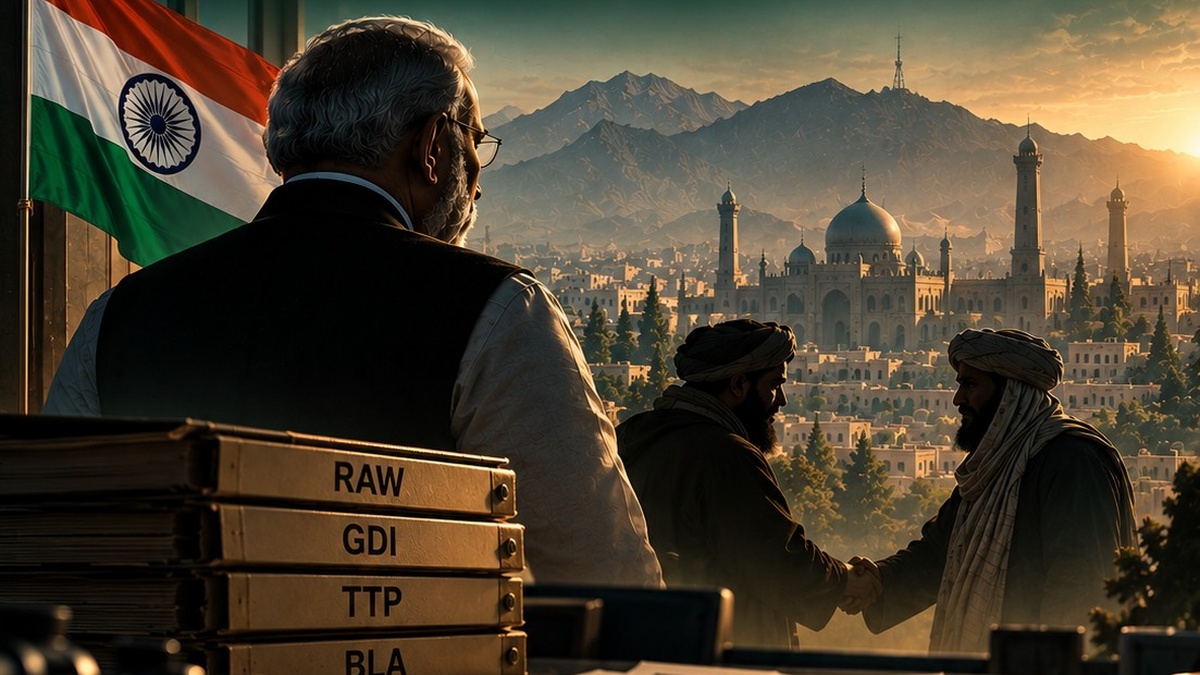
The Taliban is not merely a government that absorbed American aid. It actively sponsors proxy networks that destabilise American partners across South and Central Asia. The UN Monitoring Team’s 36th (July 2025) and 37th (February 2026) reports leave no ambiguity: the Taliban continues to host Tehreek-e-Taliban Pakistan (TTP), Al-Qaeda, and Islamic State ISIS-Khorasan. The Taliban’s denial that terrorist groups operate from Afghan soil was labelled “not credible” by UN monitors.
The figures are stark. The UN estimates approximately 6,000 to 6,500 TTP fighters based in Afghanistan. The group conducted over 600 attacks in Pakistan in the first half of 2025 alone. The Global Terrorism Index 2026 recorded 1,139 terrorism-related deaths in Pakistan in 2025, the highest since 2013. UN reports confirm the Afghan Taliban provides approximately $43,000 per month directly to TTP. American aid sustains the economy from which those resources are extracted.
Every Pakistani security resource absorbed by the TTP threat is unavailable for other purposes. Every Chinese infrastructure project targeted by TTP, the UN confirmed TTP is specifically targeting Chinese enterprises in Pakistan, creates friction in regional connectivity. The Taliban maintains these networks. American aid sustains the Taliban.
The Geopolitical Verdict
Mackinder warned in 1904 that a power consolidating the Eurasian Heartland would eventually contest any maritime coalition attempting to contain it. Afghanistan represented a critical Rimland position, a forward foothold that kept Central Asia accessible and Russia’s southern depth contested. The 2021 withdrawal vacated that position entirely.
Russia moved to fill it. The May 2026 military agreement is the latest step. Moscow gains a cooperative partner at its southern periphery, early positioning for resource extraction in a country holding vast lithium and rare earth deposits, and a stabilised flank that redirects strategic bandwidth toward Ukraine.
The American taxpayer funds Ukrainian resistance to Russia at billions per year. Through documented mechanisms, that same taxpayer has contributed to a Taliban government now formalised in military cooperation with Moscow.
SIGAR’s final forensic audit, released December 2025 before Congress permanently closed the agency, catalogued between $26 and $29.2 billion in waste, fraud, and abuse across two decades of Afghanistan spending. The watchdog that documented this failure was then shut down, removing the primary mechanism of accountability. The State Department declined to answer SIGAR’s questions on Taliban seizures of US-funded assets. No administration has offered a credible account of how this chain of consequences developed, who bears responsibility, or what changes as a result.
The policy response was not accountability. It was abandonment, cutting aid that hurt the Taliban and aid that helped ordinary Afghans in the same executive order, without distinguishing between them.
Meanwhile, in Moscow, a military cooperation agreement sits on record. The Taliban’s defence budget has doubled. The proxies are operational. The Heartland’s southern approaches are more secure than at any point since the Soviet withdrawal in 1989.
In geopolitics, as in accounting, unexamined ledgers tend to accumulate larger debts over time. This one has been accumulating since August 2021. The interest, measured in strategic consequence, is now clearly visible, in Kabul, in Moscow, and on the front lines in Eastern Europe.
Related Article: From Ukraine to Gwadar, How Geography is Reshaping World Order

Haleema Khalid is a research and strategic communications professional specializing in policy research, knowledge management, and analytical writing. With an interdisciplinary background spanning linguistics, security studies, and regional affairs, her work focuses on translating complex research into accessible outputs for policy and stakeholder audiences. She is a published researcher in corpus linguistics and political communication and is currently pursuing an MPhil in Intelligence & Security Studies, with a growing focus on Pak-Afghan affairs, regional security, and South Asian dynamics.