In a world where international laws wield their power selectively, recent revelations surrounding India’s alleged funding of violent extremist organizations and suppression of non-profit organizations (NPOs) raise disconcerting questions about the fairness and consistency of global accountability measures.
These revelations constitute just the tip of an iceberg – the international community, unwittingly or not, has been contributing to in the guise of charitable donations, real estate investments, and gold transactions. The bloodshed of Muslims and other minorities during alleged killing sprees, purportedly financed by these entities, implicates not only those directly involved but also the international leadership and the Financial Action Task Force (FATF), which has seemingly turned a blind eye to the sources of terror financing in India.
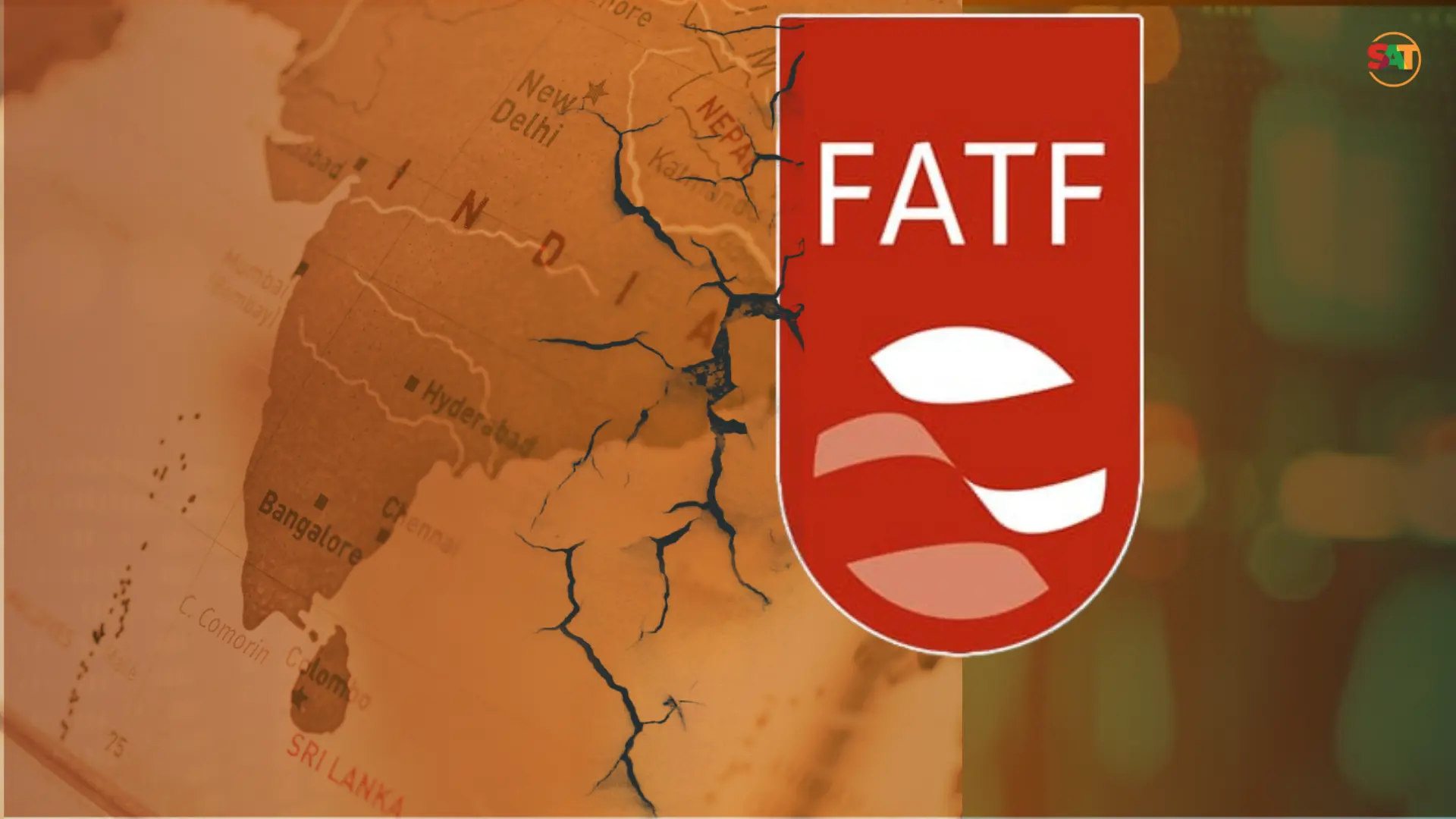
The FATF’s onsite Mutual Evaluation Review (MER) of India in November 2023 and upcoming plenary in June 2024 provides an opportune moment to examine the stark contrast in response to similar transgressions.
It is notable that the shadow report submitted by anonymous civil society actors to the FATF, documenting India’s alleged weaponization of laws against NPOs, further accentuates this inconsistency. Despite clear non-compliance with FATF standards and unaddressed recommendations dating back to 2010, India’s actions against NPOs continue unabated. The drastic increase in refusals of NGO licenses, from 41 in 2010 to a staggering 20,693 in 2023, paints a grim picture of a one-size-fits-all approach targeting the entire NPO sector based on unproven claims.
The report also exposes India’s failure to conduct a comprehensive risk assessment of the NPO sector for terrorist financing, a recommendation made over a decade ago. The exponential growth in refusals coincides with amendments to the Foreign Contribution (Regulation) Act in 2010, indicating a deliberate targeting of NPOs by the Indian government.
Amid persistent concerns that India has been adept at manipulating the international organizations therefore India may shield itself in FATF from thorough scrutiny, the dichotomy deepens when examining the misuse of anti-terrorism laws and investigative agencies, such as the Enforcement Directorate and the Central Bureau of Investigation, as political tools to target opposition leaders and civil society. The selective pursuit of cases and the lack of successful prosecutions suggest a biased application of these laws.
Moreover, while Muslim-majority countries often face swift action and condemnation, India seems to navigate a different path, shielded by its economic prowess. This selective accountability becomes particularly evident when scrutinizing the actions of groups affiliated with Hindutva ideologies.
The Rashtriya Swayamsevak Sangh (RSS), an influential Hindutva organization, founded in 1925 and its affiliated groups, such as the Vishva Hindu Parishad (VHP) and the Bajrang Dal, have been associated with a militant ideology aimed at establishing a Hindu state and have faced accusations of promoting hate, discrimination, and violence against religious minorities, particularly Muslims. Reports from credible international organizations, such as Amnesty International and the United States Human Rights Commission, have documented instances where these organizations have allegedly played a role in fueling communal tensions.
Notably, despite non-compliance with FATF standards and unaddressed recommendations, India seems to enjoy a level of immunity that raises eyebrows.
Moreover, the international community’s relative silence on India’s actions, compared to its swift response to allegations against other nations, including Pakistan, prompts important questions. Are economic interests overshadowing principles of justice and human rights? Why does India seemingly operate in a realm where accountability is uncertain, while other nations face stringent measures for similar transgressions?
It is imperative that the FATF adopts a rational, non-partisan, and pragmatic approach to scrutinize the funding sources of India’s socio-political parties, specifically those linked to alleged terror activities. The review should not be swayed by political considerations but rather focus on objective assessments of India\’s compliance with international standards.
It’s crucial to recognize that India’s purported terror financing and money laundering network isn’t confined within its borders; it extends globally, potentially fueling terrorist organizations like the Tehrik-i-Taliban Pakistan (TTP) and the Balochistan Liberation Front (BLF) to destabilize neighboring countries, particularly Pakistan. In addition, the target killings of the Sikh Activists in Canada also hint at the activation of India’s terror financing in the West as well. The international community cannot afford to turn a blind eye to the broader implications of India’s actions.
The democratic veneer that India often dons should not serve as a shield to conceal potentially nefarious activities.
It is high time for the international community to demand transparency, accountability, and a comprehensive investigation into India’s financial practices. The FATF, as a guardian of global financial integrity, must rise above political considerations and fulfill its duty to safeguard against the misuse of financial systems for nefarious purposes. The bloodshed fueled by these alleged financing activities demands a robust and impartial response from the international community.
As the world awaits the FATF’s plenary on India in June 2024, it is imperative to question the glaring double standards in international accountability. The evidence against Hindutva outfits and the RSS is well-documented, yet the response lacks the urgency and rigor seen in similar cases. The international community must reflect on its role in perpetuating this double standard and work towards a system where justice and accountability prevail regardless of a nation’s economic significance. The questions raised here are not just about India but about the integrity of the global institutions that claim to uphold justice and human rights.

Your go-to editorial hub for policy perspectives and informed analysis on pressing regional and global issues.