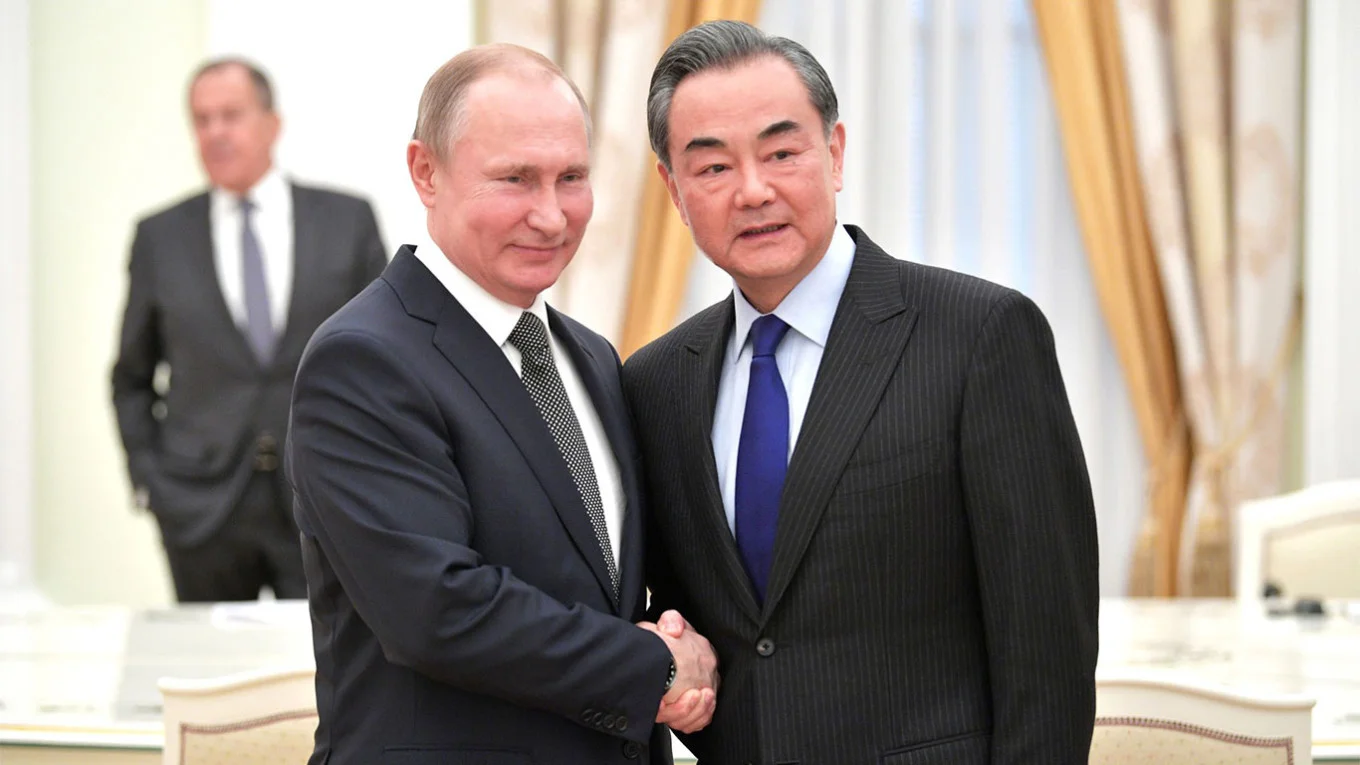
China’s top diplomat travels to Russia amid US-Ukraine tensions and deepening partnership between China and Russia.
As US President Joe Biden touched down in Ukraine to meet with his counterpart Volodymyr Zelensky on Monday, China’s top diplomat, Wang Yi visits Russia.
Wang Yi, who was promoted to Chinese leader Xi Jinping’s top foreign policy adviser last month, is due to arrive in Moscow this week. His visit is the final stop of his eight-day Europe tour. The trip highlights China’s attempted diplomatic balancing act since Russia’s tanks rolled into Ukraine a year ago.
The Kremlin has said it does not “rule out” a meeting between Wang and Russian leader Vladimir Putin. If they do meet, the images of Wang and Putin shaking hands inside the fortified Kremlin will stand in stark contrast to Biden’s open-air stroll with Zelensky through Kyiv. This contrast will be highlighted amid air raid sirens.
The optics of the two trips, taking place just days before the one-year anniversary of the brutal war on Friday, underscore the sharpening of geopolitical fault lines. This contrast is evident as Wang Yi visits Russia.
China-US Contentions
Relations between the US and China continue to plummet, most recently due to the fallout from a suspected Chinese spy balloon that entered US airspace. Meanwhile, China and Russia are as close as ever since their leaders declared a “no-limits” friendship a year ago. This closeness is partly driven by their shared animosity toward the United States.
As the US and its allies reaffirm their support for Ukraine and step up military aid, Beijing’s deepening partnership with Moscow has raised alarms in Western capitals. This concern persists despite China’s public charm offensive in Europe, where it presents itself as a negotiator of peace, as Wang Yi Visits Russia.
At the Munich Security Conference on Saturday, Wang addressed a room of European officials as “dear friends.” He touted China’s commitment to peace while apparently attempting to drive a wedge between Europe and the US.
“We do not add fuel to the fire, and we’re against reaping benefits from this crisis,” Wang said. This statement was a thinly veiled dig at the US. It echoed the propaganda messaging regularly featured on China’s nightly prime-time news program. This messaging claims that the US is intentionally prolonging the war. It suggests that the US is doing so to advance its own geopolitical interests and increase the profits of its arms manufacturers.
Chinese digs towards US
“Some forces might not want to see peace talks to materialize. They don’t care about the life and death of Ukrainians, nor the harm on Europe. They might have strategic goals larger than Ukraine itself. This warfare must not continue,” Wang said.
He urged European officials to think about “what framework should there be to bring lasting peace to Europe, what role should Europe play to manifest its strategic autonomy.”
Wang also announced Beijing’s plan to release its proposition on a “political settlement of the Ukraine crisis” around the first anniversary.
The vague mention of the proposal was met with suspicion from some Western leaders. They are closely watching for any support China might lend to its northern neighbor. This includes any assistance that could help Russia on the battlefield.
“We need more proof that China isn’t working with Russia, and we aren’t seeing that now,” European Commission President Ursula Von der Leyen told CNN Saturday.
Such suspicions are compounded by claims from US officials. They say Beijing is considering stepping up its partnership with Moscow. This includes supplying Russia’s military with “lethal support.”
“We’ve been watching this very closely,” US Secretary of State Antony Blinken told “Face the Nation” on CBS in Munich on Sunday.
“The concern that we have now is based on information we have that they’re considering providing lethal support, and we’ve made very clear to them that that would cause a serious problem for us and in our relationship,” Blinken said.
China blaming US
Responding to the accusations Monday, China’s Foreign Ministry blasted the US for “shoving responsibility, shifting blame and spreading false information.”
“It is the US side, not the Chinese side, that supplies a steady stream of weapons to the battlefield. The US side is not qualified to lecture China, and we would never accept the US dictating or even coercing pressure on Sino-Russian relations,” a ministry spokesperson said at a regular news conference.
“Who is calling for dialogue and peace? And who is handing out knives and encouraging confrontation? The international community can see clearly,” the spokesperson said.
US officials have been concerned enough with the intelligence that they shared it with allies and partners in Munich, according to CNN reporting. In a meeting with Wang on the sidelines of the conference on Saturday, Blinken also raised the issue. He warned Wang about its “implications and consequences,” according to a US readout.
SEE ALSO: https://southasiatimes.org/us-warns-china-on-arming-russia-for-ukraine-war/
Chinese Concerns
If true, the US accusations would mark a major escalation in China’s support for Russia. This would usher in a dangerous and unpredictable new phase in the war itself.
Previously, Beijing had carefully avoided actions that could trigger secondary sanctions. Such sanctions would deal a devastating blow to an economy already hampered by three years of a costly zero-Covid policy.
Though China claimed impartiality in the conflict and no advance knowledge of Russia’s intent, it has refused to condemn Moscow. China has also parroted Kremlin lines that blame NATO for provoking the conflict.
And while Beijing’s pro-Russian rhetoric appears to have softened in recent months, its support for Moscow – when measured by its annual trade, diplomatic engagements and schedule of joint military exercises – has bolstered over the past year.
Chinese officials have often calibrated their narrative to different audiences. Wang may have made many appealing pledges during his Europe tour, but whether they will be translated into a consistent message to be delivered to Putin when the two meet is another question.
Source: CNN