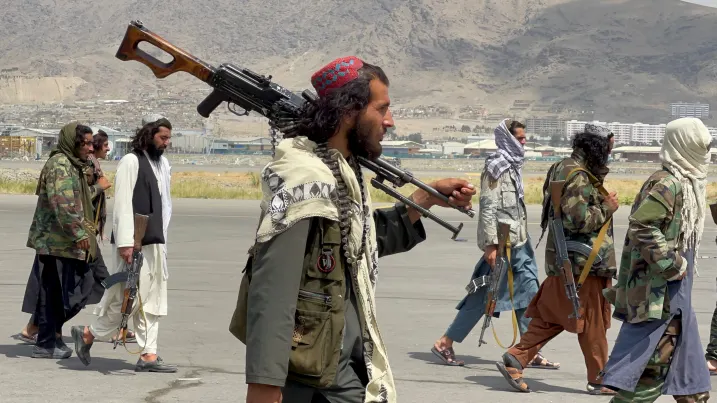
![Bangladesh´s Army arrests 2,500 and recovers 6,000 guns as part of ongoing security operations after August revolution. [Representational Image via AFP]](https://southasiatimes.org/wp-content/uploads/2024/11/1250866_8299370_weapons_akhbar.webp)
DHAKA: Bangladesh´s army said on Wednesday it had arrested 2,500 people and recovered 6,000 guns as it seeks to bolster security since the revolution that ousted ex-leader Sheikh Hasina in August.
Thousands of weapons were looted in the deadly violence during the student-led revolution that toppled Hasina and the immediate chaos after she escaped mass protests and fled to India by helicopter.
More than 3,700 weapons were handed in during an amnesty that ended in early September, with the security forces then launching a weapons sweep to collect the guns.
Colonel Intekhab Haider Khan told reporters that a total of 6,000 illegally-held guns had been collected by Bangladesh´s army, along with 200,000 rounds of ammunition.
“Our operation is still ongoing,” Khan said.
Also See: Bangladesh bans BCL, student wing of Sheikh Hasina’s party
The interim government that took over after Hasina granted the armed forces judicial power, allowing them to engage in day-to-day enforcement activities like the police.
“There has been no directive from the government regarding the army´s withdrawal,” Khan said.
The army rejected reports four people had died in military custody since August, insisting troops were “strictly adhering” to rules. “Should any complaints arise, we will take necessary action,” he said.
This news is sourced from The News and is intended for informational purposes only.

Your trusted source for insightful journalism. Stay informed with our compelling coverage of global affairs, business, technology, and more.

![Indian Christian community faces rising violence while Modi congratulates new Jacobite Catholicos in Lebanon. Rights groups sound alarm. [Image via Reuters]](https://southasiatimes.org/wp-content/uploads/2025/03/deccanherald_2025-02-12_8gxoemcr_file7zbn3w0b8kj1egk2eks4.webp)