IMF to end talks with Pakistan

IMF to end talks with Pakistan

Pakistan expects to conclude IMF staff-level talks soon. This will unlock funds to battle the economic crisis. The fiscal adjustments demanded are likely to fuel record-high inflation.

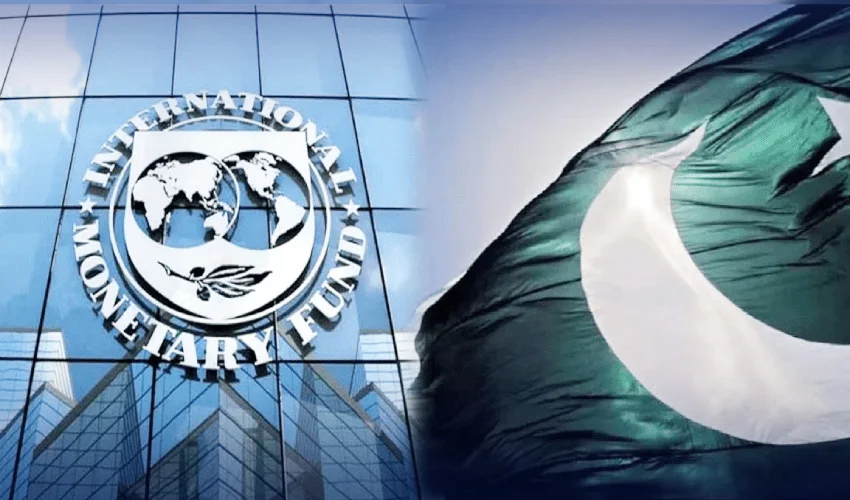
ISLAMABAD: Pakistan expects to conclude talks with the International Monetary Fund over a staff-level agreement as soon as this week. The country’s finance secretary said this is a crucial step toward unlocking funds to battle the economic crisis. The IMF will end its talks with Pakistan.

An IMF mission spent more than a week in Islamabad earlier this month. They discussed a policy framework to allow the release of more than US$1 billion in funding. This funding is part of a stalled US$6.5 billion bailout package, originally approved in 2019. The IMF will end its talks with Pakistan.

However, the mission left without a conclusion.

“The consultations with the IMF are in the final stages. We expect to conclude the consultations soon, even within the week” Hamed Yaqoob Sheikh, the top official in the finance ministry, told Reuters.

The IMF’s local representative didn’t respond to a Reuters request for a comment.

The staff level agreement would need approval from the IMF’s board before the funds can be released.

Since late last year, policy issues have held up the financing package. The IMF has requested a series of fiscal adjustments, including the removal of subsidies, increasing fuel prices, and raising more taxes to bridge a revenue shortfall.

SEE ALSO: https://southasiatimes.org/imf-urges-wealth-redistribution-in-pakistan/

Pakistan has taken steps, such as raising more than 170 billion Pakistani rupees (US$647.62 million) through a supplementary finance bill passed by the parliament on Monday.

Officials say that other measures needed to finalize the agreement include raising interest rates, which already stand at 17 percent. They also need to obtain commitments for more bilateral and multilateral funding.

The IMF funds are critical for the US$350 billion South Asian economy, which is facing a severe balance of payments crisis. The fiscal adjustments demanded by the deal, however, are likely to fuel record high inflation, which hit 27.5 per cent year-on-year in January, analysts say.

Source: CNA

News Desk

Your trusted source for insightful journalism. Stay informed with our compelling coverage of global affairs, business, technology, and more.
Recent

AQAP’s Threat to China: Pathways Through Al-Qaeda’s Global Network

AQAP’s Threat to China: Pathways Through Al-Qaeda’s Global Network

AQAP’s threat against China marks a shift from rhetoric to execution, rooted in Al-Qaeda’s decentralized global architecture. By using Afghanistan as a coordination hub and relying on AQIS, TTP, and Uyghur militants of the Turkistan Islamic Party as local enablers, the threat is designed to be carried out far beyond Yemen. From CPEC projects in Pakistan to Chinese interests in Central Asia and Africa, the networked nature of Al-Qaeda allows a geographically dispersed yet strategically aligned campaign against Beijing.

Read More »
The Enduring Consequences of America’s Exit from Afghanistan

The Enduring Consequences of America’s Exit from Afghanistan

The 2021 US withdrawal from Afghanistan was more than the end of a long war, it was a poorly executed exit that triggered the rapid collapse of the Afghan state. The fall of Kabul, the Abbey Gate attack, and the return of militant groups exposed serious gaps in planning and coordination.

Read More »
The Afghan Crucible

The Afghan Crucible

Recent reporting underscores Afghanistan’s transformation into a strategic hub for transnational jihadist networks. Far from being a localized security problem, the Afghan landscape now functions as an ideological, logistical, and digital anchor linking extremist affiliates across Africa, Southeast Asia, and beyond, signaling the collapse of regional containment and the rise of a globalized threat architecture.

Read More »
Economic Statecraft and the New Geography of Power in Regional Politics

Economic Statecraft and the New Geography of Power in Regional Politics

Strategic competition has moved beyond decisive wars toward a subtler synthesis of economic leverage, proxy networks, and calibrated force. Infrastructure, finance, and trade routes now function as instruments of power, quietly reshaping regional orders while preserving the façade of restraint. In this environment, security is no longer confined to the battlefield but embedded in supply chains, data networks, and development choices, forcing states to rethink deterrence, sovereignty, and resilience.

Read More »
The Manufacturing of a False Equivalence

The Manufacturing of a False Equivalence

As scrutiny mounts over the Taliban’s tolerance of TTP sanctuaries, Kabul has attempted to deflect blame by alleging that ISIS-K operates from Pakistan. This false equivalence ignores the historical origins of ISIS-K in eastern Afghanistan, its sustained campaign of violence against Pakistan, and verified intelligence showing that the group’s operational depth remains rooted inside Afghan territory.

Read More »