Bangladesh opposition newspaper halted

Bangladesh opposition newspaper halted

Fears of media freedom crackdown rise in Bangladesh under Prime Minister Sheikh Hasina’s government.

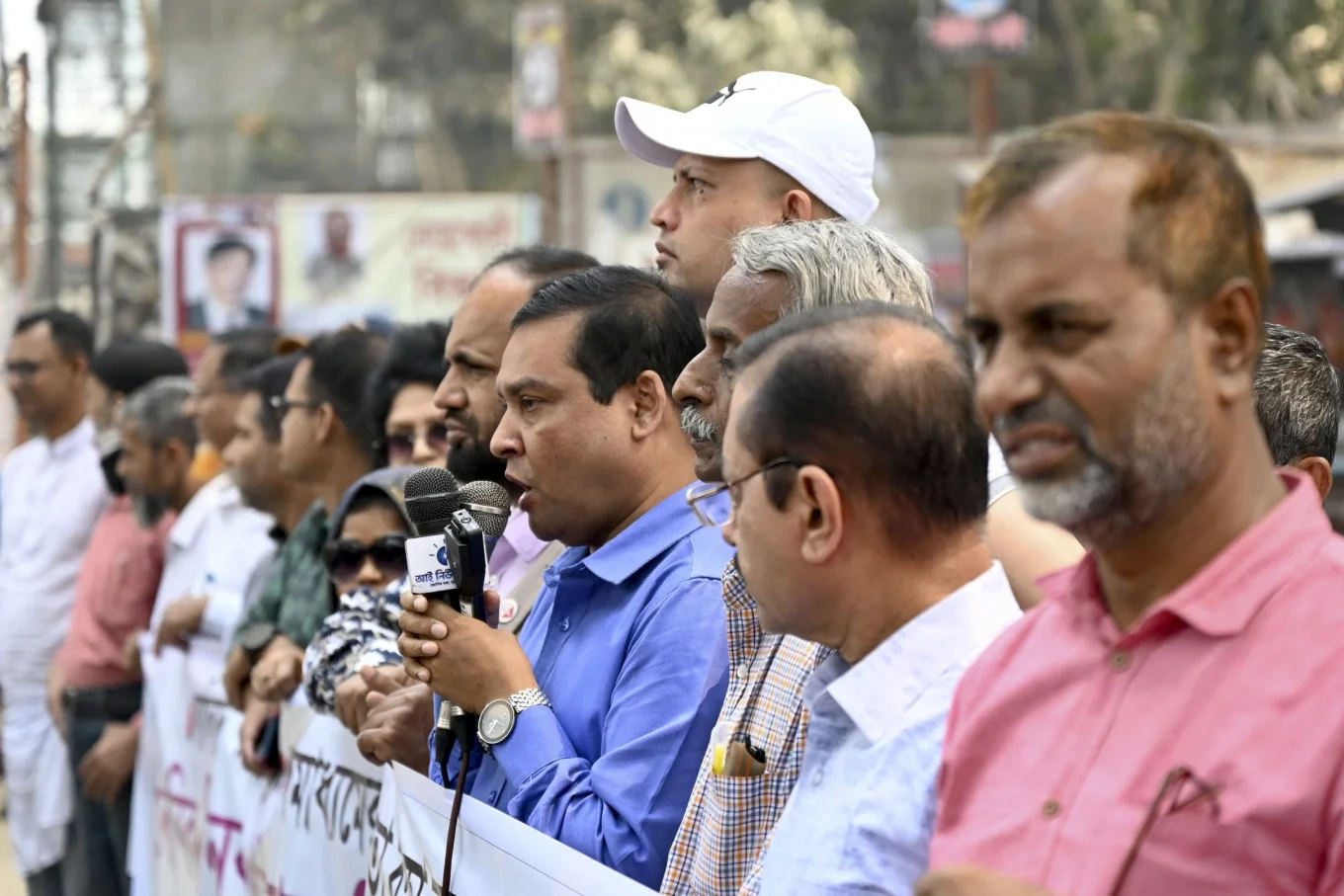
Campaigners and foreign governments, including the United States, have long expressed worries about efforts by Prime Minister Sheikh Hasina to silence criticism. They also express concerns about what they see as creeping authoritarianism. This comes as the Bangladesh opposition newspaper has halted its operations.

The Dainik Dinkal, a broadsheet Bengali-language newspaper, has been a vital voice of the Bangladesh Nationalist Party (BNP). It has served this role for more than three decades. It employs hundreds of journalists and press workers.

The news stories that pro-government businessmen rarely cover in mainstream newspapers are included.

This includes the frequent arrests of BNP activists. The party also claims that authorities have filed thousands of fake cases against its supporters.

SEE ALSO: https://southasiatimes.org/bangladesh-under-fire-for-hr-violations-after-row-at-a-juvenile-development-centers/

The newspaper said that Dhaka district authorities ordered the shutdown on December 26. However, it continued to publish after making an appeal to the Press Council, which is headed by a top high court judge.

“The council rejected our appeal yesterday (Sunday), upholding the district magistrate’s order to stop our publication,” Shamsur Rahman Shimul Biswas, managing editor of the newspaper, said, as Bangladesh opposition newspaper halted.

AFP obtained a copy of the order. The order stated that authorities canceled the newspaper’s printing permit. This action followed the newspaper’s violation of the country’s printing and publication laws.

The council said the paper’s publisher, Tarique Rahman — the acting chief of BNP — was a convicted criminal and was living abroad without handing over his job to another person.

Source: Dawn News

News Desk

Your trusted source for insightful journalism. Stay informed with our compelling coverage of global affairs, business, technology, and more.
Recent

EU–Pakistan Business Forum 2026 signals a shift from GSP+ trade reliance to an investment-led, sustainable partnership under EU Global Gateway.

EU–Pakistan Business Forum 2026

The EU–Pakistan Business Forum 2026 marks a strategic pivot toward diversified, ESG-driven investment, de-risked finance, and regulatory alignment beyond GSP+ trade ties.

Read More »
Disinformation in Pakistan exploits social media to manipulate perception, undermine the judiciary, and destabilize governance.

Disinformation, Digital Propaganda, and the Erosion of the Rule of Law

While online narratives often claim to expose corruption or political repression, coordinated digital propaganda masks a strategic effort to delegitimize state institutions. This commentary examines the interplay of monetized disinformation, coordinated amplification, and selective framing, revealing how Pakistan’s digital ecosystem substitutes outrage for evidence and destabilizes governance.

Read More »
As instability spreads from Afghanistan’s north, Tajikistan faces renewed militant pressure, exposing the limits of regional security guarantees and Taliban governance.

The Return of Insurgency in Central Asia

A series of cross-border incidents along the Afghanistan–Tajikistan frontier has raised fears of a renewed insurgent threat in Central Asia. As militant networks regroup in northern Afghanistan, regional governments are questioning long-held assumptions about Taliban governance, Russian security guarantees and the durability of the post-Soviet order.

Read More »
Is an Islamic NATO emerging? Pakistan, Turkey, and Saudi Arabia explore a trilateral defense pact reshaping Middle East and South Asian security.

Toward an Islamic NATO?

In a rapidly fragmenting global order, Pakistan, Turkey, and Saudi Arabia are exploring a trilateral defense arrangement that could redefine regional security architectures. Often dubbed an Islamic NATO, the proposed pact reflects a broader shift by middle powers toward strategic autonomy as US security guarantees wane. This convergence signals the merging of Middle Eastern and South Asian strategic theaters into a single geopolitical map.

Read More »