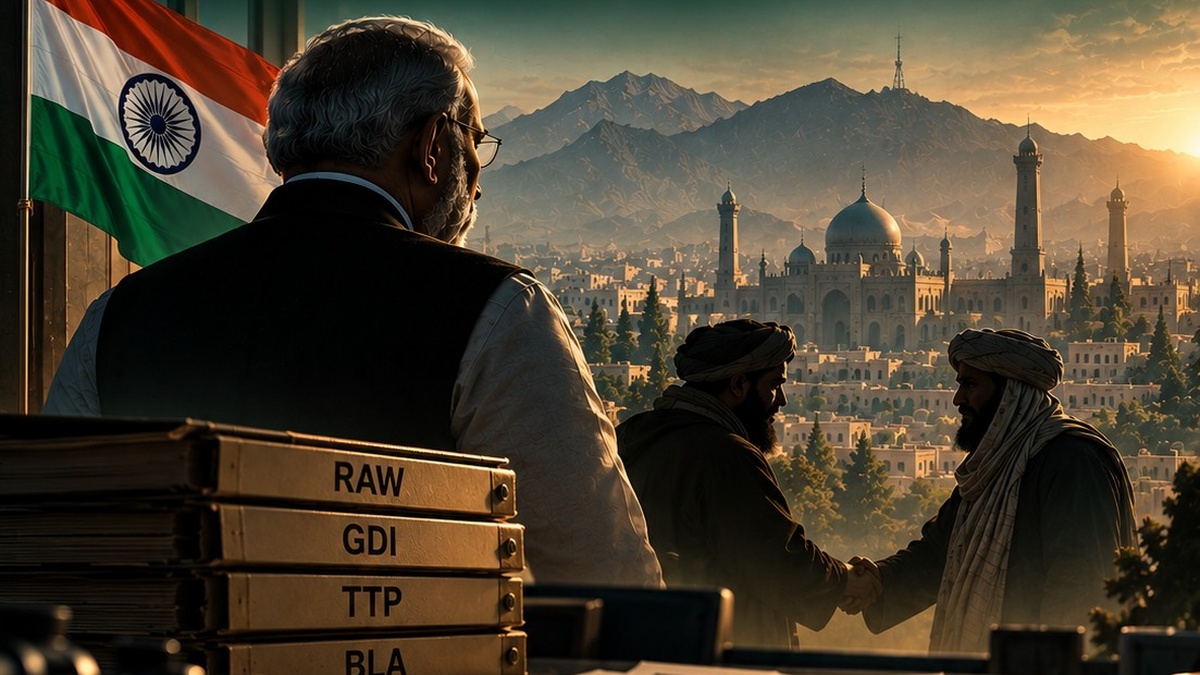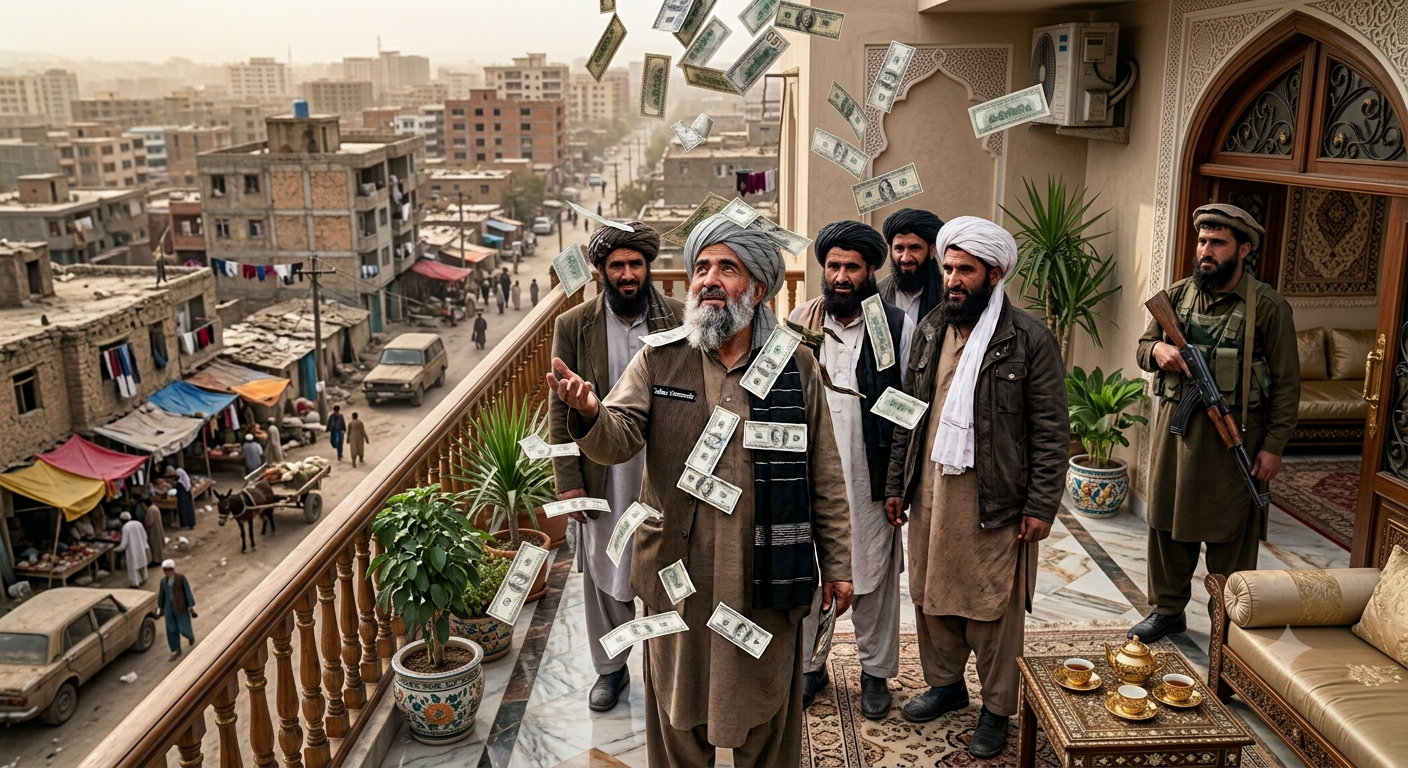
Nearly five years into Taliban rule, one uncomfortable fact keeps surfacing in official audits and UN reports. The men who run Afghanistan have found ways to profit from the very aid system designed to bypass them.
They have used the breathing room it buys to entrench their grip, indoctrinate a generation, and let the country become a staging ground for militancy across the region.
The paper trail is not speculation. SIGAR, the U.S. watchdog that audited American spending in Afghanistan until its 2026 closure, documented that U.S. implementing partners paid at least $10.9 million directly to the Taliban since 2021 through taxes, fees, and outright extortion.
More significantly, SIGAR found that bulk dollar shipments meant to stabilize the economy pass through private banks that buy currency from the Taliban run central bank, letting the regime accumulate hard currency it never has to justify.
Special Inspector General John Sopko put it bluntly: most cash aid moving through the UN system originates with American taxpayers and ends up benefiting a group Washington itself designates a terrorist organization.
What has the leadership done with the breathing room this money buys? Not build hospitals or roads.
Read more: SIGAR Confirms It, Washington Is Funding an Emirate That Exports Terrorism Straight Into Pakistan
Independent assessments describe an administration stocked with loyalists rather than technocrats, most holding only basic religious schooling, presiding over a country where access to health care, water, and employment has actually deteriorated. Girls remain barred from school past sixth grade. The International Criminal Court issued arrest warrants in July 2025 for Taliban leaders over the persecution of Afghan women, a policy choice, not a resource constraint.
Where Taliban leadership has invested heavily is elsewhere: control. Afghanistan’s madrasa network has expanded to more than 23,000 institutions since 2021, according to regional analysts, with food aid, employment, and services increasingly conditioned on families sending children into a curriculum built around loyalty and jihad rather than literacy or math.
The UN’s own sanctions monitors describe these schools operating in eastern provinces as places where al-Qaeda affiliates train children to fight. That is not a side effect of poverty. It’s policy, set from the top by supreme leader Hibatullah Akhundzada, who by multiple accounts rules from Kandahar through a small circle of clerics, bypassing his own cabinet on decisions over weapons distribution and security forces.
The regional fallout of this leadership’s choices is now undeniable. The UN’s Analytical Support and Sanctions Monitoring Team reported in December 2025 that the Taliban continues sheltering al-Qaeda and the Tehreek-e-Taliban Pakistan, estimating roughly 6,000 TTP fighters based in Afghan territory and linking more than 600 TTP attacks inside Pakistan in 2025 alone to sanctuary the Taliban provides.
Islamabad’s retaliatory strikes and border closures have since spiraled into open cross-border fighting in early 2026, a conflict Taliban leadership could defuse by acting on its own repeated promises, made under the 2020 Doha Agreement, to deny safe haven to transnational militants. It has not done so. The 2022 U.S. strike that killed al-Qaeda’s Ayman al-Zawahiri inside a Kabul house tied to the Haqqani network, whose leaders hold cabinet posts, made the nature of that promise clear.
None of this has cost the leadership anything at home. While ordinary Afghans face a currency squeezed by mismanagement and a governing class with no accountability to voters, courts, or press, the men at the top have kept the aid pipeline open, kept the central bank under their control, and kept the security services they need to suppress dissent, all while contributing nothing resembling a functioning state in return.
It’s worth noting the picture inside Taliban ranks isn’t monolithic. Reported friction between Akhundzada’s hardline faction and more pragmatic ministers in Kabul, including Interior Minister Sirajuddin Haqqani, suggests not all Taliban officials favor the isolationist, safe-haven-friendly approach that international monitors describe.
Whether that internal rift ever produces a genuine break with groups like al-Qaeda and the TTP, rather than simply a dispute over how to manage relations with a wary outside world, remains an open and contested question among Afghanistan watchers.

SAT Commentaries, a collection of insightful social media threads on current events and social issues, featuring diverse perspectives from various authors.