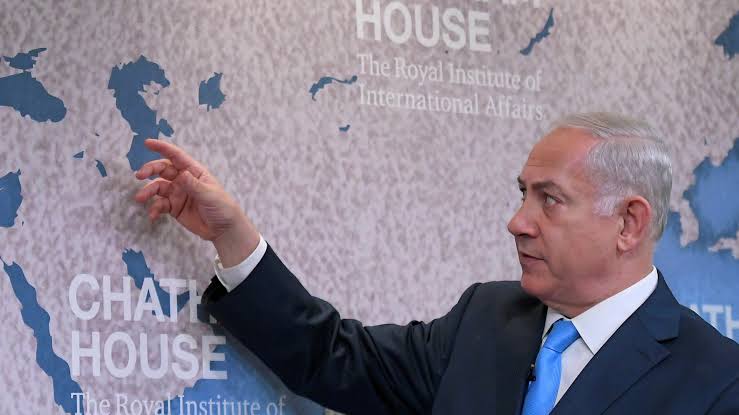
The idea of an Israel extending beyond its internationally recognized borders did not originate in October 2023. It has existed for decades within Revisionist Zionist thought, carried forward by settler movements and religious nationalist currents that never abandoned the vision of sovereignty across the entire historic Land of Israel. What October 2023 provided was not a new ambition but a new opening, a casus belli that Israeli hardliners used to pursue an old objective with far less restraint.
The trajectory that followed makes the underlying logic difficult to miss. Gaza’s campaign expanded well past a response to Hamas, with Israeli political figures openly floating permanent annexation and the relocation of Palestinians out of the territory, while settlement activity in the West Bank continued to raise the possibility that annexation would not stop at Gaza’s borders.
Lebanon followed a similar arc, framed publicly as counterterrorism while Israeli forces expanded operations across the border and occupied territory in the south. Syria offered the clearest illustration of the method.
Once Bashar al-Assad’s government collapsed, Israel carried out hundreds of airstrikes against what remained of Syria’s military infrastructure and moved forces into the south, leaving Damascus with neither the capacity to rebuild nor the leverage to negotiate as a sovereign state. This was not defensive maneuvering. It was expansion into a vacuum that Israel’s own campaign had created.
By 2025 and into 2026, the pattern extended to Iran. Israel framed its June 2025 campaign around Iran’s nuclear program and secured direct US military participation, then pushed for a second, larger campaign in February 2026.
Washington’s objectives in that campaign remained narrow. Israel’s did not. Israeli conduct throughout pointed toward a broader regional war rather than a contained strike on nuclear infrastructure, with expectations that Kurdish groups would open a second front against Iran and pull Türkiye into confrontation along its southern border, that fighting in Lebanon would intensify, and that the Strait of Hormuz, the corridor carrying roughly one sixth of global oil supply, would become a flashpoint serious enough to draw Gulf states into direct war with Tehran.
The calculation behind this was explicit even if never stated outright: a region convulsed by war among its major Muslim states would leave enough chaos for Israel to consolidate what it had already taken and expand further into what came apart.
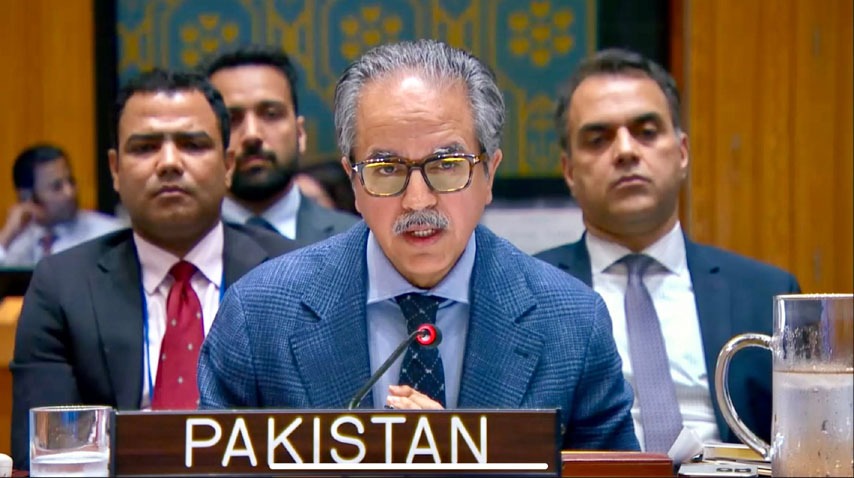
This is the point at which the trajectory breaks, and it breaks because of a deliberate set of decisions made in Islamabad rather than any Israeli miscalculation. Pakistan identified the strategic logic behind the escalation early and moved to deny it the conditions it needed. Working closely with Saudi Arabia, Islamabad encouraged Riyadh to stay out of direct military involvement even after Iranian strikes hit Saudi territory, a restraint that in turn kept smaller Gulf Cooperation Council states from escalating alongside Riyadh. Pakistan then joined Saudi Arabia, Qatar and Türkiye in an active diplomatic push that kept the crisis from widening into full regional war, with all four states becoming the primary actors managing de-escalation at the moment it mattered most.
Pakistan’s position in this effort was not incidental. Islamabad held a Strategic Mutual Defence Agreement with Riyadh while maintaining decades of working trust with Tehran, a combination no other regional actor could claim. That dual relationship let Pakistan publicly condemn the strikes on Iran while privately assuring Iranian leadership that Saudi territory would not be used to support further attacks, a position that gave both sides room to step back without appearing to concede ground.
The diplomatic outcome followed directly from that positioning. On March 29, Pakistan hosted a quadrilateral meeting in Islamabad with the foreign ministers of Türkiye, Saudi Arabia, Egypt and Pakistan, restoring diplomatic engagement to a crisis that had been running on military momentum. Under the direction of Chief of Defence Forces General Asim Munir and Prime Minister Shehbaz Sharif, Pakistan secured a ceasefire and proposed a 45-day roadmap built around an immediate halt to hostilities followed by the phased reopening of the Strait of Hormuz. Washington accepted the ceasefire before its own escalation deadline expired, and the resulting Islamabad Memorandum of Understanding helped preserve Lebanese sovereignty and reduce the likelihood of further territorial expansion beyond what had already occurred.
Pakistan’s clearest signal came not during the ceasefire negotiations but afterward, when Washington proposed folding Saudi Arabia, Qatar, Türkiye, Egypt, Jordan and Pakistan into an expanded Abraham Accords framework as part of the broader post-war settlement. Pakistan rejected the proposal outright, holding its position on Palestine even as normalization pressure was applied directly in the aftermath of a ceasefire it had helped negotiate.
The strategic result of this diplomatic sequence was a more durable understanding between Iran and the Gulf Cooperation Council states, the exact outcome Israeli hardliners had been working to prevent. Their expectation had been a Syria-style collapse repeated across multiple states simultaneously, chaos broad enough to make territorial consolidation look incidental rather than deliberate. That collapse did not happen, and it did not happen specifically because Pakistan, Saudi Arabia, Qatar and Türkiye kept diplomatic channels open at the exact moment the region stood closest to losing them.
None of this reverses what already occurred in Gaza, Lebanon or Syria. But it does mark where the expansionist trajectory stopped rather than continued, and it identifies who stopped it. The Greater Israel project depended on regional collapse to function. Pakistan’s diplomacy, backed by Riyadh, Doha and Ankara, denied it that collapse.

Your go-to editorial hub for policy perspectives and informed analysis on pressing regional and global issues.