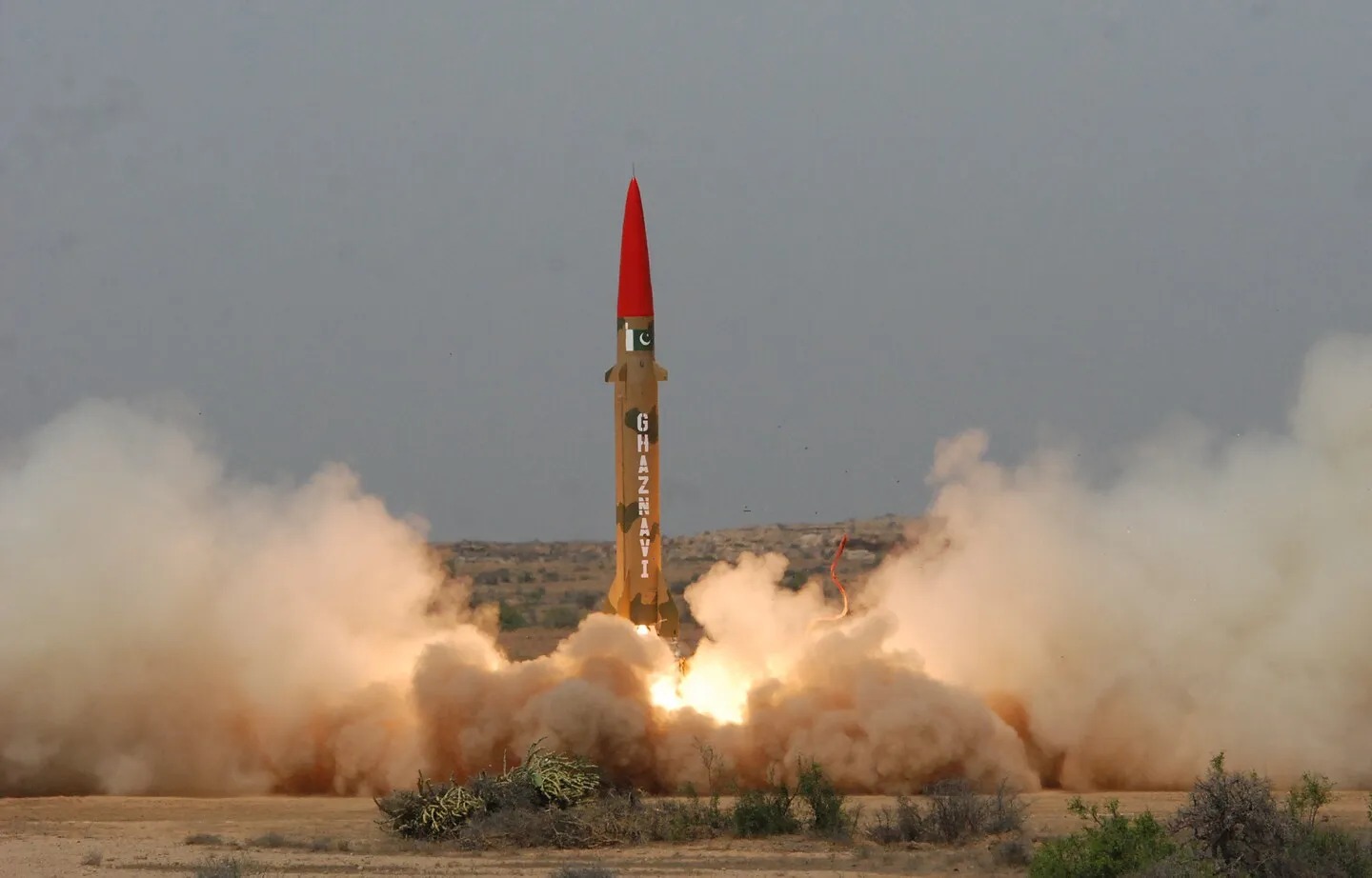
Twenty-eight years ago, Pakistan responded to India’s five nuclear tests of 11 and 13 May 1998 with a strategic and far-sighted decision. India’s nuclear ambitions were already demonstrated by its 1974 nuclear test. Through six nuclear tests conducted on 28 and 30 May 1998, Pakistan restored the regional balance of power and ensured the credibility of deterrence in South Asia. History indicates that Pakistan only reluctantly pursued nuclear capabilities after India’s nuclear test threatened Pakistan’s existence and compelled South Asia to follow suit. Pakistan’s choice to become nuclear was motivated only by its justifiable security concerns, which stemmed from a nuclear India that was becoming more aggressive in policy and posture. The strategic balance in South Asia was restored, and Pakistan’s nuclear tests demonstrated its determination to resist coercion, extortion, and tyranny.
In this context, Youm-e-Takbeer in Pakistan’s strategic history is a significant milestone and a source of gratitude for the entire nation to acknowledge the efforts and sacrifices of the generations of leaders, scientists, engineers, technicians, security personnel, strategists, and diplomats whose commitment, unwavering effort, and intelligence enabled them to complete this difficult task in the face of overwhelming challenges at that time. In this way, the Youm-e-Takbeer is a moment to commemorate the nation’s strength, resiliency, and independence, as well as to renew the resolve to never back down from defending the country’s interests in the face of any unfavorable situation.
Over the past 28 years, Pakistan’s stance and strategy have shown several notable characteristics. First, in spite of India’s expanding capabilities and greater external backing for its military strength, Pakistan has retained a strong operationalized deterrent capacity. Second, Pakistan has established a perfect nuclear security and safety system. Third, the international community has consistently reaffirmed the image of Pakistan as a responsible nuclear power. Fourth, Pakistan has strengthened the use of nuclear technology for peaceful purposes to support the achievement of the United Nations Sustainable Development Goals (SDGs), including healthcare, agriculture, energy, water resource management, and socio-economic development. Five, Pakistan has actively undertaken nuclear diplomacy to present its nuclear capacity in an accurate perspective, combat misinformation and defamation, and combat prejudice and unfair treatment of nuclear non-proliferation concerns. Pakistan’s robust nuclear safety and security command control framework, managed by the Pakistan Nuclear Regulatory Authority (PNRA), aligns national protocols with International Atomic Energy Agency (IAEA) guidelines. Pakistan advocates for participation in the Nuclear Suppliers Group (NSG) on an equal basis with other non-NPT states, emphasizing a non-discriminatory and rules-based international order.
Today, strong geopolitical and technological factors are shaping regional dynamics in South Asia, affecting options for response and deterrence. Among other factors, these include India’s advancement in missile technology, such as the deployment of MIRVs, the deployment of Ballistic Missile Defense systems, the deployment of nuclear weapons at sea, an increase in missile tests longer than 5,000 kilometers, canisterized missiles, and a shift toward a counter-force, launch-ready posture. This shows the diversion from the principles of credible minimum deterrence by India and effectively reveals aggressive plans and aspirations for force projection also outside of South Asia. In order to maintain the credibility of its deterrent, Pakistan anticipated these changes and implemented the appropriate countermeasures.
In the aftermath of the Pahalgam, India’s recent military escalation against Pakistan in May 2025 was yet another meaningless attempt motivated by New Delhi’s perilously dangerous assumption of space for limited conventional war below the nuclear threshold. Pakistan responded with restraint and precision, yet this attempt also met the same end as the others. The international community was extremely concerned that the conflict might turn nuclear, even though Pakistan was always certain that it could deter India in the conventional domain.
In the military, diplomatic, perceptions, and information, Pakistan maintained operational effectiveness across multiple domains. It is evident that India has lost far more than six top-tier combat aircraft in the four-day conflict with Pakistan in May 2025; its leaders have also lost any lingering sense of hegemony and the nation’s international credibility. This conflict highlighted the BJP’s electoral considerations, India’s long-standing hegemonic aspirations, and the Hindutva ideology, forcing the New Delhi leadership to engage in even more strategic miscalculations. Pakistan, for its part, has repeatedly stated that it will never permit an attack below the nuclear threshold, and its Full-Spectrum Deterrence is specifically designed to close this apparent gap, nestled within the Credible Minimum Deterrence policy.
It is important to remember that deterrence is a philosophy of peace through strength, stability, and accountability. Stabilizing the ceasefire, establishing a regime of restraint and crisis management, and settling the long-standing Jammu & Kashmir dispute, which continues to be the principal source of instability in South Asia’s nuclearized environment, are all essential for peace in South Asia. Pakistan, as a responsible nuclear power, reiterates its commitment to making decisions with total strategic clarity as the security environment continues to evolve. Unilateral restraint alone cannot preserve Pakistan’s desire to maintain stability in South Asia, as it requires mutual recognition of red lines, credible deterrence postures, and a shared understanding that escalation, once initiated, is difficult to control.

From Chagai-I to Today: Pakistan’s Enduring Commitment to Deterrence
Twenty-eight years ago, Pakistan responded to India’s five nuclear tests of 11 and 13 May 1998 with a strategic and far-sighted decision. India’s nuclear ambitions were already demonstrated by its 1974 nuclear test. Through six nuclear tests conducted on 28 and 30 May 1998, Pakistan restored the regional balance of power and ensured the credibility of deterrence in South Asia. History indicates that Pakistan only reluctantly pursued nuclear capabilities after India’s nuclear test threatened Pakistan’s existence and compelled South Asia to follow suit. Pakistan’s choice to become nuclear was motivated only by its justifiable security concerns, which stemmed from a nuclear India that was becoming more aggressive in policy and posture. The strategic balance in South Asia was restored, and Pakistan’s nuclear tests demonstrated its determination to resist coercion, extortion, and tyranny.
In this context, Youm-e-Takbeer in Pakistan’s strategic history is a significant milestone and a source of gratitude for the entire nation to acknowledge the efforts and sacrifices of the generations of leaders, scientists, engineers, technicians, security personnel, strategists, and diplomats whose commitment, unwavering effort, and intelligence enabled them to complete this difficult task in the face of overwhelming challenges at that time. In this way, the Youm-e-Takbeer is a moment to commemorate the nation’s strength, resiliency, and independence, as well as to renew the resolve to never back down from defending the country’s interests in the face of any unfavorable situation.
Over the past 28 years, Pakistan’s stance and strategy have shown several notable characteristics. First, in spite of India’s expanding capabilities and greater external backing for its military strength, Pakistan has retained a strong operationalized deterrent capacity. Second, Pakistan has established a perfect nuclear security and safety system. Third, the international community has consistently reaffirmed the image of Pakistan as a responsible nuclear power. Fourth, Pakistan has strengthened the use of nuclear technology for peaceful purposes to support the achievement of the United Nations Sustainable Development Goals (SDGs), including healthcare, agriculture, energy, water resource management, and socio-economic development. Five, Pakistan has actively undertaken nuclear diplomacy to present its nuclear capacity in an accurate perspective, combat misinformation and defamation, and combat prejudice and unfair treatment of nuclear non-proliferation concerns. Pakistan’s robust nuclear safety and security command control framework, managed by the Pakistan Nuclear Regulatory Authority (PNRA), aligns national protocols with International Atomic Energy Agency (IAEA) guidelines. Pakistan advocates for participation in the Nuclear Suppliers Group (NSG) on an equal basis with other non-NPT states, emphasizing a non-discriminatory and rules-based international order.
Today, strong geopolitical and technological factors are shaping regional dynamics in South Asia, affecting options for response and deterrence. Among other factors, these include India’s advancement in missile technology, such as the deployment of MIRVs, the deployment of Ballistic Missile Defense systems, the deployment of nuclear weapons at sea, an increase in missile tests longer than 5,000 kilometers, canisterized missiles, and a shift toward a counter-force, launch-ready posture. This shows the diversion from the principles of credible minimum deterrence by India and effectively reveals aggressive plans and aspirations for force projection also outside of South Asia. In order to maintain the credibility of its deterrent, Pakistan anticipated these changes and implemented the appropriate countermeasures.
In the aftermath of the Pahalgam, India’s recent military escalation against Pakistan in May 2025 was yet another meaningless attempt motivated by New Delhi’s perilously dangerous assumption of space for limited conventional war below the nuclear threshold. Pakistan responded with restraint and precision, yet this attempt also met the same end as the others. The international community was extremely concerned that the conflict might turn nuclear, even though Pakistan was always certain that it could deter India in the conventional domain.
In the military, diplomatic, perceptions, and information, Pakistan maintained operational effectiveness across multiple domains. It is evident that India has lost far more than six top-tier combat aircraft in the four-day conflict with Pakistan in May 2025; its leaders have also lost any lingering sense of hegemony and the nation’s international credibility. This conflict highlighted the BJP’s electoral considerations, India’s long-standing hegemonic aspirations, and the Hindutva ideology, forcing the New Delhi leadership to engage in even more strategic miscalculations. Pakistan, for its part, has repeatedly stated that it will never permit an attack below the nuclear threshold, and its Full-Spectrum Deterrence is specifically designed to close this apparent gap, nestled within the Credible Minimum Deterrence policy.
It is important to remember that deterrence is a philosophy of peace through strength, stability, and accountability. Stabilizing the ceasefire, establishing a regime of restraint and crisis management, and settling the long-standing Jammu & Kashmir dispute, which continues to be the principal source of instability in South Asia’s nuclearized environment, are all essential for peace in South Asia. Pakistan, as a responsible nuclear power, reiterates its commitment to making decisions with total strategic clarity as the security environment continues to evolve. Unilateral restraint alone cannot preserve Pakistan’s desire to maintain stability in South Asia, as it requires mutual recognition of red lines, credible deterrence postures, and a shared understanding that escalation, once initiated, is difficult to control.
Nazia Sheikh
Nazia Sheikh
Nazia Sheikh is a Research Officer at Centre for International Strategic Studies, AJK. She is an MPhil scholar in international relations from international Islamic university Islamabad.
Recent
From Chagai-I to Today: Pakistan’s Enduring Commitment to Deterrence
Twenty-eight years ago, Pakistan responded to India’s five nuclear tests of 11 and 13 May 1998 with a strategic and far-sighted decision. India’s nuclear ambitions
Sar-e Pol Killings Expose Deepening Crisis of Impunity and Armed Power Networks
When guns speak louder than law, justice becomes the first casualty. The daylight killing of four unarmed young men in Sar-e Pol, carried out by
Taliban’s Child Marriage Policies Deepen Afghanistan’s Isolation
The Taliban’s reported move to formalize or permit child marriages in Afghanistan has triggered strong international condemnation, with British Minister of State Hamish Falconer calling
From Atoms for Peace to Nuclear Deterrence: The Evolution of Pakistan’s Nuclear Program
“If India builds the bomb, we will eat grass or leaves, even go hungry, but we will get one of our own. We have no
Terrorism is no longer met with silence
The walls of Khyber Pakhtunkhwa are speaking, and their message is louder than fear. From Peshawar and Kohat Road to Bara and Khyber districts, public