The writ of economic gravity spares no nation, and Pakistan finds itself caught in a veritable maelstrom of fiscal pressures that have pushed fuel prices to stratospheric heights. With diesel commanding a staggering Rs. 522 per litre and petrol hovering at an eye-watering Rs. 380 per litre, the common Pakistani finds himself caught between the devil and the deep blue sea. These astronomical figures represent not merely statistical anomalies but a fundamental restructuring of household economics, where transportation costs have metamorphosed from a routine expenditure into a crushing burden that threatens to upend the fragile equilibrium of middle-class existence.
To its credit, the federal government has not remained entirely impervious to the plight of its citizenry. In a bid to ameliorate the hardship, Islamabad has extended a subsidy of Rs. 100 per litre on petrol, a gesture that, while commendable. The Punjab government, not to be outdone in the race for populist measures, has further sweetened the pot by offering an additional Rs. 100 discount to motorcyclists on 20 litres per month. Moreover, the provincial administration has rolled out an ambitious programme of free public transport services encompassing Metro Buses, the Orange Line Train, Speedo Buses, and the newly introduced Green Electro Buses across the length and breadth of Punjab.
On paper, these measures appear to constitute a comprehensive safety net, a testament to the government’s commitment to shielding the vulnerable from the vagaries of global energy markets. Yet, as the old adage goes, the road to hell is paved with good intentions. A closer examination of the ground realities reveals a far more nuanced and troubling picture—one that exposes the unintended consequences of well-meaning policies that have inadvertently created a double jeopardy for the most vulnerable segment of the transport ecosystem: the private transporters, particularly the rickshaw and Qingqi drivers who eke out a precarious living at the margins of the formal economy.
The predicament of these private transporters can best be understood through the lens of what economists term a ‘perfect storm’—a confluence of adverse factors that compound each other to create a crisis of existential proportions. These individuals, who constitute the backbone of Pakistan’s informal transport sector, find themselves squeezed from two directions simultaneously, caught in a pincer movement that threatens to drive them out of business entirely.
The first prong of this assault comes in the form of the fuel price increases themselves. To put this in perspective, a rickshaw driver typically earns between Rs. 1,500 and Rs. 2,500 per day, depending on factors such as location, weather conditions, and seasonal demand. Under the current pricing regime, fuel costs alone can devour anywhere from 60% to 100% of their gross income, leaving virtually nothing for vehicle maintenance, family expenses, or savings.
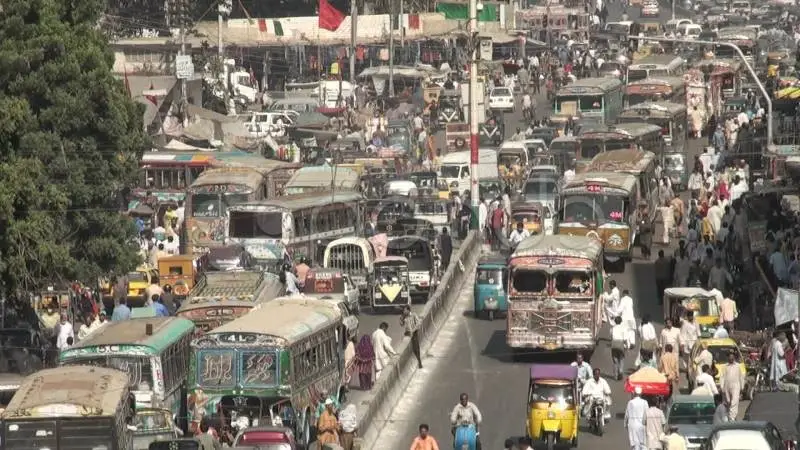
The second, and perhaps more insidious, blow comes from the government’s free transport initiatives. While these programmes have undoubtedly provided relief to commuters, they have simultaneously triggered a mass exodus of passengers from private transport options to the subsidised government alternatives. The Metro Bus systems in Lahore, Rawalpindi, and Multan; the Orange Line Train snaking through Lahore’s urban sprawl; the ubiquitous Speedo Buses penetrating previously underserved neighbourhoods; and the environmentally conscious Green Electro Buses—all have become magnets for passengers who would otherwise have patronised rickshaws and Qingqis.
To truly comprehend the magnitude of this crisis, one must look beyond the cold calculus of economics and consider the human dimension. The vast majority of rickshaw and Qingqi drivers hail from impoverished backgrounds, having migrated from rural areas in search of economic opportunity. Many are the sole breadwinners for extended families, supporting not only their immediate household but also ageing parents, younger siblings, and in some cases, relatives who have fallen on hard times. They inhabit a twilight zone of the economy, neither fully integrated into the formal sector nor entitled to the protections and benefits that accrue to regular employment.
These individuals live a hand-to-mouth existence, with no safety net to cushion them against economic shocks. They do not have access to health insurance, pension schemes, or unemployment benefits. Their vehicles, often purchased through informal credit arrangements at usurious interest rates, represent their only significant asset—and their only means of livelihood. When passenger numbers dry up and fuel costs soar, they have no recourse, no alternative source of income, and no institutional support to see them through the lean times.
What, then, is the way forward? How can the government reconcile its legitimate desire to provide affordable transport options for the masses with the equally compelling need to protect the livelihoods of private transporters? The answer lies in adopting a more holistic, integrated approach to transport policy—one that recognises the interdependencies between different segments of the transport sector and seeks to create a more equitable distribution of costs and benefits.
The fuel price crisis and its cascading effects on Pakistan’s transport sector serve as a sobering reminder of the complexities of economic policymaking in a developing country context. Well-intentioned interventions can have far-reaching consequences that extend well beyond their intended targets, affecting vulnerable populations in ways that policymakers may not have anticipated. The challenge for the government is to strike a delicate balance—providing relief to consumers while protecting the livelihoods of those who depend on the transport sector for their survival.
The views expressed in this article are the author’s own. They do not necessarily reflect the editorial policy of the South Asia Times.

The writer holds a Ph.D. degree and works as an Assistant Director in the Water Resources Zone of the Punjab Irrigation Department.