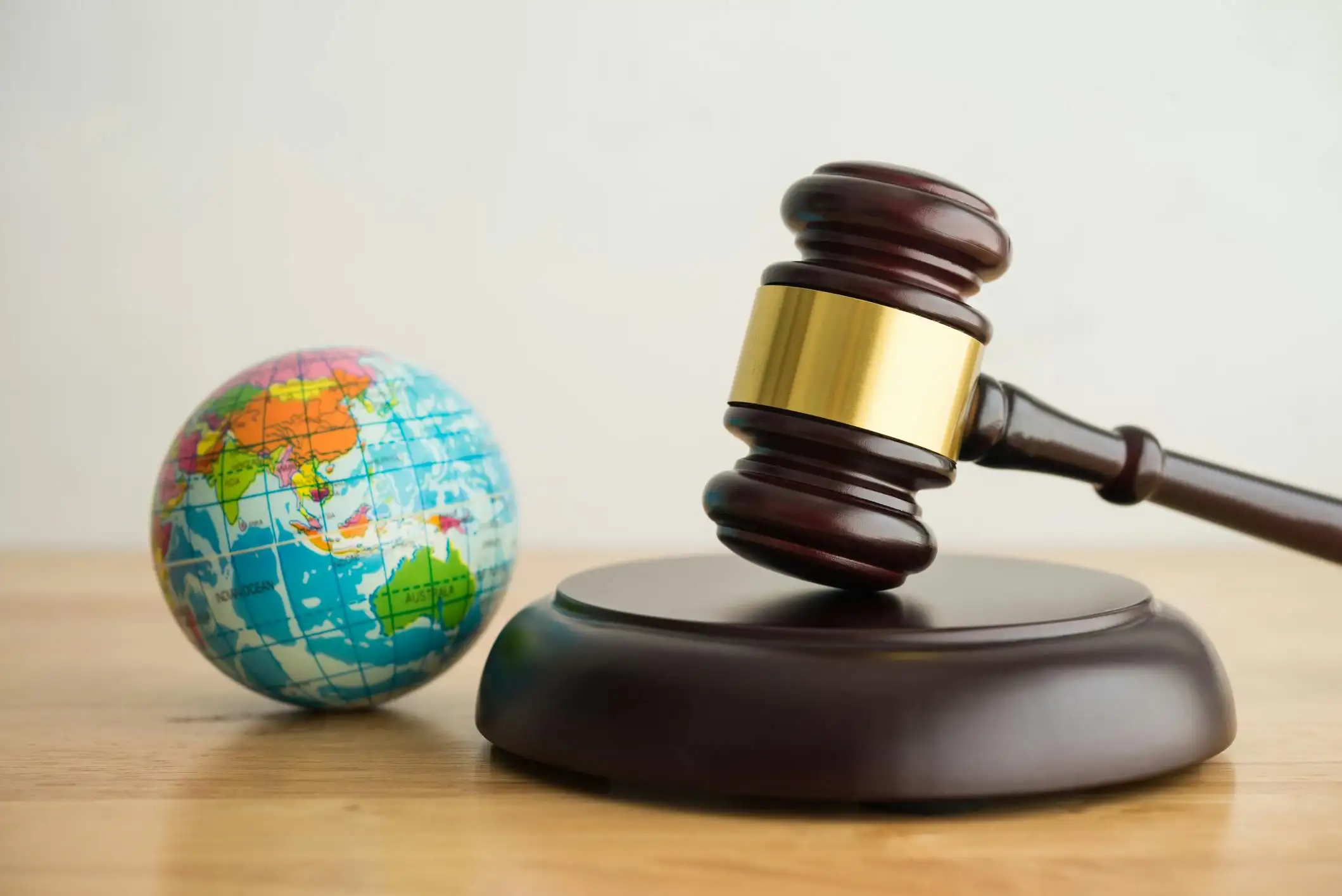
The central paradox of international law has always been its reliance on the very power it seeks to constrain. For nearly eight decades, the world operated under the comforting fiction that a set of universal rules, rather than the whims of rulers, governed the behavior of states.
But as the third decade of the twenty-first century unfolds, that fiction is dissolving. From the unilateralism of the 2003 Iraq invasion to the recent military operations in Venezuela, the veneer of a rules-based legal order is stripping away, revealing a system that was never truly independent, but rather a subsidiary of superpower hegemony.
The concept of international law did not begin in a San Francisco conference room in 1945. Its roots are deep, tangled in the early modern European effort to manage the chaos of shifting borders and religious wars. However, even before the formalization of law, international norms of conduct have existed in some form for millennia. Even the most ruthless ancient emperors and conquerors recognized certain unwritten boundaries. For example, the sanctity of the ambassador, the principle that a messenger should not be harmed, is one of the oldest and most consistent norms in human history. To kill a diplomat was seen not just as a strategic error, but as a violation of a fundamental, near-sacred order of communication between powers.
The true transformation, however, was the shift from these informal, custom-based norms to an extensive, global, and codified legal framework. The 1648 Peace of Westphalia is often cited as the birth of the modern state system, establishing the principle of sovereignty: the idea that a state has exclusive authority over its territory and that others have no right to interfere.
Early jurists like Hugo Grotius, often called the father of International law, attempted to ground these rules in natural law, a sense of universal morality. However, by the 19th century, this had shifted toward legal positivism, where law was seen not as a divine or moral imperative, but as a series of specific agreements and customs that states voluntarily accepted. This period saw the formalization of diplomatic immunity, the laws of the sea, and the first attempts to regulate the conduct of war through the Hague Conventions.
Yet, these rules were largely a European gentleman’s agreement. They applied to the civilized nations of the West while providing a legal framework for the colonization of the uncivilized rest. International law was, at its inception, a tool for order among equals and an instrument of subjugation for everyone else.
The Great Formalization and the Nuremberg Precedent
The carnage of the Second World War necessitated a total reimagining of this framework. The 1945 UN Charter was more than a treaty, it was a constitutional moment for the planet. It explicitly outlawed the use of force in international relations, with only two exceptions: self-defense or authorization by the UN Security Council.
Crucially, this period also birthed the Nuremberg Trials, which fundamentally altered the DNA of international justice. Before Nuremberg, the prevailing legal theory was that states committed crimes, not individuals, and that leaders enjoyed sovereign immunity for their actions. Nuremberg shattered this shield. By prosecuting high-ranking Nazi officials for crimes against humanity and crimes against peace, the tribunal established the revolutionary precedent of individual criminal responsibility. It signaled that a soldier or a statesman could no longer hide behind the orders of a superior or the sovereignty of a flag. This was the bedrock upon which the later International Criminal Court (ICC) and various war crimes tribunals were built.
This formalization was, on the surface, a victory for the rule of law. But in reality, it was a grand bargain guaranteed by the United States. Emerging from the war as the world’s sole economic and military colossus, Washington realized that a stable, predictable world governed by rules, rules it largely drafted, served its long-term interests better than constant, unpredictable conflict.
The End of the Bipolar Constraint
The turning point for the modern era was not a gradual decline, but a sharp, deliberate break. In 2003, the United States invaded Iraq without the authorization of the UN Security Council. This was not a minor procedural bypass, it was a frontal assault on the core pillar of the UN Charter: the prohibition of the use of force.
It can be argued that the relative adherence to international law in the decades prior was not necessarily due to a newfound moral enlightenment among global powers, but rather a byproduct of the bipolar nature of the Cold War world. During that era, the existential threat of a rival superpower acted as a structural brake. Both the US and the USSR were often forced to respect legal norms—or at least maintain a facade of doing so, to avoid escalations that could lead to mutual destruction or to win the hearts and minds of the unaligned world. In a bipolar system, the law was a useful stabilizing mechanism.
However, in the unipolar moment following the collapse of the Soviet Union, these constraints evaporated. By 2003, with no rival power to check its reach, the United States found it could bypass the Security Council with impunity. The preemptive strike doctrine introduced by the Bush administration was a direct rejection of the legal standards of imminence and self-defense. By acting outside the law, the United States signaled to the world that international legal norms were suggestions for the weak, but optional for the strong.
The consequences were profound. Once the primary architect and guarantor of the system began to treat it as an inconvenience, the incentive for others to follow suit vanished. If the US could ignore the Security Council for a regime change in the Middle East, why couldn’t Russia or China do the same in their respective spheres?
The recent actions in Venezuela represent the logical conclusion of this decay. The January 2026 operation, code-named Absolute Resolve, to capture Nicolás Maduro, a President of a sovereign country is perhaps the most explicit modern example of lawfare being discarded for raw power.
Unlike Iraq, where the US at least attempted a legalistic justification via previous UN resolutions, the current approach is more nakedly unilateral. The Justice Department’s internal memos, recently made public, argue that the President’s inherent constitutional authority to protect national interests overrides any treaty obligations, including the UN Charter.
By framing a military strike and the abduction of a foreign head of state as a law enforcement operation, Washington has essentially claimed that its domestic laws have global jurisdiction. This is a total inversion of the Westphalian system. It is no longer about states interacting as sovereigns under a shared legal framework; it is about a single state defining its own legality and imposing it on others.
Beyond the examples of Iraq and Venezuela, the legal order has been hollowed out by a series of “minor” but persistent erosions that have normalized the bypass of international institutions.
In 2011, the NATO intervention in Libya began under a UN mandate to protect civilians, but quickly morphed into an unauthorized campaign for regime change. This mission creep fundamentally damaged the trust of Russia and China in the Security Council, leading to the paralysis we see today.
Furthermore, the 2014 annexation of Crimea by Russia utilized a distorted version of self-determination to justify the violation of Ukrainian territorial integrity. Moscow’s argument was essentially a mirror of Western justifications for Kosovo, proving that when the guarantor of the law bends it, rivals will eventually break it.
Lastly, the practice of extraordinary rendition and the maintenance of black sites during the War on Terror effectively created a legal black hole. By moving individuals across borders to evade domestic and international protections against torture, states signaled that the inalienable rights formalized after 1945 were, in fact, subject to the exigencies of national security.
The Myth of Independence
The tragedy of international law is that it was never truly independent. We often speak of it as if it were a neutral referee in a football match, but it was always more like the rules of a house party: fair only as long as the host was willing to enforce them and abide by them.
The system was designed with great power exceptions built-in, most notably the veto power in the Security Council. This ensured that the law could never be used against the interests of the powerful. However, as long as the United States viewed the maintenance of that system as a primary component of its leadership, the system held.
Now, we are entering a post-legal era of international relations. When the United States openly breaks the law or ignores the International Criminal Court (ICC), the very institution whose spirit was born at Nuremberg, it isn’t just a violation, it’s a structural failure. There is no international police to arrest the hegemon. The UN, lacking an independent military or fiscal base, is reduced to a forum for rhetorical protest.
The Shattered Mirror
The current state of international law resembles a shattered mirror. The pieces are still there, the treaties, the courts, the diplomats, but they no longer reflect a coherent image of global order.
We see this fragmentation in the rise of regional coalitions of the willing and the return of spheres of influence. Countries in the Global South are increasingly viewing international law not as a shield, but as a tool used by Western powers to discipline rivals while exempting themselves.
International law only functions when there is a perceived cost to breaking it. In a world where the primary guarantor is also the primary violator, that cost will evaporate. What will remain is a might-makes-right environment, where the law is not a set of rules to be followed, but a language used to justify whatever action power has already decided to take. The gavel has not been handed to a new judge, it has been used to smash the bench.


![Ukrainian and Russian flags with soldier silhouettes representing ongoing conflict. [Image via Atlantic Council].](https://southasiatimes.org/wp-content/uploads/2026/02/2022-02-09T000000Z_1319661209_MT1NURPHO000HXCNME_RTRMADP_3_UKRAINE-CONFLICT-STOCK-PICTURES-scaled-e1661353077377.jpg)