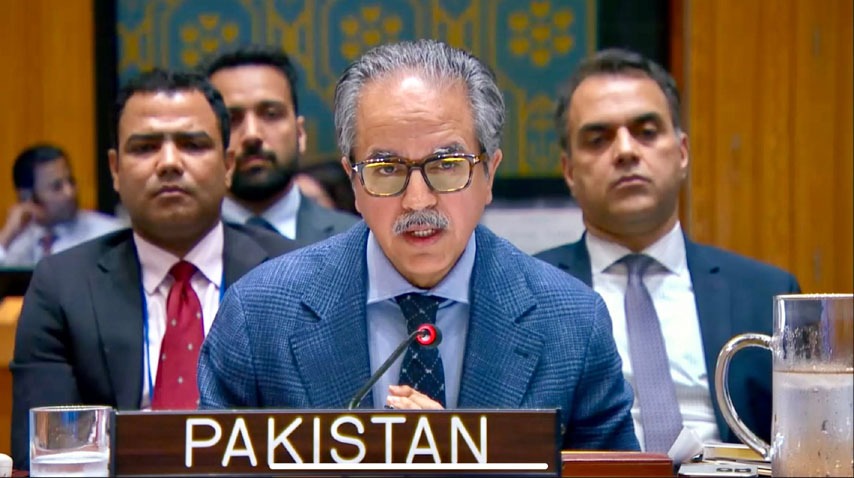
![Pakistan desires dialogue with Afghanistan to resolve issues, including TTP sanctuaries and regional security concerns. [Image via Dawn]](https://southasiatimes.org/wp-content/uploads/2024/12/130809384c46f10.webp)
ISLAMABAD: The Foreign Office said on Thursday that recent engagements with Afghanistan underscore desire of Pakistan for resolution of outstanding issues through dialogue.
Foreign Office spokesperson Mumtaz Zahra Baloch, at a weekly media briefing, said recent meetings are “an expression of Pakistan’s interest in dialogue to resolve any issues that arise from time to time and to find constructive approach and solutions to issues, including issues that are of serious concern to Pakistan”.
Last week, Afghan chargé d’affaires Sardar Ahmad Shakeeb met Deputy Prime Minister and Foreign Minister Ishaq Dar. The meeting followed close on the heels of a meeting between Pakistan’s chargé d’affaires in Kabul Obaid Nizamani and IEA Defence Minister Mullah Yaqoob.
The back-to-back meetings gave the impression that the two sides were preparing for renewal of engagement after a period of tension caused by Pakistani allegations of the outlawed Tehreek-i-Taliban Pakistan (TTP) being allowed sanctuaries on Afghan soil.
FO condemns Israeli violations of Syria’s sovereignty
Spokesperson Baloch had last week said that counterterrorism was on top of the bilateral agenda.
At this week’s briefing, the spokesperson tried to reject any linkage between the two meetings, insisting that the Afghan diplomat’s meeting with Ishaq Dar was a courtesy call for which the Afghan side had made a request some time back.
However, she emphasised that Islamabad has always advocated for engagement and constructive dialogue between Pakistan and Afghanistan.
Repeating concerns about TTP sanctuaries on Afghan soil, the spokesperson said: “Pakistan’s concerns with regards to the terror groups, which have found hideouts inside Afghanistan and are operating with impunity against Pakistan, remain on the agenda between Pakistan and Afghanistan. We have always emphasised dialogue to resolve these issues. We expect Afghanistan to ensure that these terror groups do not pose a threat to Pakistan’s security.”
Also See: Pakistan Simmers: Bannu Attack Stoke Tensions with Afghanistan
Syria’s sovereignty
The FO spokesperson said Pakistan was concerned about violations of Syria’s sovereignty by Israel and called for an inclusive and comprehensive process for resolving the Syrian crisis.
“We express full support for the sovereignty, unity and territorial integrity of Syria,” she said.
Israel invaded Syria moving deeper into Golan Heights after the collapse of Bashar al-Assad’s regime and has carried out nearly 500 attacks on military targets across Syria.
On December 8, armed rebels seized control of capital Damascus, marking a dramatic turning point in Syria’s protracted civil war, which has raged for 13 years. The capture of Damascus forced President Assad, who had maintained a grip on power despite years of conflict, to flee the country.
“We are following the developments in Syria and are concerned about the escalation in violence,” the FO spokesperson said, adding that Pakistan supports efforts for finding a comprehensive solution to the crisis in Syria.
She further said that the solution should be in accordance with the aspirations of the Syrian people.
“It is the right of the people of Syria to determine their own future and make decisions about their destiny. We also support efforts for an inclusive political process, envisioned under resolution 2254, which was unanimously approved by the UN Security Council,” the spokesperson maintained.
This news is sourced from Dawn and is intended for informational purposes only.

Your trusted source for insightful journalism. Stay informed with our compelling coverage of global affairs, business, technology, and more.