Nine Killed in Roadside Bomb Attack in Central India

At least 8 policemen killed in a Maoist bomb blast in central India, highlighting decades of conflict in the Red Corridor. [Image via Al Jazeera]

Maoist rebels killed at least eight policemen and a driver in central India by setting off a bomb blast that tossed their vehicle into the air, police said.

A roadside blast hit the police vehicle carrying the victims in the Bijapur district of Chhattisgarh state on Monday, a police statement said.

Central India has been a hotbed of such bomb attacks by Maoist rebels, with the region frequently witnessing violence despite intensified security operations.

The attack occurred as soldiers returned from an anti-Maoist operation on Saturday, during which they killed four rebels and lost a police officer.

Vivekanand Sinha, chief of the state police’s anti-Maoist operations, said, “A landmine killed eight security forces and a driver today when their vehicle came in contact with it.”

Photographs published by Indian media showed a deep crater ripped into the road by the blast.

Also See: Amit Shah’s Vision for India’s Anti-Naxal Operations: A Divided Legacy

Decades of Conflict

More than 10,000 people have died in the decades-long conflict waged by the rebels. They say they are fighting to give poor Indian farmers and landless laborers more control over their land. The land is currently exploited by major mining companies.

Government forces have stepped up efforts to crush the long-running armed conflict. Authorities killed around 287 rebels in 2024, according to official figures.

Known as Naxalites after the district where their armed campaign began in 1967, the rebels drew inspiration from Chinese revolutionary leader Mao Zedong. Authorities arrested about 1,000 suspected Naxalites, while 837 surrendered in 2024.

Amit Shah, India’s interior minister, warned the Maoist rebels in September. He told them to surrender or face an “all-out” assault. He also said the government expected to crush the rebellion by early 2026.

The movement gained strength and numbers until the early 2000s. At that point, New Delhi deployed tens of thousands of security personnel against the rebels. They were deployed in a stretch of territory known as the “Red Corridor.”

Authorities have drastically restricted the rebellion’s area in recent years.

Authorities have since invested millions of dollars in local infrastructure and social projects to combat the Naxalite appeal.

This news is sourced from Al Jazeera and is intended for informational purposes only.

News Desk

Your trusted source for insightful journalism. Stay informed with our compelling coverage of global affairs, business, technology, and more.


Recent

Zabihullah Mujahid’s Rhetoric and the Reality of Pakistan-Afghanistan Relations

Zabihullah Mujahid’s Rhetoric and the Reality of Pakistan-Afghanistan Relations

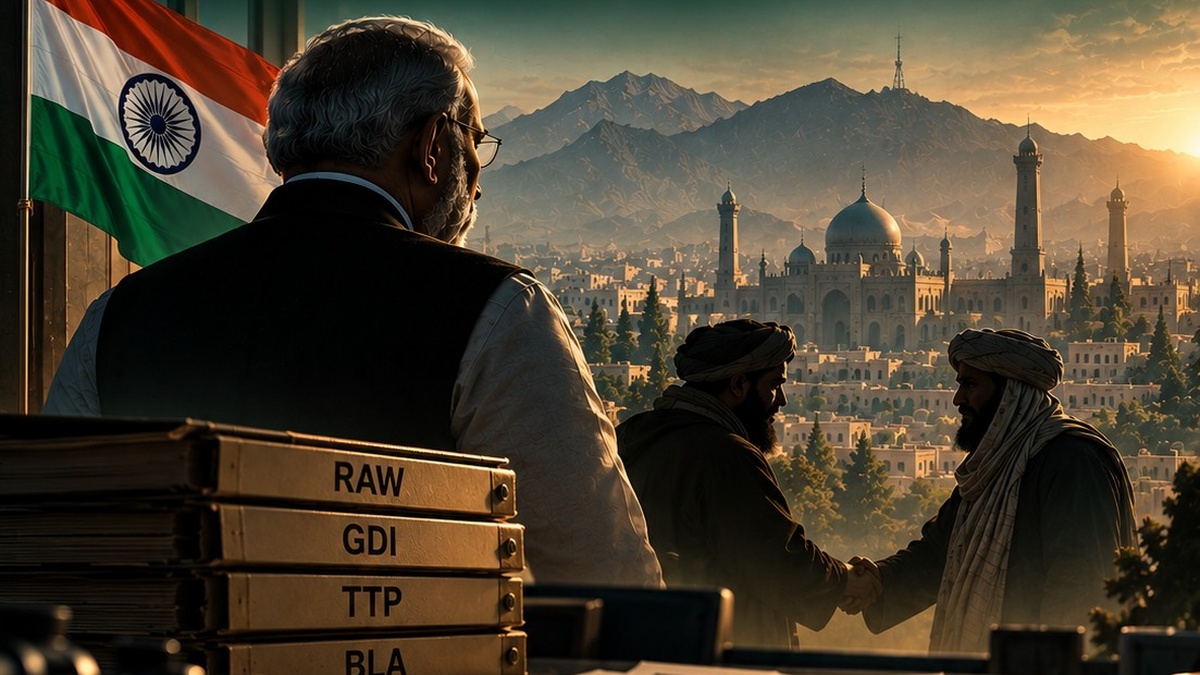
Recent statements by Taliban spokesperson Zabihullah Mujahid attempt to shift blame for strained Pakistan-Afghanistan ties onto Islamabad. Yet the real source of tension lies in Kabul’s refusal to dismantle terror networks like the TTP and BLA operating freely from Afghan soil—a failure that continues to endanger regional peace and Pakistan’s security.

Read More »
As Bihar votes, Modi’s militarised politics faces its toughest test yet—will voters reject war rhetoric for real issues like jobs and poverty?

Bihar Should Reject Modi’s War Politics

Bihar’s election is shaping up as a test of Modi’s war-driven politics. With rising discontent over unemployment and poor governance, voters may choose to look past jingoism and focus on the real issues that shape their daily lives.

Read More »
Pakistan’s Doctrine of Verifiable Peace: Realism in the Face of Proxy Politics

Pakistan’s Doctrine of Verifiable Peace: Realism in the Face of Proxy Politics

Pakistan’s Doctrine of Verifiable Peace represents a major shift from fraternal idealism to strategic realism in South Asia’s volatile security landscape. Rooted in classical realist thought, the doctrine emphasizes verification over trust, deterrence over sentiment, and conditional diplomacy over blind faith. Confronting the twin challenges of cross-border militancy and Indian-backed proxy networks in Afghanistan, Islamabad now seeks peace that is enforceable, monitored, and verifiable, anchoring regional stability on responsibility, not rhetoric.

Read More »
When Insurgents Rule: The Taliban’s Crisis of Governance

When Insurgents Rule: The Taliban’s Crisis of Governance

The Taliban’s confrontation with Pakistan reveals a deeper failure at the heart of their rule: an insurgent movement incapable of governing the state it conquered. Bound by rigid ideology and fractured by internal rivalries, the Taliban have turned their military victory into a political and economic collapse, exposing the limits of ruling through insurgent logic.

Read More »
The Great Unknotting: America’s Tech Break with China, and the Return of the American System

The Great Unknotting: America’s Tech Break with China, and the Return of the American System

As the U.S. unwinds decades of technological interdependence with China, a new industrial and strategic order is emerging. Through selective decoupling, focused on chips, AI, and critical supply chains, Washington aims to restore domestic manufacturing, secure data sovereignty, and revive the Hamiltonian vision of national self-reliance. This is not isolationism but a recalibration of globalization on America’s terms.

Read More »