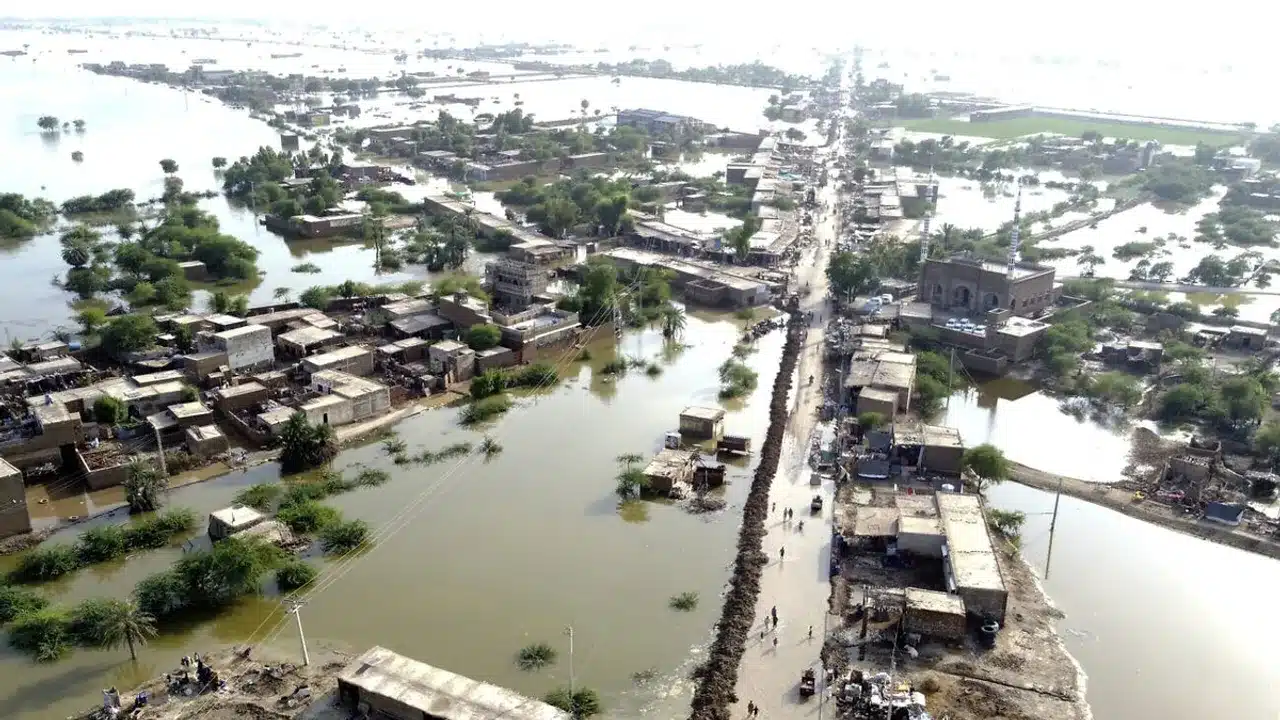
Gwadar’s climate challenge looms large as recent flooding events have once again brought to light the urgent need for comprehensive strategies to address the intersection of flooding, climate change, and inadequate infrastructure in the region. As thousands of people grapple with displacement, loss of homes, and agricultural devastation, it’s evident that immediate action is required to mitigate the impact of such disasters and build resilience in vulnerable communities.
Gwadar experienced severe flooding in 2005 and 2010 as well. The floods have ravaged Gwadar, submerging homes, businesses, and agricultural lands, leaving behind a trail of destruction. With the devastation, there’s a sense of urgency to address the underlying factors contributing to recurrent flooding in the region.
Climate Change and Flooding in Gwadar
Climate change exacerbates flooding events, making them more frequent and intense. The recent floods, categorized as a one-in-100-year event, are poised to become more commonplace as global temperatures rise. According to climate scientists, global heating has increased the intensity of rainfall over short periods by approximately 50%.
![Heavy rains triggered floods in Balochistan’s Gwadar earlier in February 2024. [Image Credits: DawnNewsTV]](https://southasiatimes.org/wp-content/uploads/2024/03/2921020452acf02.webp)
The floods in Pakistan, including those in Gwadar, are indicative of the fingerprints of climate change on extreme weather events.
With a 1% chance of such heavy rainfall occurring each year, the likelihood of similar disasters is expected to rise as global temperatures continue to increase.
Gwadar’s vulnerability to flooding is compounded by its geography, characterized by low-lying coastal areas and inadequate drainage systems. Despite significant investments in infrastructure development, including the China-Pakistan Economic Corridor (CPEC), functional disaster management and early warning systems still need to be improved. United Nations Educational, Scientific and Cultural Organization (UNESCO) has long recognized the coastal belt of Pakistan as a high-risk region for natural disasters, yet effective preparedness measures are still elusive.
The pervasive multidimensional poverty in Balochistan exacerbates its vulnerability, leaving it ill-equipped to withstand even a two-day bout of rain.
Urban Planning and Infrastructure
Urban planning in Gwadar has not adequately accounted for the region’s susceptibility to flooding. Old neighborhoods situated in low-lying areas lack proper drainage systems, exacerbating the impact of heavy rainfall. While newer infrastructure projects like the East-Bay Expressway and Marine Drive have drainage systems in place, residential areas still need to be protected due to poor planning and insufficient infrastructure.
![Aerial view of the Gwadar East Bay Expressway, a crucial infrastructure project connecting Gwadar Port with the Free Trade Zone and Makran Coastal Highway [Image Credits: CPIC Global]](https://southasiatimes.org/wp-content/uploads/2024/03/East-Bay-Expressway-Gwadar.webp)
Gwadar’s relationship with water is complex. It often experiences prolonged periods of drought and water scarcity, with years passing without significant rainfall. However, when rain does come, it often arrives in intense downpours lasting for days, leading to flooding. These alternating patterns of drought and deluge are increasingly becoming the norm due to climate change.
Also Read: Climate Change & Food Security in South Asia
Addressing Vulnerabilities and Building Resilience
Addressing the underlying vulnerabilities requires a multifaceted approach. Better disaster management, poverty alleviation, and urban development planning are crucial to reducing the impact of heavy rains and flooding. Investing in resilient infrastructure and enhancing drainage systems can mitigate the risks posed by future flooding events.
Policy recommendations should prioritize identifying areas most vulnerable to flooding and implementing resilient planning measures.
Collaborative efforts between government agencies, stakeholders, and communities are essential for effective disaster preparedness and response.
Additionally, investing in research to better understand the region’s geography and geology can inform evidence-based decision-making in urban planning.
Gwadar’s Climate Challenge: Lessons Learned and Future Outlook
Compensation and relief efforts for flood victims are necessary in the short term, but long-term solutions must address the root causes of flooding. Pakistan’s vulnerability to climate change underscores the need for proactive measures to mitigate risks and build resilience in vulnerable communities.
As Pakistan faces the daunting task of rebuilding in the aftermath of flooding, it’s imperative to learn from past experiences and prioritize resilience-building initiatives.
The International Monetary Fund (IMF) reports that Pakistan, highly vulnerable to climate change, has suffered a $2 billion annual loss since 2000. Climate-related events affect four million annually, with 2022’s superfloods impacting 30 million, claiming 1,700 lives. By 2050, natural disasters may slash Pakistan’s economy by up to 9%.
The lessons learned from Gwadar’s flooding must inform future policy decisions and infrastructure investments to ensure the safety and well-being of its residents. Only through collective action and sustainable development practices can we confront the challenges posed by climate change and safeguard the future of vulnerable communities like Gwadar, Balochistan.
The views expressed in this article are the author’s own. They do not necessarily reflect the editorial policy of the South Asia Times.