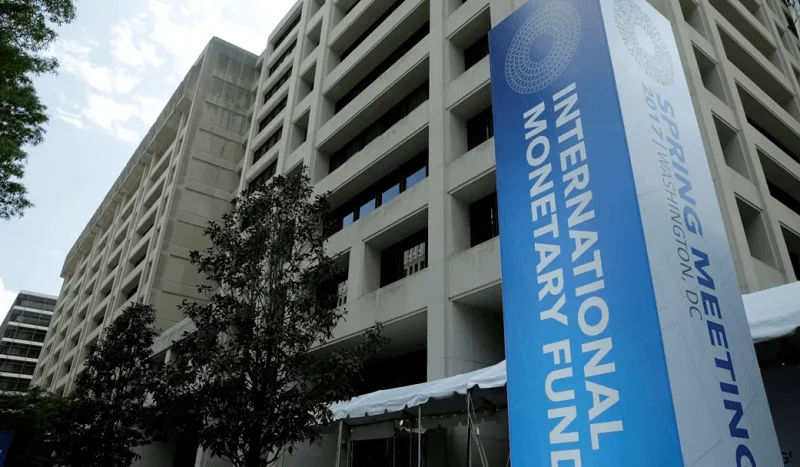
Pakistan completes prior actions for IMF staff-level agreement, securing $1.2bn disbursement to avert sovereign default through unprecedented policy measures.
ISLAMABAD: With unprecedented policy doses within 24 hours, Pakistan on Thursday completed all the prior actions needed for staff-level agreement (SLA) with the International Monetary Fund (IMF) to avert sovereign default and secure long-delayed $1.2bn disbursement, thus fulfilling IMF demands.
Sources told Dawn that policy actions stood completed after the exchange rate was allowed to move freely with a massive Rs25 per dollar depreciation in two days, an unusual 300-basis-point surge in State Bank’s policy, and the government’s announcement of continuing with an almost 10pc increase in power rates on a permanent basis through a special surcharge, per IMF demands.
These sources said the two sides were now jointly working to finalize the text of the Memorandum of Economic and Financial Policy (MEFP) and targets for the program implementation that could be presented to the IMF’s executive board for approval, thus fulfilling IMF demands.
This would involve the program monitoring tools like performance criteria, indicative targets and other similar reporting benchmarks for agreed upon macroeconomic framework.
The IMF mission is reported to have now promised to move the case to the executive board “in the most agile fashion possible” against a normal process of about six weeks.
Now that the government commitments for program implementation are clear and confusion about needed policies removed, the two sides were jointly engaging with bilateral lenders and international financial institutions for financing flow to keep the country current on external payments.
“This is a work in progress at this stage and, in fact, the Fund is now facilitating this coordination,” an informed source said. The IMF’s advisory role in the process, the sources said, was giving confidence to all partners that policies are sustainable for economic growth and development.
The most critical factors delaying the SLA related to the power sector sustainability through the permanent surcharge and complete free movement of the exchange rate, which meant the alignment of interbank, open and informal market operations of the foreign exchange market without any interference besides the central bank’s policy rate commensurate with the inflationary trend.
The government approved the continuation of up to Rs3.23 per unit special surcharge on electricity consumers to generate Rs335bn for debt servicing in the next fiscal year, allowing the rupee’s free float and increasing interest rates to 20pc.
The power sector surcharge was considered critical to support the sector towards self-sufficiency and restrict the government finances to only budgeted subsidies.
There was now complete commonality of understanding between the two sides on all matters that prolonged an outcome since the IMF staff mission left Pakistan on Feb 9.
As the authorities reached the last leg of prior action completion, the prevailing economic and political uncertainties set rumor mills in motion.
Also See: IMF accused of ’shifting goalposts’, government expresses dissatisfaction
Finance Minister Ishaq Dar responded through a statement that “our negotiations with IMF are about to conclude and we expect to sign a staff-level agreement with IMF by next week”, and that “anti-Pakistan elements” were spreading malicious rumors that Pakistan might default.
“This is not only completely false but also belie the facts. SBP’s forex reserves have been increasing and are almost $1bn higher than four weeks ago despite making all external due payments on time,” he said, adding that the foreign commercial banks had started extending facilities to Pakistan and all economic indicators are slowly moving in the right direction.
The government has already met other prior actions with the imposition of Rs170bn additional taxes for the current year and their continuation for next with over Rs500bn annual yield.
The cabinet has also approved a Rs3.82 per unit surcharge on electricity for the current year, and enhanced gas rates by up to 124pc.
On successful completion, Pakistan would be entitled to 894 special drawing rights (SDRs) of the IMF with a calculated value of $1.2bn.
The tranche had been delayed since October last year because of the government’s reluctance to allow free movement of the exchange rate, increasing the interest rate and full-cost recovery of power supply through additional surcharges and other adjustments to generate more than Rs600bn in less than two years.
Source: Dawn News