The Asymmetry at the Heart of the EU–India FTA
The EU–India FTA risks being unequal, as India cuts tariffs while Europe retains key advantages. It may deepen dependence instead of strengthening India’s industrial growth.

The EU–India FTA risks being unequal, as India cuts tariffs while Europe retains key advantages. It may deepen dependence instead of strengthening India’s industrial growth.

Once imagined as a neutral steel frame, India’s bureaucracy is undergoing a profound mutation. As faith becomes an instrument of alignment and fear a tool of discipline, the administrative state is drifting from constitutional neutrality toward ideological enforcement, with lasting consequences for democracy, governance, and state capacity.

The Taliban’s new Criminal Procedure Code formalizes a four-tiered justice system that shields clerics and elites while subjecting ordinary Afghans to imprisonment and public flogging. By codifying social hierarchy into law, the regime violates international human rights norms and subverts Islam’s foundational promise of equality before the law, turning justice into an instrument of control rather than accountability.

The 2025 Turkish Drug Report reveals that Afghanistan has not exited the global narcotics economy under Taliban rule but has instead transformed it. Through controlled poppy cultivation, exploitation of stockpiles, and rapid expansion into synthetic drugs, Afghanistan continues to shape global drug supply chains, prices, and security outcomes.

Pakistan’s entry into Gaza’s Board of Peace marks a historic departure from its traditional Palestinian policy. As Islamabad navigates an extra-legal, US-led governance framework that excludes Hamas and sidelines sovereignty, the question looms large: is participation a tool of influence, or an act of moral complicity?

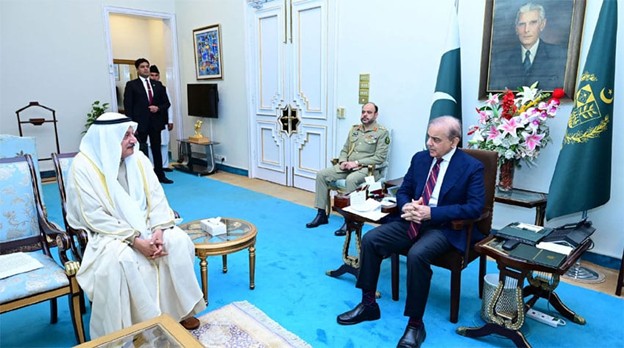
The EU–Pakistan Business Forum 2026 marks a strategic pivot toward diversified, ESG-driven investment, de-risked finance, and regulatory alignment beyond GSP+ trade ties.

Afghanistan’s post-2021 economic model reflects a sharp break from the aid-backed past, defined by informality, fiscal fragility, and regional economic isolation under Taliban rule.

While online narratives often claim to expose corruption or political repression, coordinated digital propaganda masks a strategic effort to delegitimize state institutions. This commentary examines the interplay of monetized disinformation, coordinated amplification, and selective framing, revealing how Pakistan’s digital ecosystem substitutes outrage for evidence and destabilizes governance.

The Durand Line’s transformation from a porous frontier to a fenced border is altering militant strategies, funding, and regional security. Jihadist networks like TTP and IS-K are adapting to these changes while local populations face social and economic pressures.

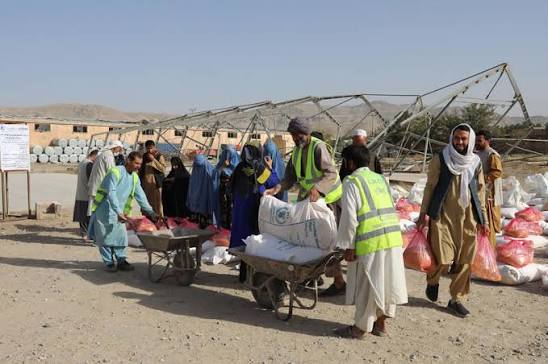
Sources suggest the Taliban has offered immediate access to Bagram Airbase for potential strikes against Iran in exchange for continued U.S. aid. Beyond military leverage, the offer underscores Afghanistan’s acute humanitarian crisis and the Taliban’s reliance on external support, highlighting the complex interplay between strategy, politics, and survival in a fragile state.