Who Is Responsible for Afghanistan’s Collapse?
The question of responsibility will surface time and again until a humanitarian and security catastrophe keeps haunting Afghanistan and the region – who is responsible for Afghanistan’s collapse?

The question of responsibility will surface time and again until a humanitarian and security catastrophe keeps haunting Afghanistan and the region – who is responsible for Afghanistan’s collapse?

OIC’s 48th session in Islamabad has erected Pakistan as a pivot of the OIC. For the first time, OIC has voiced very clearly the issues that concern the regional stability of South Asia. It remains to be seen, however, that will OIC be able to raise its stature from a popularly-claimed defunct body to a platform perfectly capable of voicing issues and concerns in a way that promotes action?

The invasion of Ukraine caused massive outrage in the Western world and the media. But why do we miss to see such condemnation and outrage on the severe and unjust wars where the West, itself, is an aggressor?

Pak-Uzbek cooperation is setting new directions that hold the promise of ‘Silk Route Reconnect’. Regional connectivity has long been compromised due to instability and war in Afghanistan. With peace returning, bilateral transit trade offers endless opportunities for regional re-connect.

Karnataka’s Hijab controversy is not over yet. Instead, it takes new forms and spreads to other communities as well, as demonstrated by the news of a Sikh girl student who was asked to remove turban to enter her college. All the new developments from Karnataka hint at the potential of this conflict to spread all across India and fuel to unprecedented levels.

Balakot airstrikes and the retaliating Operation Swift Retort by Pakistan’s Air Force provide a bigger foreground for understanding the potential of escalation in the South Asian Region and offer important insights into the deterrence paradox.

The implications of the ongoing crisis are not only limited to Europe. The Russian intervention will produce indispensable ramifications for South Asia as well. As gas and oil prices will face a surge amid the crisis in Europe, this will likely cause a severe recession for South Asian economies and will hamper the manufacturing capacities.
![Rights violations in India’s Karnataka Muslim female students wearing hijabs are denied entry to classrooms in Udupi, reflecting rights violations in India's Karnataka [Image Credits: AP]](https://southasiatimes.org/wp-content/uploads/2022/02/202202asia_india_udupi_hijab.webp)
Female Muslim students barred from entering their classrooms for wearing a hijab walk outside their college in Udupi, Karnataka, India, violating their basic right.

The recent wave of Saffron Vigilantism becomes a burning issue, as Muslims and Hindu Extremists face-off over Hijab Row. The largest ‘Democracy’ is witnessing an ever-growing religious intolerance against the Muslims under the Modi Regime.

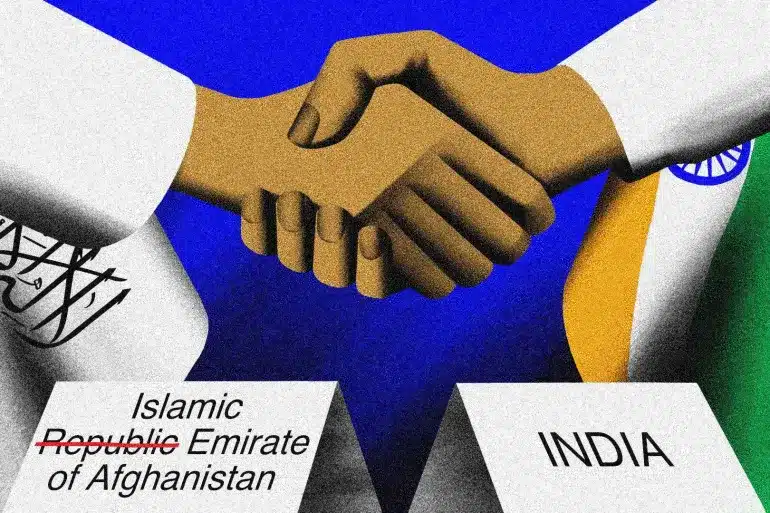
India with its leverage lost in Afghanistan is reportedly considering reopening its embassy in Kabul. This comes at a time when India is seeking its role in Afghanistan; either through ‘Asia-Pacific’ group – 18th Russia-India-China (RIC) foreign ministers’ meeting, or through United States-led initiatives, such as Quad.