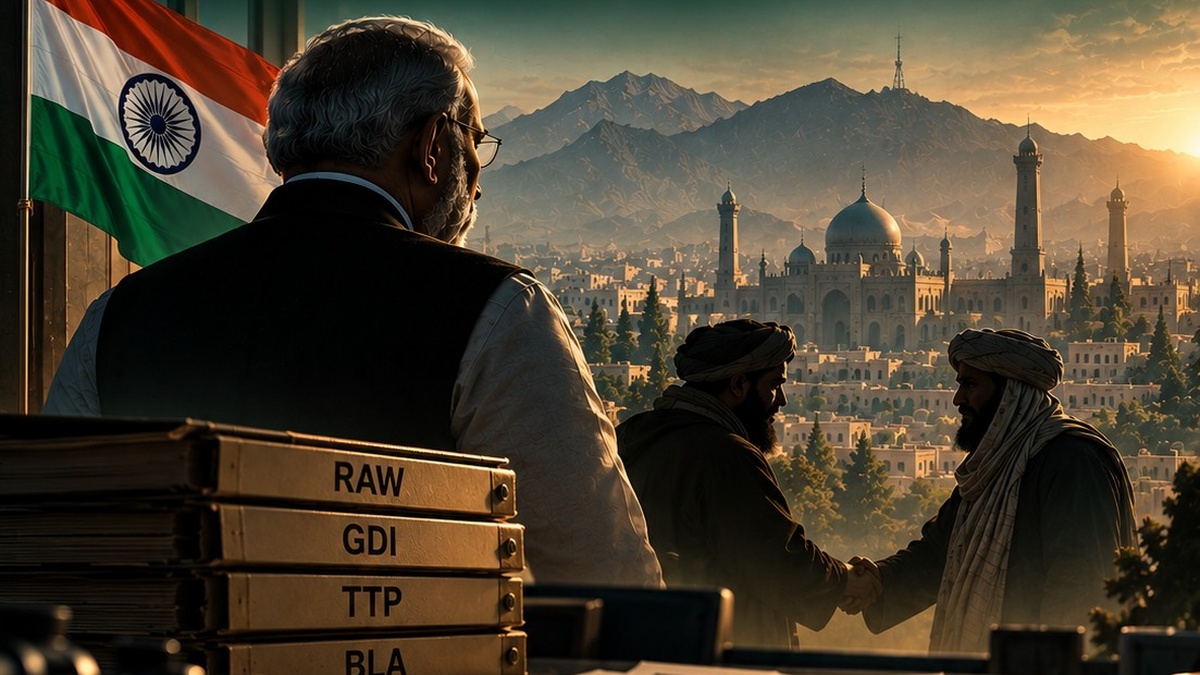
Pakistan conducted a ground operation against the terrorist hideouts of TTP and ISK-Province in Afghanistan and carried out calibrated airstrikes on June 28, 2026, in response to the Afghan strikes in Pakistan’s Balochistan province on 19 June, 2026. These strikes carried out by Pakistan resulted in the killings of 29 militants.
Afghanistan claimed that these strikes cost the lives of 36 civilians and made a firm statement that these strikes will be met with a strong retaliatory response. However, the United Nations issued a statement backing Pakistan’s position and said that “Pakistan has a right to self-defence” while urging both parties to de-escalate.
Historically, relations between both countries have remained strained since Pakistan’s independence in 1947. The core issue lies in the Durand Line. The Durand Line was demarcated as an official boundary between Afghanistan and Pakistan by the British in 1893. Successive Afghan governments have repeatedly questioned its legitimacy and ceased to consider it as an international border.
While Pakistan considers it its international border and has invested heavily in fencing and border security due to the porous nature of the border. As the line cuts through Pashtun tribal areas between Afghanistan and Pakistan, it has always remained at high risk of infiltration. These competing claims have led to increased tensions between both countries.
Afghanistan and Pakistan have once again entered an intense cycle of escalation despite a fragile ceasefire, a situation that neither side can afford. This is not an isolated incident; rather, it is part of a recurring pattern that has persisted since last year.
A major ceasefire took place between Afghanistan and Pakistan in October 2025. The ceasefire agreement came into being in Doha with the mediating efforts of Qatar and Turkey. This ceasefire was brokered to end the operation “Khyber Storm” launched by Pakistan against Afghanistan.
This ceasefire came to an end in February 2026, when Pakistan launched another operation, “Ghazab lil Haq,” against Afghanistan amid rising terrorist attacks inside Pakistan.
These border tensions are marked as the most dangerous stand-off between both countries in years. A temporary ceasefire took place between them in March, but the pattern of border tensions did not stop.
It led to the closure of the Pakistan–Afghanistan border, which resulted in the closure of major trade routes between them, impacting the economies of both countries and worsening the already severe humanitarian crisis in Afghanistan.
The tensions between Pakistan and Afghanistan are not going to lead anywhere but will only worsen the instability in which both countries are already drowned. They both stand at a point where another series of military escalations would be considered a strategic mistake rather than a tangible solution.
While Pakistan and Afghanistan have major security concerns, particularly over militancy on the disputed border (Durand Line), history has repeatedly proved that kinetic measures and retaliatory strikes in the name of counterterrorism have never eliminated the underlying threat.
Instead, they deepen mistrust, cost the lives of innocent civilians, worsen the humanitarian crisis, and create an environment that is then exploited by extremist factions.
Pakistan is already grappling with many internal and external challenges that need immediate attention. Escalations will risk Pakistani resources at a time when economic recovery and revival, political stability, and social cohesion remain the most urgent priorities.
‘For Afghanistan, the economy remains fragile, with millions of citizens dependent on foreign humanitarian assistance; another cycle of escalations will undermine stability and worsen its already severe humanitarian crisis.
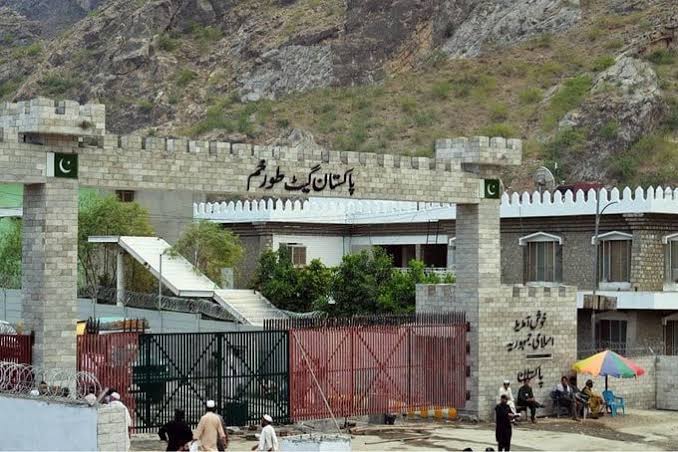
The border closure, particularly the closure of the Torkham border, Afghanistan’s busiest trade route with Pakistan during the February strikes, brought commercial activities to a near standstill. Afghanistan, being a landlocked country, depends heavily on Pakistan’s ports and transit routes.
The border closures led to increased costs of transportation, reduced income for traders and transporters, and delayed imports and exports. Humanitarian operations were heavily affected. Humanitarian aid agencies reported difficulty in reaching the affected population, which further deteriorated the humanitarian conditions in Afghanistan.
The Prolonged conflict will lead to the further closure of major trade routes between both countries. Frequent border closures will disrupt trade and transit activities, affecting livelihoods and increasing economic pressure on border communities.
In the realm of security, Pakistan is already confronted with militant activities and insurgencies, particularly in Khyber Pakhtunkhwa and Balochistan. Opening another front of conflict along the already volatile border will undermine its counterterrorism efforts. It will also increase pressure on Pakistan’s security forces, which are already dealing with several internal security fronts.
Beyond security, renewed tensions also have diplomatic consequences. For Afghanistan, renewed conflicts will lead to major diplomatic setbacks. Afghanistan is already dealing with a humanitarian crisis, economic instability and international isolation. Furthermore, the Taliban government continues to grapple with the international recognition issue. Escalating tensions with Pakistan will make it even harder for the Taliban to gain international legitimacy and establish friendly relations with neighbours. Prolonged tensions will further undermine Afghanistan’s diplomatic standing.
Similarly, persistent tensions have diplomatic consequences for Pakistan also. Pakistan seeks to establish itself as an integral player in regional connectivity and diplomacy. It aims to connect South Asia with Central Asia. Persistent tensions with Afghanistan will erode trust and hinder regional initiatives.
This volatile security environment will create diplomatic instability, discouraging foreign investment and partnerships. Furthermore, cross-border strikes will push the international community to scrutinise civilian casualties and regional stability, which will negatively affect the diplomatic image of Pakistan and Afghanistan.
In conclusion, both countries must practice restraint because military escalation is unlikely to resolve Pakistan’s concerns over cross-border militancy or Afghanistan’s concerns over cross-border strikes and border management.
For a country like Pakistan that is already facing complex economic and security challenges, strategic restraint accompanied by firm counterterrorism measures and sustained diplomatic engagement would better serve its long-term national interests than a prolonged military conflict.
Atika Ameer
Atika Ameer is currently enrolled in the bachelor’s program in the Department of Peace and conflict studies in National Defence University. Her areas of interest include diplomacy, current affairs, National security, and international law.