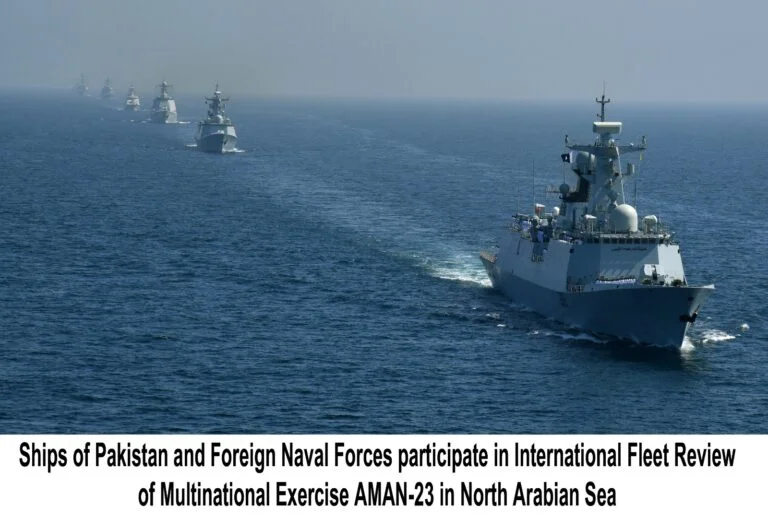
With ships, aircraft, Special Operations Forces Marine teams, and observers, more than 50 countries will take part in the five-day drill.
Pakistan Navy on Friday kicked off one of the largest maritime exercises in the Arabian Sea along with the participation of navies of 50 countries.
Many military representatives, observers, and diplomats from participating countries attended the opening ceremony at Navy Dockyard in Karachi.
The eighth exercise of the Aman series involves ships, aircraft, and special operation forces of participating countries. The exercise will take place from Feb 10-14. Additionally, a message from Admiral Amjad Khan Niazi, Chief of the Naval Staff of the Pakistan Navy, was read.
Welcoming the participants, Admiral Amjad Khan Niazi said the maritime exercise aimed at promoting harmony among countries and peace. He highlighted that maritime security was facing non-traditional challenges, adding: “Climate change has profoundly affected the marine environment”.
SEE ALSO: https://southasiatimes.org/analyzing-quad/
The organizers have divided the exercise into harbor and sea phases to facilitate comprehensive training and coordination in both settings. The harbor phase includes seminars, discussions, demonstrations, and pre-sail planning. The sea phase involves tactical maneuvers, security exercises, and gunnery firings.
The maritime drill aims to provide a forum for understanding maritime concepts and operational cultures. It enhances interoperability and identifies ways to combat common threats at sea.
The Pakistan Navy launched the exercise in 2007 with only three participants. However, stakeholders widely acknowledged the message of collaborative maritime security. Consequently, 50 countries have joined the drills this year.
Original Source: The Nation

Your trusted source for insightful journalism. Stay informed with our compelling coverage of global affairs, business, technology, and more.