As the Iran-Israel-US war enters its fifth month, the maritime chokepoint at the heart of the global energy system has become the fuse for a crisis that reaches from the Gulf to the Hindukush, and Pakistan finds itself both mediator and frontline state.
There are wars that stay where they start, and there are wars that redraw the map of everyone’s risk. The conflict that began on February 28, 2026, when US and Israeli strikes killed Iran’s Supreme Leader Ali Khamenei, belongs unmistakably to the second category. Nearly five months on, what was framed in Washington as a decapitation strike against Iran’s nuclear programme has metastasised into a rolling confrontation over the Strait of Hormuz, the twenty-mile-wide chokepoint through which roughly a fifth of the world’s oil once moved every day.
This week alone has seen a seventh consecutive night of American strikes, Iranian retaliation against US assets in Kuwait, Bahrain and Jordan, and a missile strike that damaged a desalination plant in Kuwait, exposing just how fragile the Gulf’s basic infrastructure has become under sustained fire.
For most of the outlets covering it from Washington, London, or Doha, this is a Middle Eastern war with global spillover. For South Asia, it is not a distant war at all. Iran shares a nearly 900-kilometre border with Pakistan, running through Balochistan. This is the same border across which cross-border militancy, fuel smuggling, and refugee flow have long moved in both directions, and which now sits adjacent to an active war zone. That single fact of geography, not proximity of headquarters, not sentiment, is what converts a Gulf conflict into a direct regional emergency: a pipeline into Pakistani inflation, Pakistani energy security, and Pakistani strategic choices, arriving at a moment when Islamabad is already managing a volatile western frontier and an unresolved eastern rivalry with India.
The region, and Pakistan in particular, needs to brace for a prolonged period of turbulence rather than a quick return to normalcy, and the coming months will test Islamabad’s capacity to convert diplomatic relevance into durable strategic gain.
The Maritime Domain: From Chokepoint to Precedent
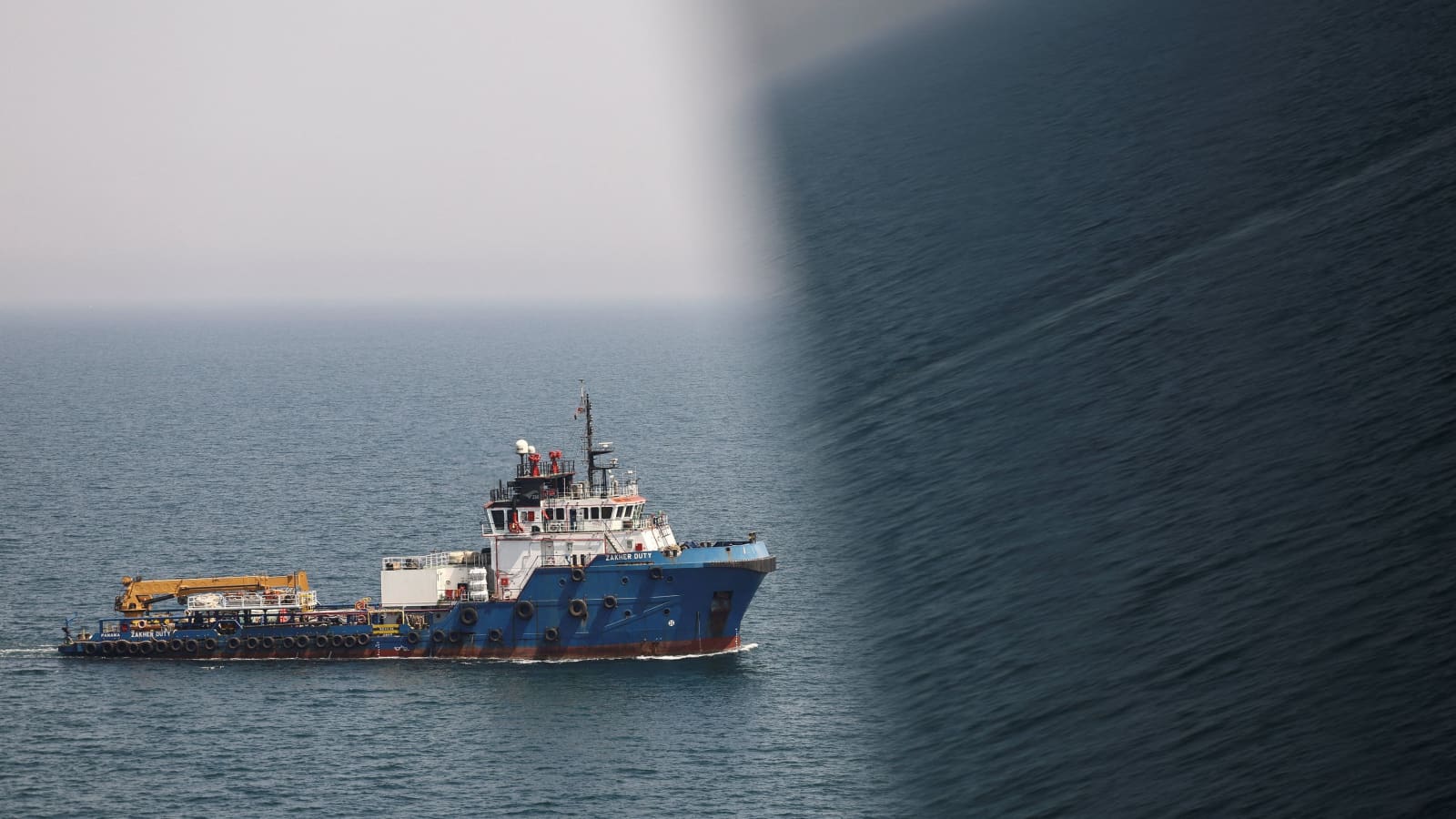
The immediate flashpoint is control of transit through Hormuz. A June memorandum of understanding had extended an earlier ceasefire and set out a framework for negotiations, but Tehran and Washington have each accused the other of violations since. Iran has pressed a claim to regulate, and eventually toll, shipping through the strait, warning vessels to follow regime-approved routes and firing on commercial ships in early July to enforce the point. Washington’s answer has been to reimpose a naval blockade of Iranian shipping and to threaten a 20 percent tariff on any vessel attempting passage without US clearance.
This is no longer simply a war over Iran’s nuclear file. It is a contest over who writes the rules of a global chokepoint, and the precedent, once set, will not stay confined to the Gulf.
A world in which a regional power can condition access to a strait carrying a fifth of global oil trade is a world that reopens every other maritime chokepoint to the same logic, from the Bab-el-Mandeb to the Malacca Strait. Insurers have already made transiting Hormuz prohibitively expensive; shipping has rerouted where it can, and where it cannot, it has simply stopped. Even once the strait reopens, markets are likely to take months to normalise, given the scale of disruption to tanker insurance, crew willingness, and OPEC production, which has fallen more than 30 percent since the war began.
Fuel, Inflation, and the South Asian Squeeze
The economic transmission channel from Hormuz to South Asian household budgets is short and direct. Brent crude has traded well above pre-war levels through the conflict, spiking repeatedly on each escalation, surging past $100 during the acute closure phases in March, and jumping again above $78 in mid-July as fighting resumed over the strait. More alarming than crude benchmarks has been the price of refined fuel. Diesel and jet fuel have at points topped $200, with the first visible signs of demand destruction now appearing across Asian markets from Thailand to Pakistan.
Pakistan’s exposure is structural, not incidental. More than 85 percent of the country’s crude oil arrives via the Gulf and the strait, and disruptions have already driven double-digit increases in domestic fuel prices, compounding currency pressure and inflation.
On the gas side, state-run Pakistan LNG has been forced repeatedly back into the expensive spot market as Qatari term shipments, Pakistan’s primary supply line, have been disrupted by the closure, at one point buying the most expensive spot LNG cargo in four years.
India, which imports roughly a fifth of its oil needs through waters exposed to the same risk, faces its own version of this squeeze on its import bill, its currency, and its fiscal space. The entire subcontinent, in other words, is importing a war it did not start, priced in dollars it does not control.
For a country already negotiating IMF conditionalities, managing a fragile external account, and absorbing the costs of internal security operations on its western border, this is not a shock Pakistan can simply weather. It is a shock that compounds every other vulnerability already on the books.
Where Pakistan Stands: Mediator, Frontline State and Pressure Point Simultaneously
What distinguishes this crisis from previous Gulf disruptions is Pakistan’s unusual position at its centre. Field Marshal Asim Munir has emerged, by most independent accounts, as the single most consequential intermediary between Washington and Tehran, credited by US officials, including Vice President JD Vance, with sustaining a negotiating channel through some of the war’s most dangerous moments, and personally engaged in the diplomacy that produced the tentative Geneva-track agreement in June.
Pakistan’s credibility here is not accidental. It is one of very few states that retains working trust with both Washington and Tehran, carries no colonial or sectarian baggage that either side objects to, and has demonstrated, through backchannel diplomacy with Turkiye and Egypt, a capacity to keep communication open even when official contact is politically impossible for the belligerents themselves.
This is genuine strategic capital, accumulated across months of largely unglamorous back-channel work. But capital of this kind is perishable if not converted into structural gain, and it exists alongside, not instead of, a set of harder vulnerabilities that mediation cannot paper over.
On the western border, Pakistan’s counter-terrorism campaign against the TTP and affiliated networks continues against a backdrop of an Afghan Taliban state increasingly assertive in its own regional signalling, with reported entrenchment of Al-Qaeda and ISKP-linked elements benefiting, directly or indirectly, from the broader regional chaos and from equipment flows that trace back to the US withdrawal. A Gulf war that further strains Afghan-Iranian and Afghan-Gulf trade and remittance corridors is likely to deepen Afghanistan’s own economic distress and economic distress on that side of the Pak Afghan border has historically translated into instability on this one.
On the eastern border, India’s own exposure to Hormuz-driven inflation and fiscal pressure does not translate automatically into caution. New Delhi’s strategic posture since the 2025 crisis has remained assertive, and a regional environment already saturated with hard-power signalling from the Gulf war raises the risk of miscalculation multiplying rather than receding. Pakistan cannot assume that global attention on the Middle East buys it strategic breathing room in the east; if anything, distracted global attention is precisely the condition under which regional risk-taking becomes more, not less, tempting.
On the economic front, Pakistan is being asked to absorb an external energy shock at the exact moment its fiscal space is thinnest, a test of whether the diplomatic prestige generated by mediation can be translated into concrete economic dividends: preferential energy arrangements with Gulf partners, expedited financing, investment commitments from grateful counterparties in Washington, Doha, and Riyadh, or simply sustained international goodwill that eases the path through ongoing IMF and multilateral negotiations.
What Pakistan Needs to Consider
A few priorities follow directly from this reading:
First, diversify energy exposure with urgency, not aspiration. The repeated scramble for spot LNG cargoes is a symptom of a supply architecture built for a calmer era. Accelerating alternative routes, including deeper energy cooperation through second phase of China Pakistan Economic Corridor, expanded domestic and regional gas infrastructure, and renewable capacity that reduces exposure to any single chokepoint, needs to move from policy documents to funded projects.
Second, convert mediation into measurable strategic and economic return. Trust earned through months of back-channel diplomacy is a finite asset. Islamabad should be explicit, in its bilateral engagements with Washington, Tehran, Riyadh, and Doha, about translating goodwill into concessional energy deals, investment pledges, and diplomatic support on issues that matter to Pakistan directly, including on its western border and in multilateral financial forums.
Third, insulate the western border from a widening regional vacuum. As Gulf and Iranian resources and attention are consumed by the war, Pakistan cannot assume Afghan-based threat networks will remain static. Sustained investment in border management, intelligence-sharing arrangements, and diplomatic engagement with Kabul, however difficult, needs to continue regardless of how the Gulf war resolves.
Fourth, avoid strategic overextension on the eastern front. Precisely because Pakistan’s diplomatic bandwidth and international goodwill are currently concentrated on the Gulf mediation, restraint and vigilance toward India should be paired with continued investment in credible deterrence, so that neither over-confidence nor distraction creates openings for miscalculation.
Fifth, prepare the domestic economy for a prolonged, not transient, price shock. Treating this as a temporary spike risks under-preparing households and industry for what is increasingly being described as a chokepoint crisis that will take months, not weeks, to normalise even after a ceasefire holds.
How Beijing, Moscow, and Europe are Reading the War
China and Russia have positioned themselves as vocal critics of the US-Israeli campaign without becoming direct participants in it. Both governments jointly condemned the strikes as violations of international law and Iranian sovereignty, convened emergency UN Security Council sessions, and have publicly backed Pakistan’s mediation role. Beijing in particular has said it is coordinating closely with Islamabad’s diplomatic track.
Yet neither Moscow nor Beijing has moved to offer Iran direct military support, and some analysts read their posture as a calculated one: content to let Washington absorb the costs of a prolonged Middle Eastern entanglement while they position for advantage elsewhere, from Ukraine to the Asia-Pacific.
China’s exposure runs through energy security and the safety of its Gulf-linked investments; Russia’s runs through its 2025 strategic partnership treaty with Iran and its own interest in demonstrating that US “regime-change” campaigns carry costs.
Europe’s position has been considerably more fractured. Some capitals have expressed solidarity with the US-Israeli position on Iranian nuclear proliferation and terrorism financing. The European Union has separately moved toward sanctioning Iran over the Hormuz blockade even as it faces its own diesel supply risk from the very closure it is sanctioning Iran for enforcing.
The bloc’s vulnerability to a prolonged fuel-price shock, already a live concern given warnings of European diesel shortages if the strait remains closed, means Brussels has every incentive to see a durable settlement, even as individual member states remain politically divided on how much pressure to apply to Tehran versus Washington.
What the Region Should Brace for
Taken together, the picture is not one of imminent resolution but of managed, recurring volatility. Ceasefires and memoranda in this conflict have proven durable in weeks, not months. Each has broken down over the same unresolved question of who controls passage through Hormuz. South Asia should expect further price spikes tied to each escalation cycle, continued strain on LNG and crude procurement, and a widening gap between the diplomatic prestige some regional actors accrue and the economic relief their populations actually feel.
For Pakistan specifically, the coming period is likely to be defined by a paradox: rising international stature as an indispensable diplomatic bridge, running in parallel with rising domestic economic strain and an unforgiving two-front security environment. Managing that paradox, extracting durable gain from mediation while shoring up both borders and the balance sheet, is the central strategic task facing Islamabad through the remainder of this war and whatever settlement eventually follows it.