The West Asia conflict has pulled back the curtain on something India has ignored for far too long. The country’s food security is dependent on unstable global fertiliser markets. That is not a temporary shock. In fact, what appears on the surface as a temporary geopolitical disruption is, in reality, a structural crisis decades in the making. India’s agricultural growth has been built upon cheap fertilisers, massive subsidies, and heavy import dependence, without creating a sustainable or resilient nutrient system of its own. The wars in Ukraine and West Asia did not create this vulnerability; they merely exposed how fragile the system already was.
Consider the numbers. India imports nearly 43% of its DAP requirement and close to 80% of its sulphur demand. Roughly half the energy inputs for urea production come from abroad, much of it tied to Gulf and West Asian supply chains. Micronutrients such as boron are almost entirely imported, since India simply has no domestic reserves to draw on. Food security here is no longer a purely domestic matter. It is tied to shipping routes, energy prices and conflicts thousands of miles away.
Supply disruption is only part of the concern. The bigger question is whether the current model can survive at all. Manufacturers are already short of raw materials. Consignments sit delayed at ports. Some micronutrient plants have reportedly shut down for lack of imported inputs. These are not one-off glitches. They are warning signs of a larger crisis that can no longer be treated as temporary.
What is more worrying is the fact that the entire impact of the crisis is still largely hidden from the public since the Indian government is absorbing the shock through subsidies. State is taking the financial hit and farmers have not yet seen the true increase in global fertiliser prices. This could bring short-term respite but on a longer run, it needs reforms. The question is no longer about the inefficiency of the subsidy scheme, but how long India can afford it.
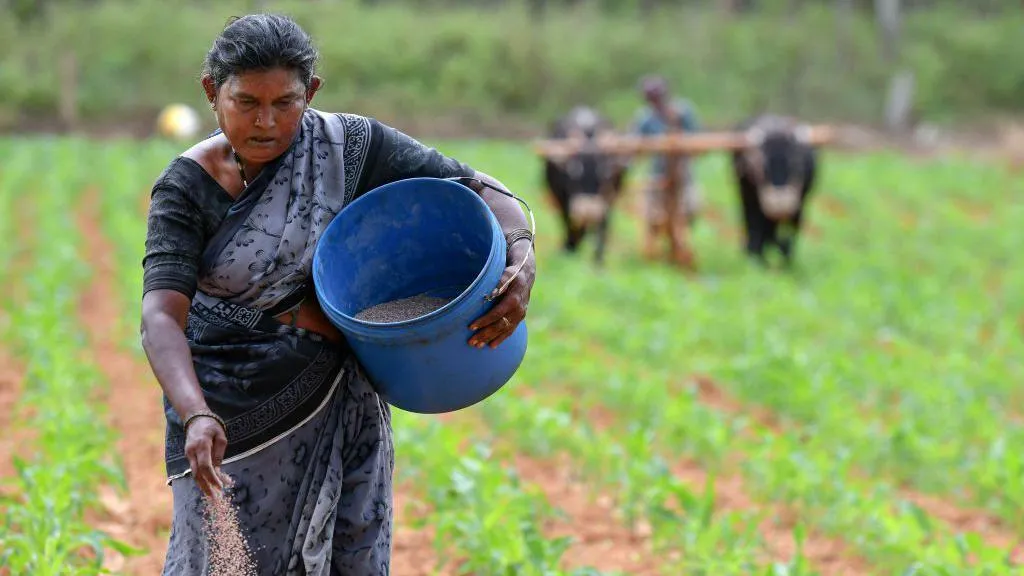
India already consumes about 40 million tonnes of urea a year – a rate that many agricultural specialists now claim is excessive and harmful to the environment. A lot of this fertiliser is not even used by crops at all. Instead, it is wasted through runoff, pollutants and bad application procedures. The overuse of urea has damaged soil health, disrupted the balance of nutrients and added to environmental stress in farming regions. However, political hesitancy has stalled significant transformation for decades.
This is where the fertiliser issue goes beyond the agriculture debate. It becomes a political economy concern. Subsidies are so closely enmeshed in electoral politics that every attempt to roll them back is immediately met with worries of agrarian unrest and political retaliation. Policymakers know the problem, economists have warned about it over and over again, and agricultural scientists have been providing remedies for years, but structural transformation is at a standstill because no government wants to pay the political price of change.
But continuing with the existing system is equally risky. India may already be experiencing diminishing returns from excessive fertiliser use. Agricultural growth over the years has not depended on fertilisers alone; factors such as irrigation, improved seeds, and changing cropping patterns have also played a major role in increasing productivity. This raises an important question: if multiple factors drive agricultural growth, does continuously increasing fertiliser consumption still make economic and environmental sense? The long-held assumption that higher fertiliser use automatically guarantees higher productivity is now being increasingly challenged.
Interestingly, many farmers themselves seem to know more about the situation than officials would like to think. The surveys show that a big percentage of farmers truly desire to cut back on their usage of chemical fertilisers because they understand the damage it is doing to the health of the soil. Their reluctance is not ignorance, but fear – fear of decreasing yields, uncertain income and the lack of viable alternatives. India has not been able to build robust support systems around biofertilisers, integrated nutrient management and sustainable farming changes. Farmers are locked in a system where drug reliance seems to be the safest economic gamble, even as they realise it is a bad long-term bet.
The environmental impact is just as catastrophic. Decades of chemical-intensive agriculture have depleted soil organic carbon, upset nutritional balance and raised ecological stress. So the fertiliser problem is also a soil health crisis. The long-term survival of agriculture requires sustainable agricultural techniques such as crop rotation, residue incorporation, precise nutrient management and integrated farming systems. These are no longer optional innovations but a necessity.
However, the remedy cannot be sudden and ideological. The Sri Lankan example has shown how abrupt exits from chemical fertilisers can disrupt food production and wreak havoc on economies. India cannot afford revolutionary change. What it needs instead is a substantial, but gradual, revamping of its fertiliser system. Improving nutrient-use efficiency is the most realistic way forward. During the session on West Asian War on Fertiliser Economy organised by IFPRI, experts said that India can reduce fertiliser use by 20-30% just by better application methods, precision technologies and enhanced management procedures. Technologies like nano fertilisers, controlled-release fertilisers, deep insertion techniques and nitrogen inhibitors can make a big impact on reducing loss. Similarly, improving soil health systems and creating crop-specific nutrient management strategies can boost productivity while decreasing reliance on heavy chemical inputs.
India also has to reconsider fertiliser policy beyond subsidy alone. The country needs investment in alternative nutrient systems, green ammonia, biofertilisers, waste-to-resource technology and residential nutrient recovery systems. F, not just cushioning the price shocks as they come. Right now, far too much policy energy goes into managing the subsidy bill and far too little into building actual resilience.
The West Asia conflict, then, should be read as a warning, not a one-off disaster. It has laid bare how exposed India’s food system is to geopolitical shocks and how risky its dependence on imported inputs has become. Handled well, this moment could push India toward a more resilient, efficient and sustainable agriculture sector. Because at this point, the fertiliser debate is not really about farming anymore. It’s about economic stability, environmental survival, political will, and the long-term security of India’s food supply.
The views and opinions expressed in this article are solely those of the author and do not necessarily reflect the editorial position of South Asia Times.

Rishita Dang
Rishita Dang is a Public Affairs graduate from CHRIST (Deemed to be University), Delhi NCR, and an Economics & Analytics enthusiast. Her interests include public policy, development economics, agricultural systems, and sustainability.