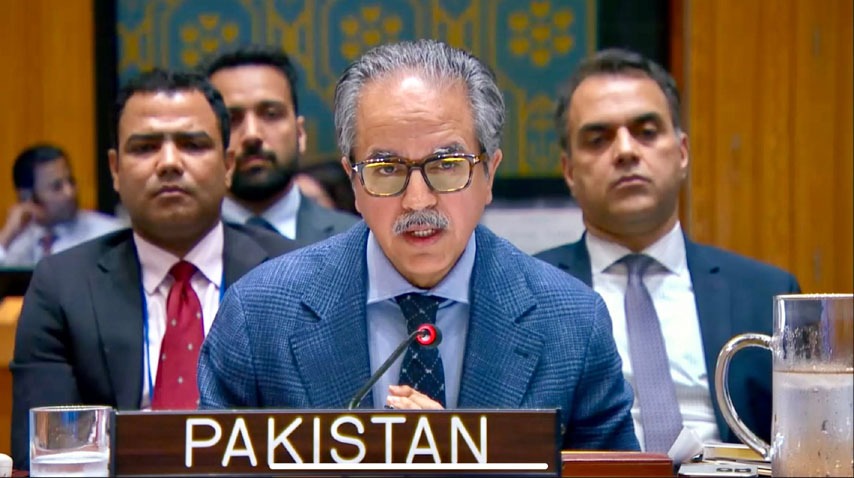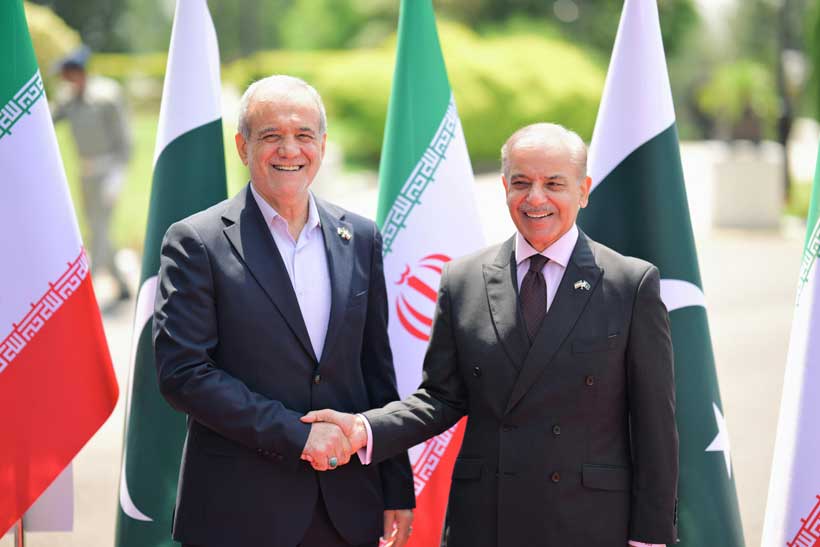
When Pakistan’s Prime Minister Shehbaz Sharif, Field Marshal Asim Munir, and Interior Minister Mohsin Naqvi arrived in Tehran on 4 July 2026 to attend the state funeral of Ayatollah Ali Khamenei, they were doing what statesmen do: standing with a neighbour in a moment of profound national grief. Iran had lost its Supreme Leader of 37 years, killed in a US-Israeli airstrike on 28 February 2026 that shook the region and the world. Over 100 countries sent delegations. Heads of state and government from Georgia, Tajikistan, and Armenia attended. Russia sent Dmitry Medvedev. India sent a senior delegation including the Bihar Governor and the Deputy Foreign Minister. China was represented. Even countries that had maintained careful distance from Tehran during the war sent their condolences in person.
And yet, for a certain class of commentator, it is Pakistan’s attendance that requires explanation. Pakistan’s presence is being framed, in some quarters, as evidence of partisanship, of compromised neutrality, of a mediator taking sides.
The Mediator Who Earned the Right to Grieve
Let us begin with the facts of Pakistan’s role because without them, no assessment of its funeral attendance is honest.
When the United States and Israel launched their joint war on Iran on 28 February 2026, the world held its breath. The Strait of Hormuz was blockaded. Global oil markets convulsed. Regional powers scrambled. Diplomatic channels that had taken years to build collapsed overnight. It was Pakistan, a country that many Western analysts had spent years dismissing as a pariah state, a troubled democracy, a strategic liability, that stepped into the breach.
Field Marshal Asim Munir worked day and night, making calls to Washington as a Trump deadline to strike Iran expired. Pakistan delivered a 15-point US proposal to Tehran. It hosted the Islamabad Talks on 11 and 12 April 2026, the highest-level direct engagement between Washington and Tehran since 1979, with US Vice President JD Vance, Special Envoy Steve Witkoff, and Jared Kushner on one side, and Iran’s Parliamentary Speaker Mohammad Bagher Ghalibaf and Foreign Minister Abbas Araghchi on the other. When those talks ended without a deal, Pakistan did not walk away. Its officials continued shuttling between Washington and Tehran for weeks. Saudi Foreign Minister Prince Faisal bin Farhan specifically acknowledged Pakistan’s “consistent and sustained efforts in support of mediation and dialogue throughout the process.”
On 17 June 2026, the Islamabad Memorandum was signed remotely by US President Donald Trump and Iranian President Masoud Pezeshkian, ending more than three months of war. Pakistan had achieved what no wealthy democracy, no established global institution, and no traditional great power had managed: direct engagement between Washington and Tehran after nearly five decades of estrangement.
This is the country that attended Khamenei’s funeral. Not a partisan. Not an ally of Iran against the West. The peacemaker. The bridge. The country that kept both sides talking when the alternative was wider catastrophe. If that country cannot attend Iran’s state funeral without being accused of taking sides, then the very concept of neutral mediation has been emptied of meaning.
Neighbourliness Is Not Alignment
Pakistan and Iran share a 909-kilometre border. They share centuries of civilisational, cultural, and religious history. Persian was the language of the Mughal court. It shaped Pakistan’s poetry, architecture, vocabulary, and intellectual tradition in ways that are not reducible to politics. Pakistan has an estimated 35 to 45 million Shia Muslims, the second-largest Shia population in the world after Iran. For millions of Pakistani citizens, Ayatollah Khamenei was not merely a political figure. He was a religious authority of immense significance.
Sending a high-level delegation to his funeral is therefore not a diplomatic choice that requires elaborate justification. It is the natural, logical, and humane response of a country that shares geography, faith, and history with a grieving neighbour. The question that should be asked is not why Pakistan attended but what it would have said about Pakistan if it had not.
Does Pakistan not send senior representatives to important events in Saudi Arabia, Türkiye, and Qatar? Of course it does. Diplomatic engagement with friendly states, including attendance at moments of national mourning, is standard statecraft. It is not alignment. It is not endorsement of every policy of every government whose grief one shares. It is the recognition that human solidarity and diplomatic engagement are not zero-sum.
The Regional Context
The critics of Pakistan’s attendance have conspicuously avoided one inconvenient fact: Pakistan was far from alone. Delegations from over 100 countries attended Khamenei’s funeral. Heads of government flew to Tehran. The speakers of the parliaments of Iraq, Oman, Qatar, Belarus, Azerbaijan, Kyrgyzstan, Uzbekistan, Bangladesh, and Egypt attended. Russia’s Medvedev was there. India, which has been far more cautious than Pakistan in its engagement with Iran, still sent a senior delegation.
If Pakistan’s attendance is evidence of partisanship, then the funeral of Ayatollah Khamenei was attended by the partisans of over 100 nations. That is an absurdity. The real question is why Pakistan, specifically, is being singled out for scrutiny that is not applied to any of the other attendees. The answer, most likely, is that Pakistan’s growing diplomatic credibility is uncomfortable for those who preferred it diminished.
Empathy as the Foundation of Diplomacy
There is a deeper argument to be made here, one that goes beyond the specific circumstances of this funeral and speaks to Pakistan’s emerging diplomatic doctrine.
Pakistan’s success as a mediator in the US-Iran conflict was not the product of cold transactional calculation alone. It was the product of trust, trust built over years of consistent engagement with both Washington and Tehran, sustained through moments of tension, and grounded in the recognition that Pakistan understood both sides with genuine depth. Field Marshal Munir’s ability to keep the US at the table when talks nearly collapsed was not merely a function of his access. It was a function of his credibility, the credibility of a country that both sides believed was acting in good faith.
That credibility rests, in part, on Pakistan’s willingness to be present in the human moments that diplomacy too often overlooks. Attending a state funeral is not a policy statement. It is an act of empathy, the recognition that grief is real, that loss is real, and that the relationships that sustain diplomacy must be tended even in the spaces between formal negotiations.
A mediator who disappears when the grief is inconvenient is not a mediator. Pakistan understands this. Its attendance in Tehran is not a contradiction of its neutral role. It is an expression of the human foundation on which that role rests.
Rebutting the Partisanship Charge Directly
For those who persist in the partisanship framing, a direct rebuttal is warranted.
Pakistan brokered a ceasefire between the United States and Iran. It hosted the first direct US-Iran talks since 1979. Its mediation involved sustained engagement with Washington, Riyadh, Ankara, Doha, and Cairo, not just Tehran. Saudi Arabia’s Foreign Minister specifically praised Pakistan’s efforts. The United States allowed Pakistan to be the primary channel for some of the most sensitive negotiations of the conflict. None of this is the behaviour of a partisan actor.
Pakistan’s Shia population protested, sometimes violently, after Khamenei’s killing. Curfews were imposed in Gilgit and Skardu. Pakistan’s government navigated immense domestic pressure while maintaining its mediating role with composure and discipline. A partisan actor would have buckled to that pressure. Pakistan did not.
Attending a funeral is the least that Pakistan owes a neighbour of 909 kilometres with whom it shares faith, history, and the fragile architecture of a peace it helped build. Those who see partisanship in that attendance are not analysing Pakistan’s diplomacy. They are undermining it, and the regional stability it has helped purchase.
Pakistan Has Earned the Right to Stand With Iran Today
Ayatollah Ali Khamenei led Iran for 37 years. He was a figure of immense religious authority for tens of millions of Pakistani citizens. He was the head of state of Pakistan’s immediate neighbour. He died in a war whose escalation Pakistan worked tirelessly to prevent and whose resolution Pakistan made possible.
Pakistan’s Prime Minister, Army Chief, and Interior Minister are in Tehran today not as partisans but as neighbours, as peacemakers, and as human beings extending the solidarity that grief demands and diplomacy requires.
The enemies of peace would prefer Pakistan diminished, isolated, and silent, unable to grieve with Iran or negotiate with America. Pakistan has chosen a different path: the path of empathy as the foundation of diplomacy, of presence as the currency of trust, and of principled engagement as the only honest answer to a region in crisis.
That is not partisanship. That is statecraft, and Pakistan is practicing it at its finest.

The Author is a research associate and content producer at South Asia Times.

Your go-to editorial hub for policy perspectives and informed analysis on pressing regional and global issues.