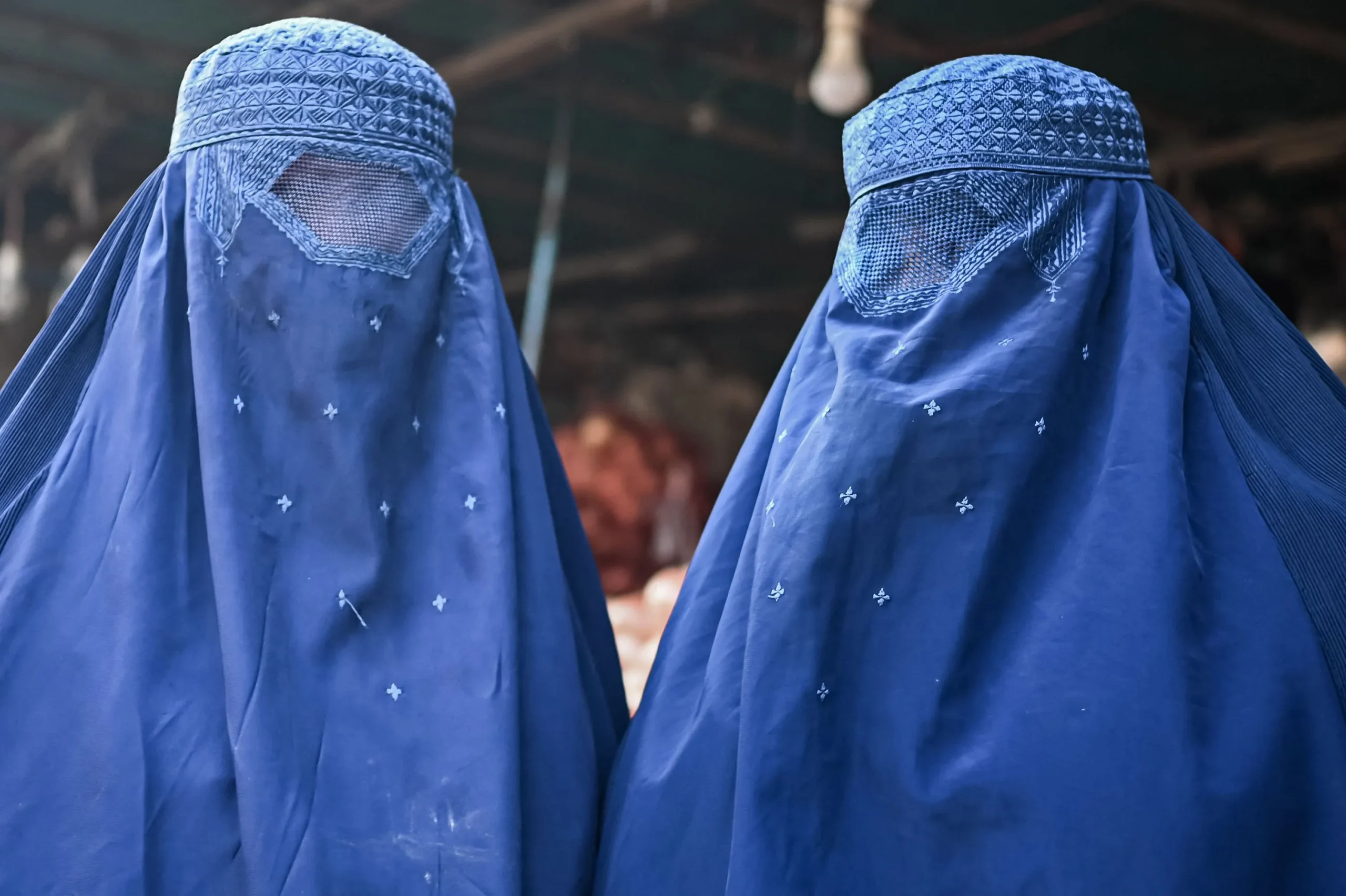
The international community has now gotten into a perilous stand-off over Afghanistan. The international community has been working for almost five years under the false premise that it can use diplomatic isolation, economic sanctions, and conditional humanitarian aid as a tool to ensure the fundamental rights of Afghan women and girls. Rather, it has become a lasting, institutionalized system of gender apartheid.
Afghan women’s total exclusion from public life is not just a violation of human rights. It’s the intentional weakening of a country’s infrastructure, its education, its workforce, its future, even its doors stripped away by an ideology that can’t stand a good test. Now the international community has been issuing statements for five years. There must be a radical shift and abandoning the idea of reforming the regime and only look at the women and girls it has left behind.
The Systemic Erasure of Human Potential
The most visible weapon used against Afghan women is the absolute ban on female education beyond the sixth grade. When the edict was first introduced, it was carefully framed by regime officials as a temporary suspension driven by logistics and technicalities. Years later, that facade has entirely collapsed. What has replaced it is a deliberate “cultural revolution” designed to restructure the collective mind of the nation.
Official reports tracking the state of Afghan civil society reveal that the regime has moved far beyond simple bans; they are actively rewriting the national school curricula to remove hundreds of subjects ranging from basic sciences and humanities to any literature deemed inconsistent with a rigid doctrinal interpretation enforcing a systematic intellectual starvation.
The immediate result of these policies is a staggering 93% learning poverty rate across the. This metric goes beyond the millions of girls physically locked out of classrooms. It encompasses an entire generation of children who are being educated inside an ecosystem drained of critical thinking, starved of modern educational resources, and crippled by severe teacher shortages and near-total internet isolation.
The broader macroeconomic consequence of this intellectual erasure is devastating. According to statistical modeling compiled by UN Women, the cumulative impact of blocking women from secondary education, higher learning, and formal employment means that Afghan girls and women currently achieve just 17.3% of their full lifetime potential. No country can survive when more than eighty percent of the human potential of half its population is intentionally suppressed by state law. This is a policy of deliberate national underdevelopment.
The Carceral State: Mobility and the Healthcare Crisis
The restrictions do not end at the schoolhouse gates. The regime has turned the entire geography of Afghanistan into an open-air prison for women through strict codes governing daily physical movement. Chief among these is the mahram mandate, an institutionalized law requiring women to be accompanied by a male chaperone whenever they leave their homes or attempt to travel.
While this mandate is often discussed in Western media as a loss of personal freedom, its practical, day-to-day consequence is a severe health crisis. Healthcare delivery data from public facilities in Afghanistan reveals that the “Mahram” requirement acts as a structural barrier to basic medical care.
Imagine a woman living in a rural province who experiences severe pregnancy complications or a sudden, acute illness. If her husband is away working, if she is a widow, or if her family lacks an available adult male relative, she cannot legally step outside to visit a clinic. Ground-level medical assessments have documented repeated instances where female patients were physically turned away from clinics or delayed seeking treatment entirely because they arrived without a male escort. This structural barrier directly triggers missed antenatal checkups, untreated chronic conditions, and a predictable, preventable spike in maternal and infant mortality rates across the provinces.
Financial Destruction and Forced Malnutrition
The legal erasure of women from the workforce has also functioned as the primary catalyst for Afghanistan’s economic implosion. Following the 2021 transition, women were summarily banned from working in government ministries, non-governmental organizations (NGOs), financial sectors, and beauty salons.
The economic shockwave of this mass termination hit the household level instantly. In a country already reeling from decades of conflict, severe droughts, and the freezing of central bank assets, hundreds of thousands of families relied entirely on the steady salaries of female teachers, nurses, and civil servants. Data shows that households previously supported or supplemented by female breadwinners suffered an immediate “50% collapse in total income”.
This income deprivation translates directly to acute starvation. Maternal malnutrition has skyrocketed across all 34 provinces. The crisis is so severe that international humanitarian operations have been forced to pivot to emergency survival tactics. Agencies like UNICEF have had to rapidly scale up operations, distributing specialized micronutrient supplements and therapeutic food supplies to more than 1.4 million pregnant and breastfeeding women just to prevent mass wasting and widespread infant cognitive impairment. The international community is effectively spending billions of dollars in emergency aid to patch up a humanitarian wound that was entirely self-inflicted by the country’s rulers.
The Illusion of Leverage: Why Global Diplomacy Failed
For the past five years, the UN Assistance Mission in Afghanistan (UNAMA) and Western capitals have engaged in a diplomatic strategy of “comprehensive integration” or “conditional engagement.” The foundational logic was simple: the regime desperately wants international recognition, the lifting of banking sanctions, and the resumption of long-term development aid. Therefore, foreign diplomats argued, the international community could use these desires as leverage, gradually exchanging economic normalization for the restoration of women’s rights.
This strategy has proven to be a complete illusion. The theory of diplomatic leverage failed because it fundamentally misunderstood the nature of the regime’s power structure.
Policy evaluations of UNAMA’s operations demonstrate that decision-making has been entirely centralized within an autocratic, ideological core based in Kandahar. The supreme leadership views the absolute subordination of women not as a negotiable policy point, but as the core ideological pillar of their state identity. They have consistently demonstrated that they are entirely willing to accept economic isolation, severe poverty, and the status of a global pariah state if that is the price required to maintain their internal social order.
Consequently, continuing to issue statements of “deep concern” is an exercise in futility. The international community possesses no real diplomatic leverage over a leadership that operates on a timeline of generational, ideological struggle rather than quarterly economic performance.
A Radical Realist Pivot: Survival Aid and Decentralized Education
If the regime cannot be pressured into changing its core ideology, then the global strategy must shift from a paradigm of “negotiation” to a paradigm of “circumvention”. Foreign efforts must bypass the de facto authorities completely to deliver direct, unmediated support to the population.
This pivot requires two immediate structural changes in how the world interacts with Afghanistan:
- Localized Survival Aid over Infrastructure: Funding must shift heavily toward micro-level healthcare clinics that operate deep within communities, using local networks to ensure that women can access care without facing the rigid checkpoints of the “mahram” mandate. It also means expanding direct cash transfer programs straight into the hands of mothers, preventing family malnutrition at the roots.
- Legal Recognition of Gender Apartheid: International bodies must officially recognize the situation in Afghanistan as gender apartheid. This provides the framework necessary under international law to criminally prosecute officials traveling abroad, freeze individual assets of those enforcing the edicts, and strip the regime of any remaining avenues of international legitimacy.
Conclusion: The Cost of Complacency
The ongoing tragedy in Afghanistan is a stark warning to the rest of the world. It proves that human progress is not a one-way street, and that rights hard-won over decades can be systematically erased in a matter of weeks if the global community chooses the path of comfortable compliance.
The women and girls of Afghanistan have not surrendered; they continue to resist through underground schools, secret business networks, and quiet acts of daily defiance. The international community must finally match their bravery with structural realism. It is time to abandon the belief that diplomatic dialogue will open the school doors. The global community must invest its resources into building the digital pipelines, networks, and economic lifelines necessary to sustain Afghan women until this dark chapter of history finally burns itself out.

Madiha Munir is an MPhil candidate in Governance and Public Policy at National Defence University, Islamabad.