The world that we used to know just a few decades ago represented an equation with variables on both sides whereas the conflicting geopolitical poles were trying to use inverse operations to group all the hard power variables on one side of the equation and all regular numbers (constants) of the soft power on the opposite sides. That was an era of the unipolar world decline.
Nowadays we have reached a turning point of the global order. Isolating the variable for finding a solution is not actual anymore. The Russia-Ukraine conflict inspired by the West and NATO, US-Israel aggression against Iran, – these are the features of the changing geopolitical landscape in the world affairs.
While designing an insight of the emerging security architecture of the global order it is important to consider one of the most treacherous risk to be dealt with: summing up all the errors and bottlenecks of the outdated strategy of conflict that has been prevailing during unipolar world era in the Western hemisphere and its thoughtless transfer into domain of the Global South; reviving the historically painful narratives between the states in the South Asia and Middle East, igniting fuel of terrorism, extremism, religious and ethnic strives, detaching one country from another, depriving one nation after another by the false ideas and promises of the inclusive capitalism, technological and anthropological equality in accordance with the merciless terms of the ultra-globalist elites.
The West and those states that are still striving for its shallow ideological umbrella will gain nothing constructive but the hybrid form of hegemony and new devised world order. The language of wars and aggression, doctrine of genocide, as an example of Israel and its leadership explicitly demonstrates “we can fight with Lebanon, Iran, Turkey and Egypt at one time”. If we de-code this statement it will sound as «we will plant the seeds of the war among all of you». It is a road straight to the multi-polarized world with the gloomy future for the whole humanity.
If yesterday we were standing in the middle of the warring states on terms of one superpower, the current global shift shows that the conditional division into two geopolitical domains of interests and influence, the Global West and Global South, does not save us from the risk of the uncontrollable mass destruction on the whole planet, on the opposite, it leads towards warring states, nations, communities and world leaders on no one’s terms with no guarantees for anyone.
The deterioration of the international institutions, financial system, governance and leadership, reconfiguration of the intellectual, ideational, social, political and technological patterns, – all that creates a serious threat to the process of the peaceful transformation towards more stable and predictable multipolar world.
As soon as multipolarity is still an undecoded geopolitical physics there is a strong need to elaborate a strategy that will allow to pass the corridor of the emerging full eclipses of the global order-in transition and find the most advanced and innovative ways of sustaining peace and prosperity of the rising power centers.
Russia and Pakistan have power, resources and will to face the highlighted risks, threats and challenges, build a substantial ground for the lasting strategic partnership. During the last decade both states have demonstrated a steady growth towards closer relations and confidential dialogue within a broad range of interests such as defense and security, trade and logistics, energy and agricultural sector.
The year 2025 has become a pivotal momentum for Russia-Pakistan ties due to the geopolitical and geostrategic shifts in the USA, US-EU relations, South Asia and Middle East.
It opened a pathway towards new strategic drivers that can shape a new geopolitical installation and partnerships, whereas Pakistan can play a significant role for Russia in the region of South Asia, and Russia can help Pakistan to exit a long-lasting era of dependence on one single source of power, technological and military support.
Russia and Pakistan are fully capable to expand their highly beneficial geopolitical connectivity by promoting the values of national sovereignty, technological and scientific exchange, building a well-tuned and synchronized mechanism of strategic communication that will provide an unbroken string of projects and initiatives in a diversified way and for the long term period of time.
For accomplishing this goal, the political, diplomatic and economic driving force of Russia and Pakistan is to cover three levels of integration: strategic communication, strategic initiatives and strategic alignment.
The strategic communication is to be channeled through the intensive exchange of ideas, concepts, scenarios and insights on the potential of collaboration between Russia and Pakistan (P&P contacts, public diplomacy, B2B). It will allow to construct an intellectual and ideational reservoir of elaborating a strategic initiatives ground. The latter will supply the fuel for the strategic advancement and partnership.
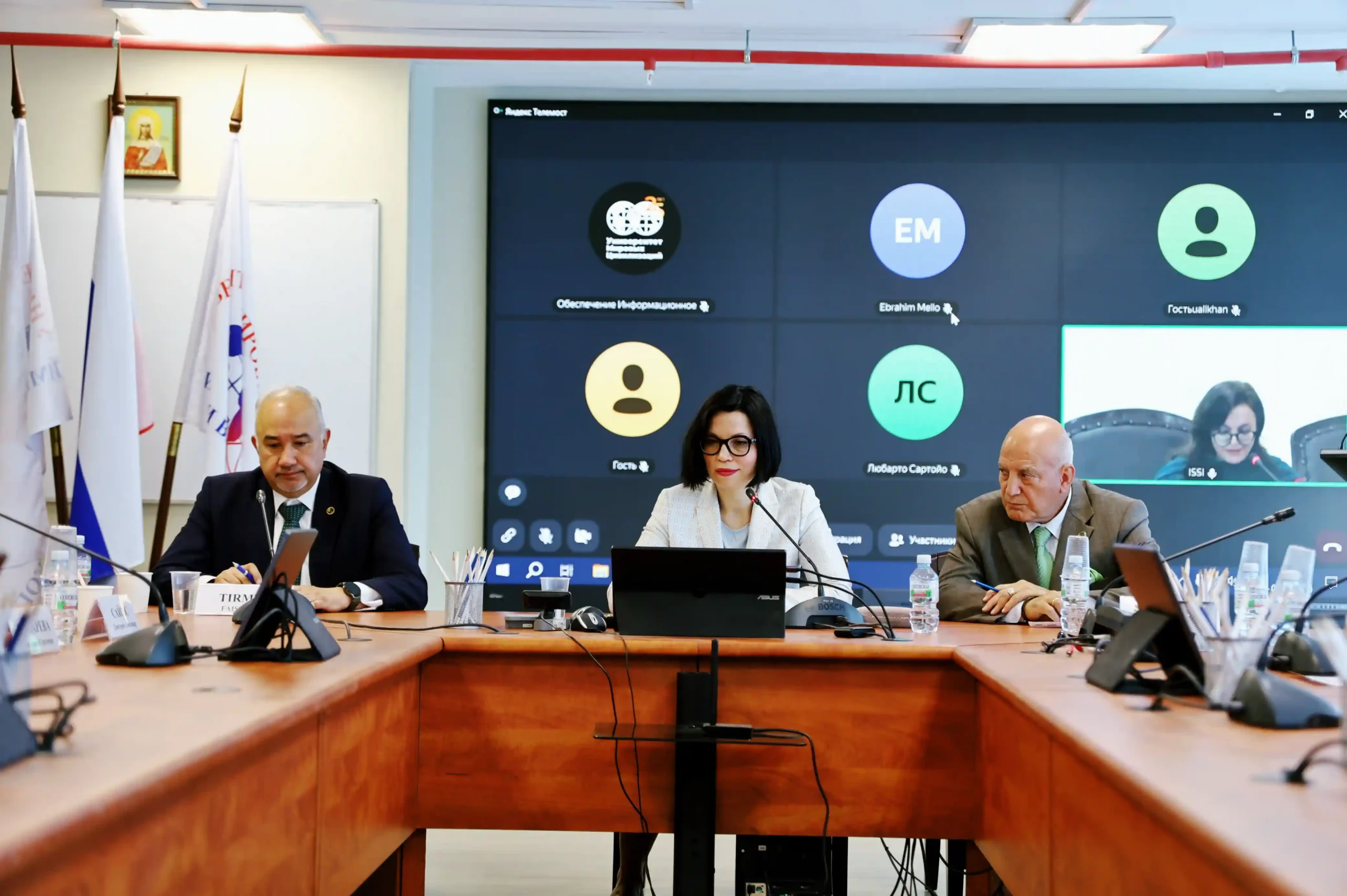
Unfortunately, there is not a single Russia-Pakistan think tank that is to be empowered to develop a conceptual and strategic context of the long-term synergy between Russia and Pakistan. The recent intensification of the contacts between academia, business, and diplomatic circles (the First Russia-Pakistan Eurasian Forum,16-17th of December 2025, Moscow, media forum «Moscow-Islamabad», 27th of February 2026, Moscow, the Second Russian-Pakistani International Conference “The Evolution of Russian-Pakistani Relations in a Changing World Order”, 13-15th of May 2026, Kazan, Russian Federation) demands a steady channel and strategic interplay between the Russian and Pakistani decision-makers, as well as the financial support for securing a reliable base of expertise, exchange and targeted programs and initiatives implementation.
As for the B2B contacts, it also requires a serious institutional breakthrough as soon as the current entities such as the Russia-Pakistan Business Council, Chamber of Commerce and Industry of the Russian Federation, as well as other Associations for Business Promotion with Pakistan are chained by the objective lack of space for the business maneuvering between Russia and Pakistan, inertia and weak leadership.
However, the key challenge of these domains is the absence of the long-term strategy at all. The reason of this vacuum is derived from the flat and linear past that practiced situational analysis and was driven by the rapid ascents and rough downturns of interests of the parties towards each other.
The strategic pivot of Russia towards Global South and an in-depth transformation of Pakistan and its political and diplomatic spirit have placed both states in front of dilemma: to move along the strategy-to-strategy accommodation upon the current geopolitical configuration or to make a strategic breakthrough that will build a long-standing ground for trust and commitment.
In order to lift the Russia-Pakistan ties on the new level we should avoid giving a considerate attention to the comparative scale of the strategic relations of Russia and Pakistan with the third parties. On the 4th of June 2026 the Russian President Vladimir Putin met with the representatives of international news agencies on the sidelines of the St. Petersburg International Economic Forum at the Constantine Palace in Saint Petersburg. While replying on the question of the Indian journalist, he highlighted Pakistan’s significance by firmly rejecting the narrative that Islamabad acts merely as a proxy or under the complete control of Beijing. He described Pakistan as a large, sovereign, and independent nation with multi-dimensional global relationships.
This statement supports an idea of constructing an independent and mutually respectful strategic bonds disregarding other forms of partnership that Russia and Pakistan have built or in the process of settling down. The message of the Russian President was positively received in Islamabad and can foster new strategic drivers to emerge and shape the context of the future agreements of collaboration in the sphere of trade and logistics, education, science and technologies, security and defense, agriculture. There is also a broad scope of opportunities within maritime logistics and space programs, humanitarian ties, B2B and P2P diplomacy.
The Russian President Vladimir Putin has named China, the United States, India, and Russia as the four top countries driving the international order. This is an obvious trend which should be considered at the cusp of shifting global order. However, it is worthy of mentioning that there is a high grade of friction and rivalry between indicated global players which may create a hurdle race in the era of technological and geopolitical competition.
Pakistan has succeeded to design a dynamic strategic bond with China, USA, Iran, the Gulf Arab states, Turkey, Egypt, as well as with the states of the Central Asia.
Therefore, it can emerge as a reliable and advanced partner that can participate in a diversity of geopolitical configurations and alliances and secure its peaceful interplay and collaboration.
Being a middle power, Pakistan has entered the league of the global powers due to its diplomatic leverage and smart performance in the geo-strategic and geo-economic domains. Considering the above-mentioned strategic drivers the Russia-Pakistan Strategic Partnership has a great potential to be well-articulated and diversified.
Pakistan is a ‘natural connector’ for China’s Belt and Road Initiative and Russia’s International North-South Transportation Corridor. This should be worked out in a fruitful way between Russia and Pakistan as well.
Pakistan is to be overviewed by Russia as a great tourist, investment and IT sector destination. Pakistan is rapidly cementing its status as an emerging global IT powerhouse. It is officially ranked among the top 16 global outsourcing destinations, outperforming over 170 countries, and features one of the largest freelance tech communities in the world. Pakistan has one of the youngest populations globally, with over 60% of its citizens under 30. This massive “youth bulge” is driving a rapidly expanding IT sector, with national exports recently exceeding 3.8 billion. Today, hundreds of thousands of young professionals are leading the charge in software development, digital entrepreneurship, and the global gig economy. Pakistani youth and its digital excellence can become a valuable incentive for building a profound long-term strategic partnership between Moscow and Islamabad.
Science, education and cultural exchange is another important realm that can cement the playground of the Russia-Pakistan Strategic Ties. The contacts between academia, R&D institutions, young scientists and public leaders, educational exchange programs are to become a driving force of the strategic dialogue empowerment. The successful story of Russia-Pakistan relations is to be written not only by politicians and diplomats but by the civil communities of both countries, their youth, innovators and thinkers.
The human capital, knowledge economy and social progress are the values and goals that are shared in common and can become a powerful language of communication between Moscow and Islamabad disregarding geopolitical trends or fluctuations. Moscow and Islamabad are to move towards vital consensus that will protect the immune system of their relations for decades ahead.
Thus, Russia and Pakistan have all the required elements for designing its own self-sufficient strategic DNA of collaboration that can provide a gradual transformation from the pragmatic strategic partnership grounded in energy security, defense cooperation, and regional connectivity, towards united and indivisible strategy of Greater Eurasia, as both countries have a unique historical privilege of exposing their creative driving force for building a new multipolar world on the equitable terms and unprecedent spirit of innovation.
Dr. Roxolana Zigon is a Russian geopolitical analyst and expert in international relations and diplomacy. She is the Director of the Scientific Center for International and Strategic Research at the University of World Civilizations, where her work examines evolving global power dynamics, Eurasian affairs, strategic competition, and contemporary foreign policy challenges.