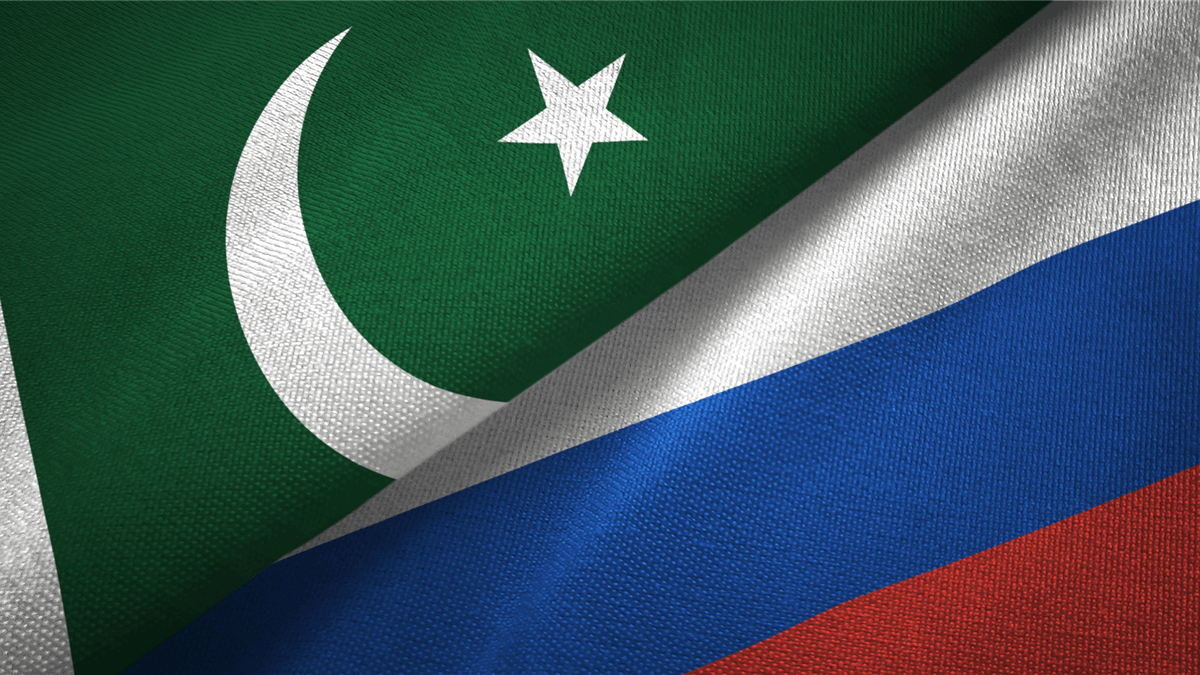
There is a particular kind of geopolitical irony that takes decades to ripen. For much of the twentieth century, Pakistan and Russia faced each other across the barricades of other people’s wars, proxy confrontations on Afghan soil, competing alliance architectures, and the accumulated suspicions of ideologically opposed blocs. That history did not merely fade. It calcified. And for years, it served as the unspoken ceiling of what bilateral relations could realistically become.
What I observed at the Institute of Strategic Studies Islamabad’s high-level webinar on Monday, a gathering of senior diplomats, policymakers, and strategic thinkers from both countries, suggested that ceiling is being dismantled, quietly and methodically. The event’s title, ‘Pakistan–Russia Bilateral Relations at the Cusp of a Shifting Global Order,’ was not diplomatic boilerplate. It was a statement of structural reality.
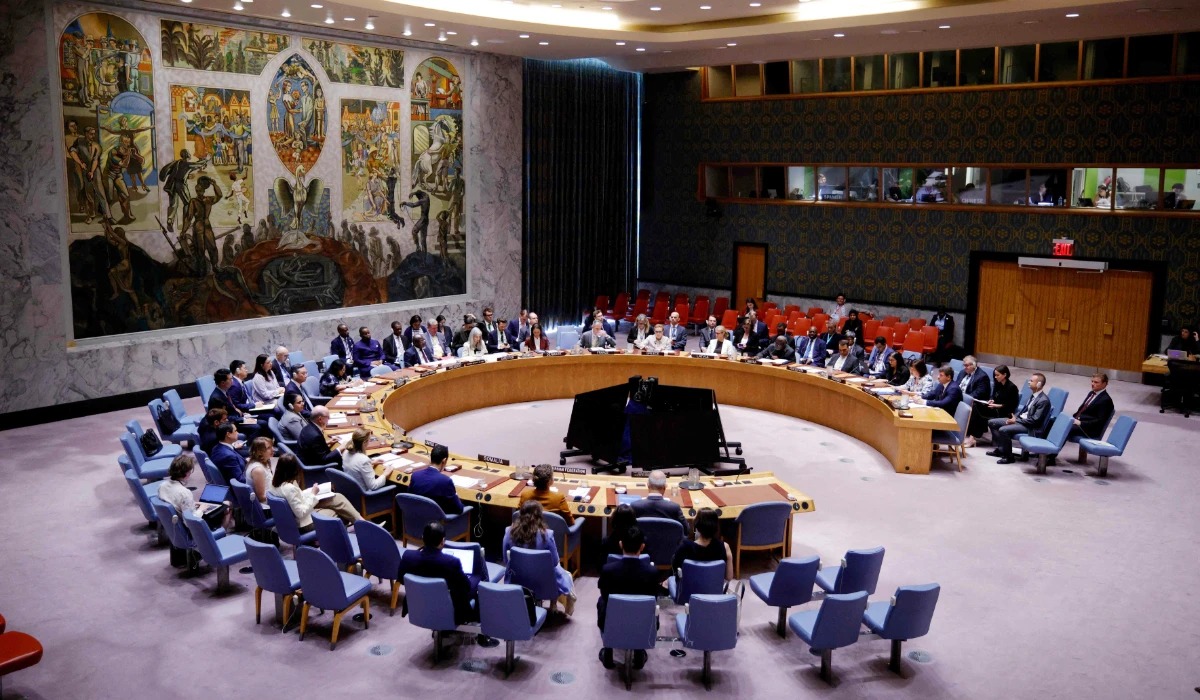
Federal Minister for Energy Sardar Awais Ahmed Khan Leghari described Pakistan–Russia relations as a steadily strengthening partnership that has expanded significantly over the past two decades. That characterisation, offered without fanfare, contains within it a quiet revolution. Two decades ago, the relationship existed largely on paper. Today, it is underpinned by an Intergovernmental Commission (IGC), joint working groups on counterterrorism, coordination at the United Nations Security Council (UNSC), and an expanding footprint inside the Shanghai Cooperation Organisation (SCO).
Ambassador Faisal Niaz Tirmizi, Pakistan’s envoy to Moscow, described the current period as ‘a defining moment in global politics.’ He was not being hyperbolic. The fracturing of the post-Cold War liberal order, the war in Ukraine and its systemic consequences, the accelerating United States-China rivalry, and a Middle East in violent flux have together created conditions in which middle powers are no longer passive recipients of great power decisions. They are becoming architects of new arrangements.
Dr. Tariq Fatemi, whose decades in Pakistani diplomacy lend him a particular authority on matters of foreign policy, put it with characteristic directness. ‘I can’t think of a better time for Pakistan–Russia relations than today’, he said. He called on both sides to move beyond the gravitational pull of historical grievance, ‘what happened in the 1950s and what happened in the past is past’, and seize an opening that may not remain indefinitely available.
Notably, Pakistan’s strategic value in any emergent Eurasian order is not abstract. It is cartographic. As Ambassador Masood Khan articulated with precision, Pakistan offers Russia and the broader Eurasian landmass considerable and durable value. Direct access to the Arabian Sea, maritime connectivity routes, and a gateway to West Asia. Gwadar Port, which figures prominently in the China-Pakistan Economic Corridor (CPEC), is the physical expression of this potential. A deep-water facility on the Makran coast that could anchor a broader network of Eurasian connectivity if the political and infrastructural conditions are met.
The International North–South Transport Corridor (INSTC) entered the discussion as a live possibility, not a theoretical construct. Pakistan’s potential participation in the INSTC, and its conceptual linkage to Gwadar, would constitute a significant expansion of the corridor’s strategic footprint. The vision articulated by Ambassador Khan was even more sweeping. A Pakistan-Xinjiang corridor extended into wider Eurasian connectivity networks through Russia, creating what he called ‘a broader Eurasian strategic space.’ This map does not exist yet. But it is one that serious strategists are beginning to draw.
The most candid moments at Monday’s webinar concerned the distance between political intent and economic reality. Bilateral trade between Pakistan and Russia currently stands at approximately US$1.3 billion, a figure that Ambassador Khan rightly described as requiring significant expansion.
The obstacles are real and should not be minimised. Banking and payment mechanisms remain underdeveloped, particularly in the shadow of Western sanctions architecture. Connectivity bottlenecks persist across multiple corridors. The private sectors of both countries remain largely unacquainted. And the Pakistani business community, still oriented toward traditional partners and markets, has not yet pivoted toward the Eurasian commercial ecosystem with the urgency that the strategic moment might seem to demand.
Dr. Fatemi was explicit on this point that unless both sides recognise and act on mutual economic advantages, the aspirations articulated at gatherings such as Monday’s will not translate into substance. Russia was encouraged to expand its economic presence in Pakistan. The revival of Pakistan Steel Mills, once built with Soviet assistance, was raised as a potential site of renewed industrial cooperation. This is symbolically a resonant and practically significant proposal.
Energy cooperation is the most immediate and tangible frontier. The LNG and oil trade, which surged following Russia’s reorientation of its export relationships post-2022, opened channels that Pakistan, facing acute energy price pressures, has begun to explore. The Intergovernmental Commission (IGC) remains the principal institutional mechanism for advancing this agenda.
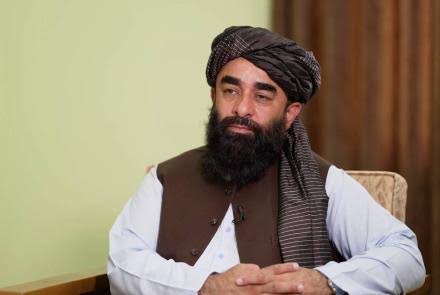
There is a domain in which Pakistan and Russia have found convergence more rapidly than in commerce. Security. Counterterrorism, particularly the shared threat posed by militant networks operating across the Afghanistan-Central Asia corridor, has emerged as a genuine area of policy alignment. Within the SCO framework, this convergence is institutionalised, however imperfectly. Ambassador Khan noted that Russia could play a constructive role in persuading the Afghan Taliban to prevent their territory from being used as a staging ground for regional terrorism. This is a role that Moscow, with its direct relationships in Kabul and its Central Asian equities, is better positioned to play than most.
During the recent diplomatic turbulence involving Iran and Pakistan, Russia worked alongside Pakistan in support of de-escalation, a data point that Dr. Fatemi cited as evidence of the strategic alignment in process. These are not the gestures of a relationship that remains merely ceremonial.
Senior journalist Syed Talat Hussain’s intervention at the webinar deserves particular note. His emphasis on cultural diplomacy and long-term people-to-people engagement as ‘essential pillars’ of the relationship pointed to a dimension of bilateral ties that remains almost entirely underdeveloped. The long-pending Pakistan–Russia visa regime agreement, still under process, stands as a symbol of how institutional inertia can frustrate even the most willing of political intentions.
Media cooperation, academic exchanges, and the cultivation of a constituency within both societies that understands and values the relationship, these are not luxuries to be pursued after the strategic architecture is in place. They are conditions for the strategic architecture to hold.
Ambassador Khalid Mahmood, Chairman of ISSI’s Board of Governors, closed the proceedings by reaffirming commitment to expanding the relationship ‘across multiple domains.’ The phrase is appropriate. The relationship that Pakistan and Russia are constructing is not a bilateral pivot with a single hinge point. It is a multi-domain architecture. Energy, connectivity, security, diplomacy, and people, each of which must be developed in tandem if the whole is to achieve structural integrity.
The transformation underway between Islamabad and Moscow is not a temporary diplomatic fashion. It is a structural consequence of an emerging multipolar order in which both states increasingly find strategic convergence. Russia needs Pakistan’s geography, its Arabian Sea access, and its position as a bridge between South Asia, Central Asia, and West Asia. Pakistan needs Russia’s energy, its institutional weight in Eurasian forums, its role as a stabilising influence in Afghanistan, and its capacity to counterbalance the diplomatic pressures that Islamabad perennially faces from multiple directions.
The logic of the relationship has never been this strong. The real test, as the webinar made clear, is no longer diplomatic intent. It is implementation. The coming decade will determine whether Pakistan–Russia relations evolve into a substantive Eurasian partnership, one with trade volumes, infrastructure corridors, and functional security mechanisms to its name, or whether this moment of convergence becomes, as so many before it, an underutilised strategic opportunity.
History is watching. So, more pressingly, are the structural forces reshaping the world.
Salman Javed is the CEO of South Asia Times (SAT) and a strategic communications professional with over 15 years of experience in research, media, public diplomacy, and geopolitical analysis. His areas of expertise include Pak-Afghan affairs, regional security, strategic narratives, and South Asian geopolitics. He has led multiple research and media initiatives aimed at bridging policy analysis with informed public discourse.