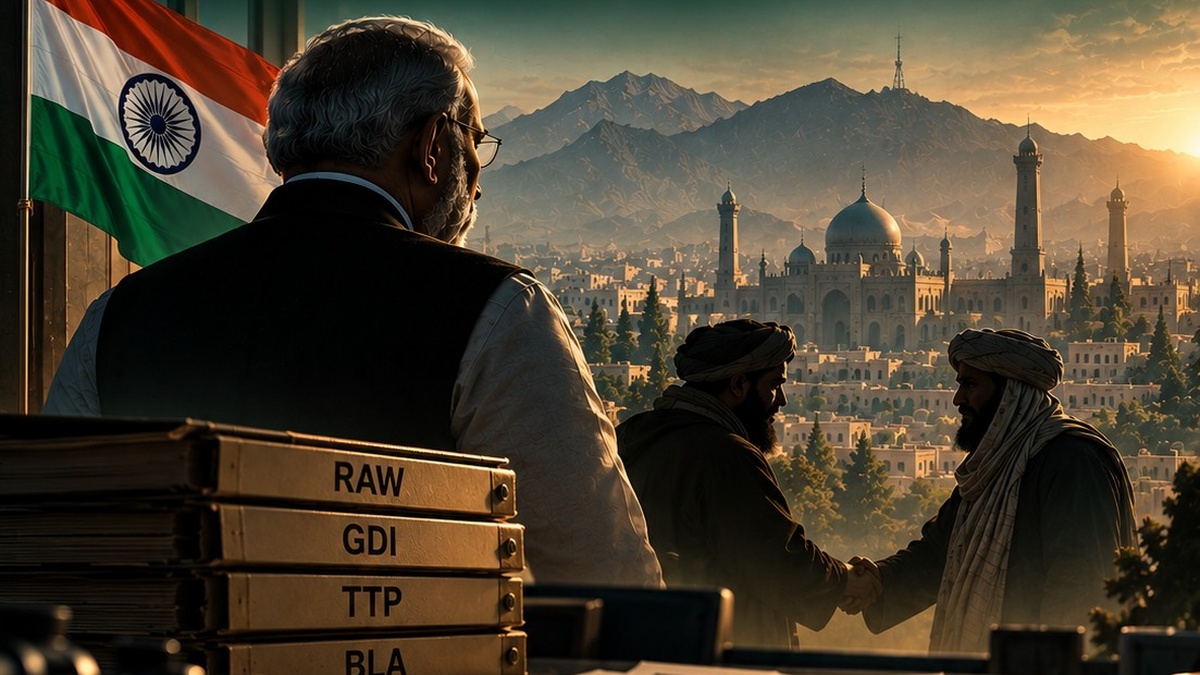
The events of May 7th have carved a definitive place in the annals of modern geopolitics. The date will not be remembered for an aggressive state flexing its military muscle to destabilize a neighbor, but rather for how the targeted nation turned the tables, surprising the international community by reasserting the sanctity of its borders.
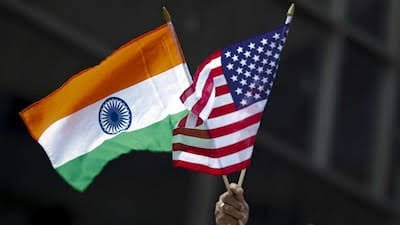
The historical friction between Pakistan and India remains one of the most volatile quagmires in international relations. As two populous, nuclear-armed neighbors, their relationship has long been defined by a deep-seated trust deficit and the unresolved core dispute over Kashmir. This reality has resulted in conventional wars in 1948, 1965, and 1971, and pushed the region to the precipice of conflict in 1999, 2002, 2016, 2019, and most recently, 2025.
However, the dynamics of this bilateral relationship have deteriorated significantly since the Bharatiya Janata Party (BJP) assumed power under Narendra Modi in 2014. India’s posture toward Pakistan has grown increasingly hostile, driven by an ideological blending of history, religion, and domestic politics. Across successive tenures, the Modi administration has aggressively pursued a policy of diplomatically isolating Pakistan, leveraging international forums to level accusations while masking its own domestic instabilities and regional insecurities.
During this era, New Delhi has repeatedly employed direct military bellicosity under the guise of “counter-terrorism” and avenging its soldiers, particularly concerning the highly sensitive environment of occupied Kashmir. A predictable and dangerous script has emerged over the last decade. In 2016, following an attack by indigenous actors in Uri, India claimed “surgical strikes” against Pakistan, prompting immediate counter-actions before international mediation prevailed. In 2019, the Pulwama attack yielded a similar response: Indian aerial incursions that were swiftly and effectively thwarted by Pakistan’s defensive forces, again requiring global mediation to de-escalate.
This playbook was dangerously expanded in 2025. Following the tragic killing of 26 tourists in Pahalgam, Indian Illegally Occupied Jammu and Kashmir (IIOJK), India bypassed all avenues of diplomatic inquiry or evidence-sharing. Instead, it launched unprecedented airstrikes deep into Pakistani territory, targeting civilian locations. This unprovoked escalation triggered a formidable and entirely justified defensive retaliation from Pakistan. While a US-brokered ceasefire was implemented after four days, halting the immediate violence, the specter of instability continues to loom over the region.
A stark contrast exists in how both nations handle regional security crises. In the post-9/11 era, India has reflexively blamed Pakistan for almost any domestic security failure. Pakistan, conversely, has consistently advocated for open dialogue, requested actionable intelligence, and maintained a stance of responsible diplomacy. Under the current Indian administration, however, Pakistan’s calls for dialogue and its protests regarding the disputed status of Kashmir have been met with warmongering, offensive tactics, and military adventurism.
While India’s border skirmishes since 2016 were largely confined to the Line of Control, the 2025 aggression crossed a catastrophic threshold. By targeting multiple locations within Pakistan proper, India directly breached the sovereignty of the Islamic Republic of Pakistan, pushing the two nuclear-armed nations to the absolute brink of all-out war.
Sovereignty is not merely a political buzzword; it is the sacred bedrock of the modern nation-state system. Born from the Treaty of Westphalia in 1648, sovereignty represents the supreme, absolute authority an independent country exercises over its territory and internal affairs. The United Nations Charter explicitly codifies this in Article 2, stating: “The Organization is based on the principle of the sovereign equality of all its Members.”
Yet, in today’s increasingly volatile global climate, the commitment to upholding sovereign integrity is eroding. The failure of the international community to forcefully condemn breaches of sovereignty has emboldened aggressive states. A deeply concerning trend is the emulation of disproportionate military doctrines—akin to actions witnessed in Gaza—being applied to the South Asian theater.
When a nation’s territorial integrity is violated, it is not merely a bilateral skirmish; it is a direct challenge to the international rules-based order. The global community must view the 2025 Pakistan-India clash through this critical lens. Framing Pakistan’s response simply as a “tit-for-tat” escalation is a dangerous mischaracterization. It normalizes offensive realism and equates the aggressor with the defender. Treating both nations on the same scale while blindly urging “de-escalation” fails to address the root cause and only exacerbates the security dilemma.
The international system, forged from the ashes of World War II, was designed precisely to prevent this brand of unilateral aggression. Today, that system is buckling under the weight of crises spanning from Ukraine to the Middle East. If the world allows the normalization of unprovoked strikes across sovereign borders in South Asia, the resulting geopolitical firestorm could easily mirror the catastrophic global conflicts of the 20th century.
No responsible global citizen wishes for such an outcome. Therefore, the international community must actively work to preserve the principle of sovereignty, eliminate the “grey areas” exploited by aggressors, and establish strict accountability for those who violate international law.
By commemorating Marka-e-Haq this May, Pakistan is not celebrating escalation; it is cementing its position as a defender of international law. It is amplifying a necessary call to preserve sovereign values. Global actors would do well to support these diplomatic endeavors, for recognizing and deterring belligerence is the only true pathway to regional peace and cooperation.
Sovereignty must prevail.

Koonj Altaf is a PhD candidate in International Relations and an academic counselor based in Karachi, Pakistan. She writes regularly on Pakistan-India relations, regional diplomacy, conflict resolution and international affairs. Her research focuses on South Asian geopolitics, peacebuilding and strategic stability in the region.