The growing tensions among the United States, Israel, and Iran signal more than a regional crisis. It essentially reflects an ongoing transformation in the global order, with far-reaching implications for maritime and strategic stability. The growing confrontation, marked by high-stakes military posturing and attempts at strategic decapitation, underscores the limits of traditional power hierarchies, as Iran’s resistance unfolds within an increasingly multipolar system. Simultaneously, the growing influence of China and the reassertion of Russia have reshaped the geopolitical contours of the Middle East and beyond, reinforcing the enduring relevance of hard power in contemporary statecraft.
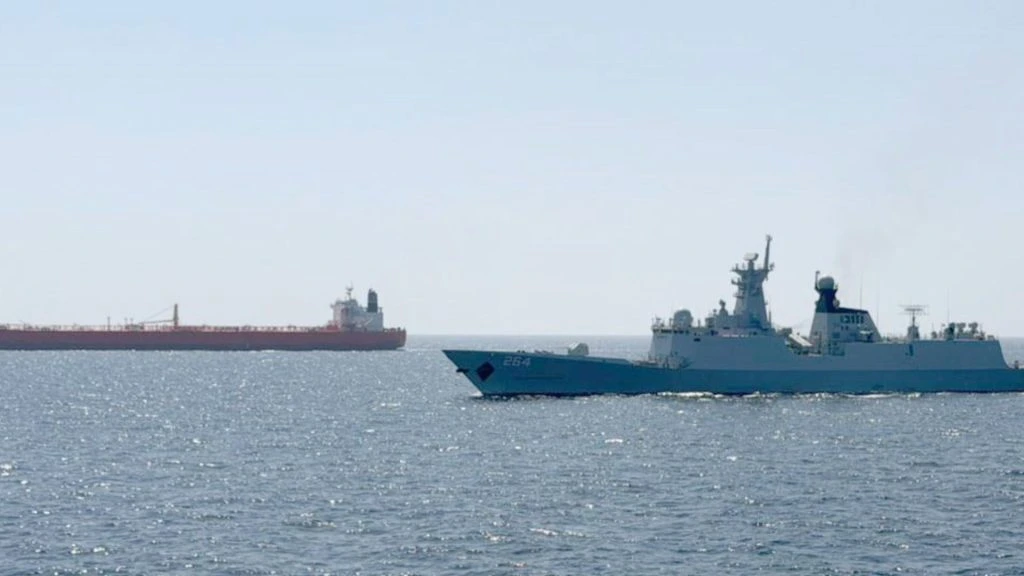
Against this backdrop, developments such as the closure of the Strait of Hormuz and the initiation of Operation Muhafiz-ul-Bahr by the Pakistan Navy must not be viewed as isolated efforts but as a calculated response aimed at safeguarding national and maritime interests. Pakistan’s geostrategic position, particularly the rising importance of Gwadar as a viable alternative for maritime access, has assumed renewed significance in ensuring continuity of trade and energy flows. In this volatile environment, Pakistan’s dual role as a stabilising maritime actor and a diplomatic intermediary highlights the intricate link between regional security and global equilibrium. Within this framework, the Pakistan Navy has emerged as a pivotal force, ensuring the security of sea lines of communication and facilitating the uninterrupted movement of vital commerce through one of the world’s most critical chokepoints, reinforcing Islamabad’s its credentials as a credible peace broker in the region.
The maritime domain has long remained a contested space, particularly during periods of conflict when global trade, connectivity, and strategic competition converge with heightened intensity. The developments surrounding the Strait of Hormuz reinforce Barry Buzan’s proposition that security is inherently clustered within geographically proximate regions, as the evolving dynamics of the Gulf vividly illustrate the logic of a regional security complex. Yet, the contemporary character of the conflict adds further complexity. The integration of emerging technologies, ranging from autonomous maritime platforms and unmanned aerial vehicles to satellite-enabled surveillance, has transformed the conduct of operations at sea. As a result, states are increasingly shifting from conventional naval engagements to hybrid forms of warfare, where persistent monitoring, technological integration, and operational agility have become more decisive than mere physical presence in controlling critical sea lines of communication.
In parallel, the risk of a broader economic disruption has necessitated coordinated diplomatic engagement by key regional and extra-regional actors. Pakistan has emerged as the principal driver of mediatory efforts in the Gulf crisis, with countries such as Turkey, Egypt, Saudi Arabia, and China playing supporting roles, as it leverages its geostrategic position and proximity to Iran to lead initiatives aimed at de-escalating tensions.. Historical precedents, such as the strain placed on the Bretton Woods system during the 1973 oil crisis, underscore the vulnerability of global economic structures to disruptions in energy flows. In this context, Iran’s challenge to the petrodollar system in 2026 has further unsettled established financial hierarchies, amplifying the stakes of the crisis. Consequently, efforts to secure maritime interests, ensure the continuity of trade, and maintain stability in the North Arabian Sea have become paramount, reflected in the deployment of naval assets to safeguard merchant shipping and uphold the principle of open and secure sea lanes.
As aforementioned, Pakistan’s stature in the international system appears to be gaining traction as it assumes an increasingly active and central mediatory role in the Middle East, engaging with key regional actors such as Turkey, Saudi Arabia, and Egypt. This diplomatic outreach has been reinforced by high-level engagements, including Foreign Minister Ishaq Dar’s visit to China, where consultations with his counterpart Wang Yi focused on formulating a five-point framework aimed at achieving a cessation of hostilities. In contrast to India, Pakistan has demonstrated a consistent willingness to pursue proactive diplomacy. Historically, Pakistan has occupied a consequential position in pivotal geopolitical moments, ranging from its facilitation of the Sino–US rapprochement to its frontline role in the War on Terror, and now to its active engagement in the unfolding Iran–US–Israel crisis.
At the same time, Pakistan’s strategic environment is becoming increasingly complex. The recent signing of a Mutual Defense Agreement with Saudi Arabia, whereby an attack on one is to be treated as an attack on the other, adds a significant security dimension to its foreign policy calculus. Coupled with renewed, albeit still ambiguous, engagement with the United States, including participation in initiatives such as the Trump-led peace efforts on Gaza, Pakistan finds itself navigating a delicate balance. Should Saudi Arabia invoke the defense pact, Islamabad could face pressure to respond, even as it seeks to maintain stable relations with neighboring Iran. This creates a dilemma: while Pakistan aims to avoid direct involvement, particularly given sensitivities along its western borders, any escalation that tilts unfavorably against Iran could further complicate its regional posture and test the limits of its diplomatic balancing act.
The Pakistan Navy’s role in the waters of the Arabian Sea reflects a notable evolution, from a traditional focus on deterrence and combat operations to a broader emphasis on cooperation, maritime security, and non-traditional roles. In the context of the Gulf crisis, where the boundaries between conflict and stability are increasingly indistinct, Geoffrey Till’s observation that navies serve not only as instruments of war but also as instruments of order becomes particularly relevant. The Pakistan Navy’s presence in these waters contributes to the maintenance of open and secure sea lines of communication, fosters confidence among regional stakeholders, and helps mitigate the risks of escalation in an already volatile environment.
Operating in such a complex theatre necessitates a careful balance between neutrality and strategic preparedness. Despite economic constraints, Pakistan’s approach underscores the dual objective of safeguarding national interests while contributing to regional stability. Initiatives such as the Pakistan Navy’s participation in the Sea Guardian exercise alongside the PLA Navy highlight efforts to enhance interoperability and maritime cooperation. Concurrently, new developments, such as Iran allowing Pakistan’s access to oil supplies amid the closure of the Strait of Hormuz, and reports of vessels transiting under the Pakistani flag, illustrate the growing operational and diplomatic space Pakistan occupies. As a neighboring state with key interests in regional peace, Pakistan continues to pursue mediation efforts in coordination with actors such as Turkey, Egypt, and Saudi Arabia, seeking to prevent further escalation in the Iran–US–Israel crisis.
Gwadar Port, owing to its proximity to the Strait of Hormuz, assumes heightened strategic importance in this context. It offers the potential to function as an alternative maritime and logistical hub for energy flows, linking sea-based trade with inland connectivity corridors such as the China–Pakistan Economic Corridor (CPEC). From a theoretical perspective, this reflects a form of strategic redundancy, whereby states seek to mitigate vulnerabilities associated with critical chokepoints. Pakistan’s broader approach thus emphasizes resilience, integrating maritime security with infrastructural development and economic connectivity to reinforce the operational effectiveness of the Pakistan Navy. In navigating the ongoing Iran–US–Israel conflict, Pakistan appears to be pursuing a cautious yet pragmatic strategy, aiming to balance its regional relationships while safeguarding its long-term strategic and economic interests.
Reflecting on the above discussion it can be inferred that regional security stands increasingly imperiled amid the US–Israel war against Iran, a reality aptly explained by the Regional Security Complex framework, wherein patterns of rivalry, interdependence, and alliance formation render the security of one state inseparable from the insecurity of others. Within this fraught environment, Pakistan’s strategic and economic interests, and its diplomatic initiatives converge as it seeks to mediate the conflict, positioning itself as a credible advocate for de-escalation and negotiated settlement. In an inherently anarchic international system, the pursuit of comprehensive security remains central to the protection of national interests, particularly as the intensity of the conflict continues to reshape the geopolitical landscape of West Asia.
The spillover effects are already evident in rising oil prices, disrupted trade flows, and shifting strategic calculations, underscoring the global ramifications of the crisis. The initiation of Operation Muhafiz-ul-Bahr illustrates the primacy of safeguarding national interests when instability approaches a state’s immediate periphery. For Pakistan, the proximity of the Gulf conflict to its southern maritime frontier, coupled with the risks of asymmetric escalation, presents a complex challenge, one that directly impacts energy security, inflationary pressures, and the balance of trade. In a deeply interconnected world, the evolving US–Israel war is not merely a regional confrontation but a broader stress test for the global economic order, with implications for the the stability of energy markets, and the resilience of the prevailing dollar-centric system.