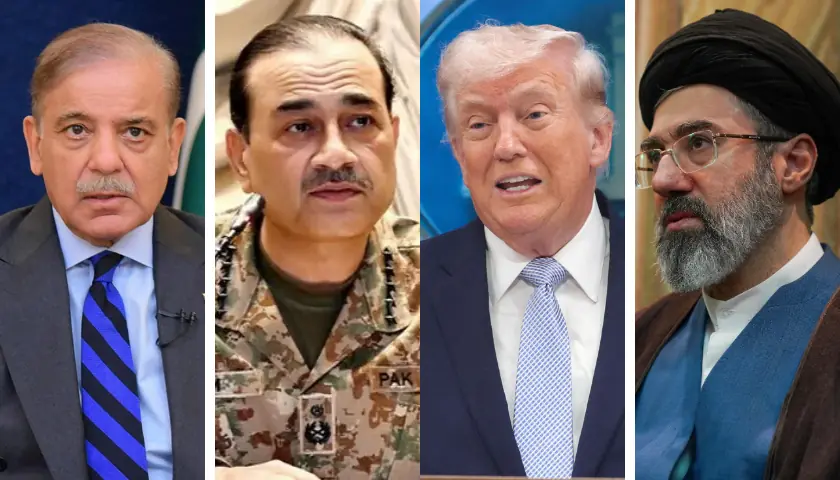
Pakistan’s announcement of an immediate ceasefire between the Islamic Republic of Iran, the United States, and their respective allies marks a significant moment in contemporary global politics, one that underscores Islamabad’s re-emergence as an influential actor in the international political arena. The invitation extended to all parties for follow-on negotiations in Islamabad further reinforces Pakistan’s aspiration to position itself not merely as a regional actor, but as a credible facilitator of dialogue in complex international conflicts.
This development resonates strongly with Pakistan’s historical legacy of mediation, most notably its pivotal role in the early 1970s in facilitating the rapprochement between the United States and the People’s Republic of China. At a time when Cold War divisions had rendered direct engagement between Washington and Beijing nearly impossible, Pakistan acted as a crucial link and an effective intermediary between the two states. The secret visit of US National Security Advisor Henry Kissinger to Beijing via Islamabad in 1971 remains a landmark episode in diplomatic history. Pakistan’s ability to maintain trust with both sides, despite their ideological differences, demonstrated its utility as a bridge between competing powers. The current ceasefire initiative appears to echo that earlier moment, which suggests a revival of Pakistan’s traditional strength as a mediator capable of navigating geopolitical fault lines.
However, Pakistan’s renewed diplomatic relevance cannot be understood in isolation from more recent developments, particularly the May 2025 war between Pakistan and India. That brief but intense confrontation marked a turning point in how Pakistan is perceived internationally. The reported downing of at least seven Indian Air Force fighter jets, along with one unmanned aerial vehicle, by Pakistan, signaled a level of operational capability that surprised many observers. Beyond the immediate military outcomes, the conflict had broader strategic implications: it challenged prevailing assumptions about the balance of power in South Asia and underscored Pakistan’s preparedness and resilience in the face of escalation.
In the aftermath of the conflict, Pakistan appears to have leveraged this shift in perception to recalibrate and reboot its foreign policy. In this regard, relations with Bangladesh, which had remained subdued for years, have shown signs of revival, indicating a willingness to mend historical fissures and pursue pragmatic engagement. Simultaneously, Pakistan has sought to position itself as a constructive actor in the Muslim world, playing a central role in advocating for peace in Gaza and amplifying calls for a ceasefire and humanitarian relief.
Equally significant is Pakistan’s deepening strategic alignment with key regional players. The signing of a Strategic Mutual Defence Agreement with Saudi Arabia reflects a consolidation of security ties that extends beyond traditional cooperation. This partnership not only enhances Pakistan’s strategic depth but also reinforces its standing within the broader Middle Eastern geopolitical framework. In this context, Islamabad’s role in facilitating a ceasefire involving Iran, the United States, and their allies acquires added significance. It suggests that Pakistan is increasingly viewed as a state capable of engaging with diverse and often antagonistic actors, from Washington to Tehran, without being perceived as overly partisan.
The convergence of these developments point to a broader transformation in Pakistan’s international identity. It alludes to the fact that Pakistan is no longer confined to a reactive or peripheral role, rather it is actively shaping diplomatic outcomes in regions extending beyond its immediate neighborhood. Nevertheless, sustaining this momentum will require careful navigation. Mediation efforts of this scale are inherently fragile, and their success depends on maintaining neutrality, credibility, and consistency. Pakistan will need to balance its various partnerships while ensuring that its role as a facilitator is not compromised by competing strategic interests.
In sum, the announced ceasefire and the forthcoming talks in Islamabad symbolize more than a temporary de-escalation; they reflect the reassertion of Pakistan as a consequential diplomatic actor. Drawing upon its historical experience and bolstered by recent shifts in regional dynamics, Pakistan appears poised to reclaim a role that had once defined its foreign policy identity, serving as a bridge in times of division and a catalyst for dialogue in an increasingly fragmented world.

Your go-to editorial hub for policy perspectives and informed analysis on pressing regional and global issues.

![An illustration depicting a smartphone with a display reading VPN. [Courtesy: Reuters/File].](https://southasiatimes.org/wp-content/uploads/2026/09/1438445_6414833_VPN_akhbar.webp)