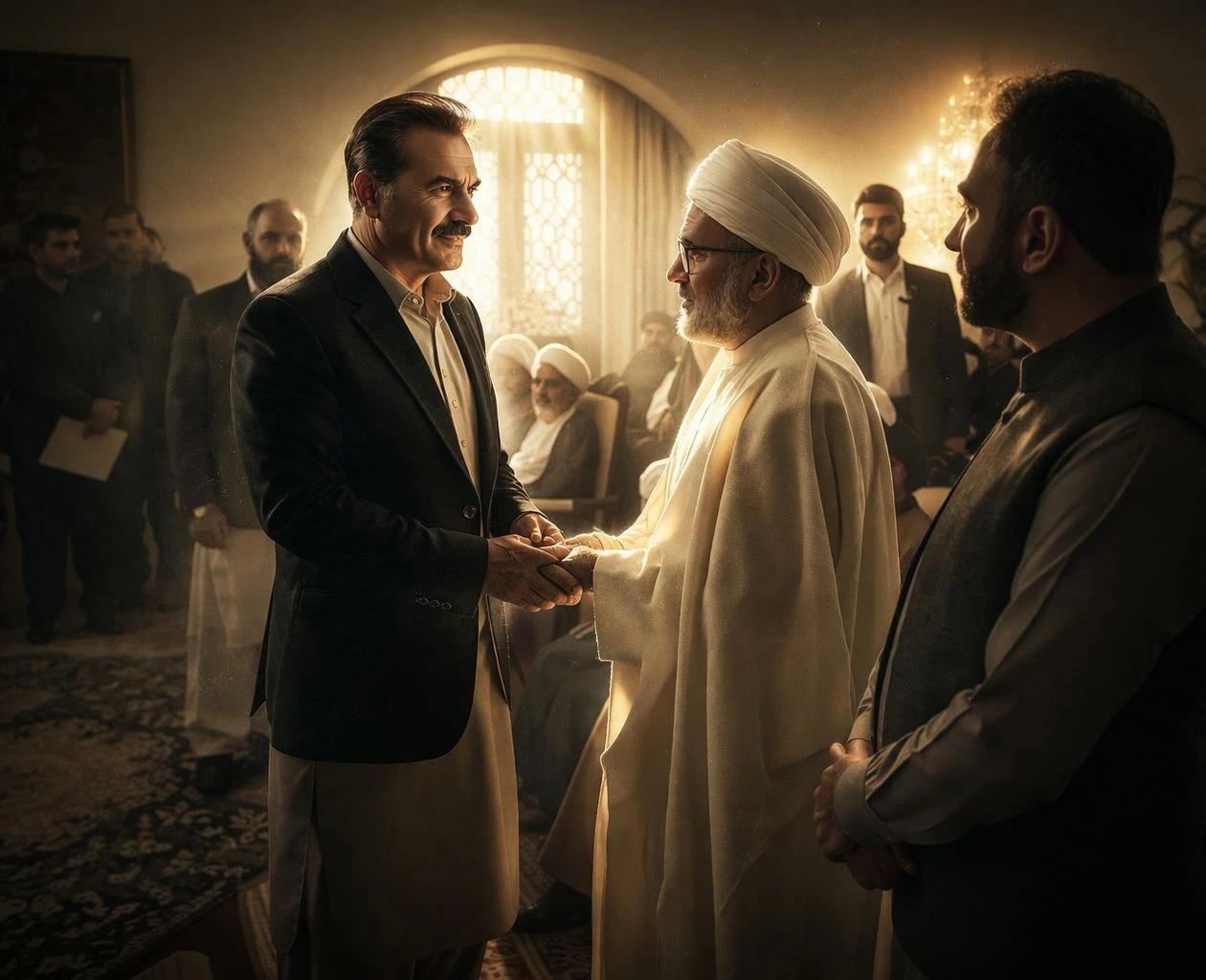
Sepoy Muhammad Asif Khattak had served sixteen years in the Pakistan Army. He left behind a widow, a son, and three daughters. Sepoy Zulfiqar Ali Khattak had served ten years. He left behind a widow, a son, and a daughter. Both men were from Attock district in Punjab. Both were buried with full military honours in their ancestral villages, their coffins draped in the national flag, army contingents presenting final salutes at the graveside.
They were killed in Skardu on March 1, 2026. Not on a battlefield. Not on the Line of Control. Not defending Pakistani territory from an external threat. They were killed during riots in which a Pakistani crowd burned down the office of the United Nations Military Observer Group, the body that monitors Pakistan’s own Kashmir ceasefire claim, torched an Army Public School, set fire to a police station, and attacked the Aga Khan Rural Support Programme offices. The crowd was mourning a foreign head of state.
They were not protesting for Pakistan. They were protesting for Iran.
On that same morning, in Pakistan’s largest metropolis, in Karachi, hundreds stormed the US Consulate, breached the outer gate, smashed windows, and set an armoured vehicle on fire. Ten people were killed, sixty wounded. By the end of the day, between twenty-six and thirty-five Pakistanis were dead nationwide. The interior minister went on television and said every Pakistani was as grief-stricken as the people of Iran.
Two soldiers from Attock, with families and years of service behind them, might have disagreed. This is what the Ummah looks like in practice. Not solidarity. Not shared interest. A tool. Deployed on schedule. Paid for in Pakistani blood.
The Instrument and its Operators
The Ummah, the global community of Muslim believers united above national borders, is one of the most durable and most cynically wielded instruments in modern geopolitics. It surfaces reliably whenever a state needs population-level emotion mobilised quickly and cheaply. It requires no policy argument, no evidence of mutual benefit, no accounting of consequences. It requires only the invocation of shared identity and a sufficiently visible enemy.
History is consistent on this point regardless of who is doing the invoking. The Ummah has been deployed as a mobilising instrument across the Muslim world for decades, by states and non-state actors across sectarian lines, each time dressing a political or strategic calculation in the language of divine obligation. The people who answer the call carry the cost. The architects of the call rarely do.
Iran has been among its most sophisticated operators. The Islamic Republic built its entire regional architecture on the language of Muslim solidarity: resistance against imperialism, the brotherhood of the oppressed, the moral duty of the faithful. What it actually built was an architecture of Iranian interest. Hezbollah served Iranian strategic depth in Lebanon. The Houthis served Iranian leverage over Saudi Arabia and Red Sea choke-points. The Iraqi militias served Iranian influence over Baghdad’s political architecture. Hamas served Iran’s ability to maintain permanent pressure on Israel without direct confrontation. Every piece of the Axis of Resistance was, at its core, a tool of Iranian statecraft dressed in the language of Islamic solidarity.
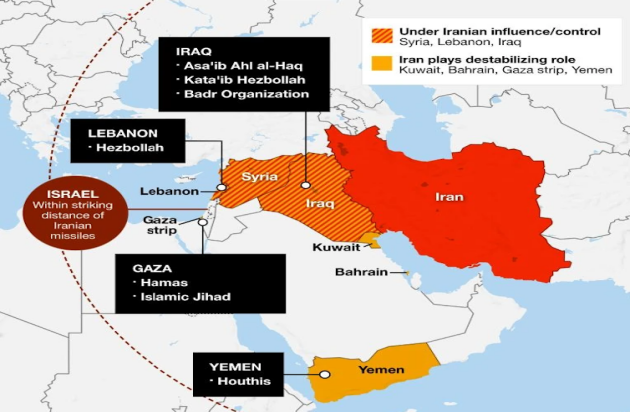
Illustration of Iran’s influence in the Middle East
Pakistan was never a beneficiary of this architecture. Nor was Lebanon, which now hosts a state within a state it did not elect. Nor Yemen, whose civilian population has paid the heaviest price of any country in the Houthi project. The Ummah, in Iranian hands, has been a delivery mechanism for Iranian power dressed as Muslim liberation.
Iran’s Record With Pakistan, Unedited
The Shia-Sunni fault line running through Pakistan did not emerge from within. After 1979, Iran’s Islamic Revolution transformed what had been a manageable sectarian coexistence into an active proxy battlefield. Iranian money and training flowed into Pakistan, funding Shia militant organisations including Sipah-e-Muhammad, which conducted targeted killings across Pakistani Punjab through the 1980s and 1990s. Pakistan became, in the documented assessment of the Wilson Center, a relocated battlefield for the Iran-Saudi sectarian competition, with Iranian-backed groups conducting offensive operations on Pakistani soil as instruments of Tehran’s regional strategy. The bodies were Pakistani. The strategic calculus was entirely Iranian.
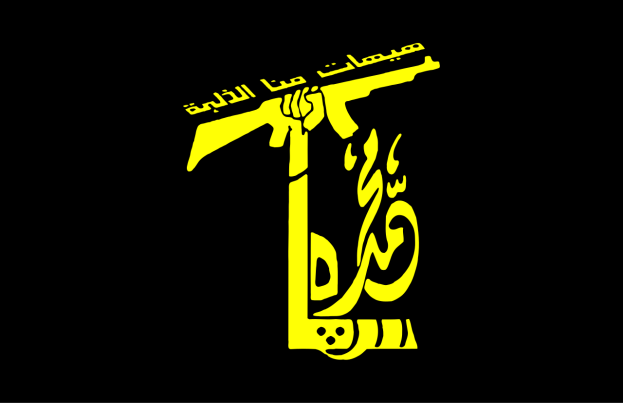
Sipah-e-Muhammad Flag
Then came 1994. Pakistan was weeks away from its most significant attempt to internationalise Kashmir at the United Nations Human Rights Commission in Geneva. An OIC-backed resolution condemning India for human rights violations was ready to be tabled. Sanctions against India were possible. Iran’s representative in Geneva, acting on direct orders from President Rafsanjani, blocked the OIC move, arguing that problems between close friends should not require an international forum. The resolution collapsed. It was the last time Pakistan ever attempted to bring Kashmir before a UN forum. Iran had quietly, deliberately, and at Pakistan’s direct expense, chosen India over a fellow Muslim state’s most consequential unresolved territorial claim.
A decade later, Kulbushan Jadhav, a serving Indian Navy commander operating under a Muslim alias, ran intelligence and subversion operations into Pakistan for over a decade from the Iranian port of Chabahar. His network funded Baloch separatists, planned attacks on Karachi and Gwadar, and orchestrated sectarian violence across Sindh. His operational base was Iranian soil. Pakistani authorities chose not to directly indict Tehran. Iran continued invoking the Ummah.
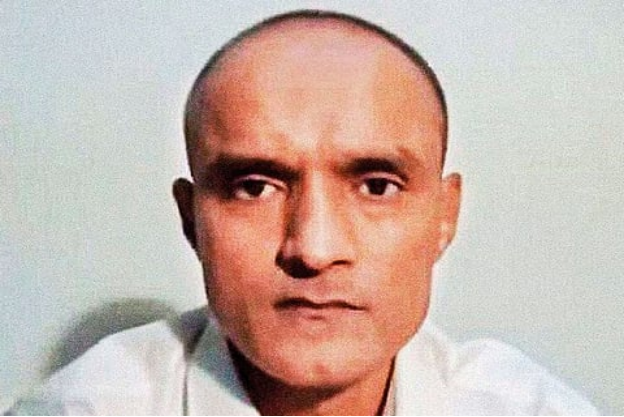
Picture of Indian spy Kulbushan Jhadav
In January 2024, Iran launched airstrikes inside Pakistani territory. Pakistan struck back within days. When Iranian interests required it, the 900-kilometre shared border with a fellow Muslim-majority nuclear state was a target, not a bond.
Iran also recruited Pakistani Shia fighters for its Syria operations under IRGC direction, organising them under the Zainabiyoun Brigade: young men from Pakistan’s most economically vulnerable communities, deployed in a foreign war serving Iranian strategic objectives. The recruits were Pakistani. The cause was Iranian. The casualties, again, were Pakistani.
Analysts at King’s College London have documented India’s deliberate use of both Iran and Afghanistan to place Pakistan in a strategic pincer movement. The Chabahar network was not a bilateral anomaly. It was one arm of a coordinated squeeze, hosted by a state that was simultaneously invoking Islamic brotherhood toward Pakistan’s own population.
Pragmatism Without Apology
Look at how every other significant actor in this region actually behaves. The UAE and Bahrain formalised relations with Israel based on a cold reading of their security environment and economic interests. Saudi Arabia examined the same option, concluded the cost to its regional standing and domestic legitimacy outweighed the benefit, and stepped back. No theological crisis. No emergency summit of the faithful. A calculation, made, revised, and acted on. These are states navigating the permanent tension between identity and interest with their eyes open rather than their hands over them.
Saudi Arabia, for all the weight it carries as custodian of the holy cities, has been one of the most consistently pragmatic actors in the region’s modern history. When Pakistan has needed it, Saudi has provided deferred oil payments, credit lines, and financial arrangements that have kept Islamabad functional through crisis after crisis. Not as charity. Not as Ummah solidarity. As the conduct of a state that understands a stable Pakistan serves its own long-term interests. That is what genuine partnership looks like: interests aligned, benefit concrete and sustained, no speeches required.
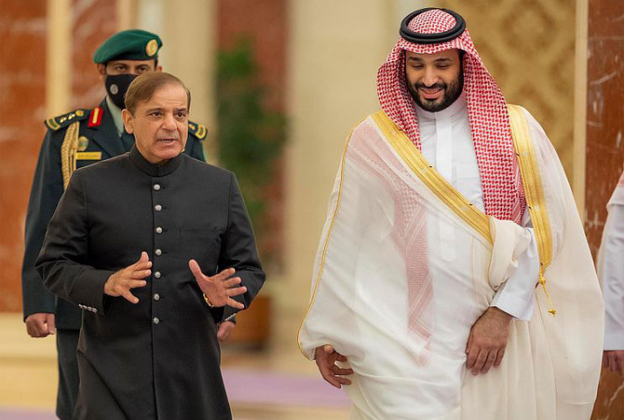
Prime Minister Shehbaz Sharif with Saudi Crown Prince Mohammed bin Salman
Iran, meanwhile, invokes Islamic solidarity louder than any state in the region, from every platform, in every conflict, at every funeral. And then pursues its interests with the same cold precision as everyone else. It gets the moral high ground and the strategic calculation. Its neighbours get the missiles. Its admirers in Skardu and Karachi got the funerals.
The Cost of War for Pakistan
Pakistan imports more than 80 percent of its oil needs. The disruption to the Strait of Hormuz triggered the largest fuel price increase in the country’s history, petrol rising 20 percent in a single week during Ramadan. Schools were closed. The government moved to a four-day working week. The cost of transport, groceries, and daily survival rose sharply at the precise moment Pakistani families were preparing for Eid.
That economic pressure does not exist in isolation. Pakistan is simultaneously prosecuting an active military conflict on its Afghan border, Operation Ghazab Lil Haq, against Taliban forces that have been exporting terrorism into Pakistani cities for years. The country is managing simultaneous shocks: the economic fallout of Iran’s war to its west via the restriction of Strait of Hormuz, and the security costs of the Taliban’s war to its northwest via the Durand Line. Both conflicts have roots in the same pattern of foreign actors treating Pakistani stability as expendable to their own strategic ends.
Beyond the price of fuel is the larger exposure. Millions of Pakistani workers are employed across the Gulf states that Iran has spent three weeks striking with missiles and drones. Their livelihoods, their remittances, and the foreign exchange that keeps Pakistan’s economy breathing all sit inside a blast radius created by Iranian foreign policy. Pakistani nationals are confirmed among the civilians killed in the UAE by Iranian strikes, migrant workers struck by debris in Al Barsha and near Zayed Airport, killed in the cities where they went to build a living for families back home. Tehran has offered no apology. It has instead continued to insist it targets only American assets, a claim that requires ignoring the nationalities of the people its munitions are actually hitting.
The Ummah, as a concept, has no remittance programme. It has no compensation fund for the families of Pakistani workers killed by Iranian drones in Dubai. It has no mechanism for the grief of a widow in Lahore whose husband went to the Gulf to give his children a future and came home in a coffin because a foreign government decided the neighbourhood was a legitimate battlefield.
The Oldest Con
Iran is not a hypocrite because it pursues its interests. Every state in this region pursues its interests. The United States does. India does. Saudi Arabia does. Every actor in this conflict, without exception, is operating from national interest, not divine obligation.
Iran is a hypocrite because it built a forty-year brand around the claim that it was doing something else entirely. And because millions of people, including in Pakistan, believed it, organised around it, and in Skardu and Karachi, died for it.
Pakistan has absorbed the costs of other people’s Ummah projects before, paying in strategic exposure, in blowback, in decades of instability along its borders from conflicts it helped prosecute on behalf of interests that were never entirely its own. It is paying again now, on two fronts simultaneously: in fuel prices and Gulf worker livelihoods from Iran’s war, and in blood and treasure on the Afghan border from a Taliban that was itself partly a product of earlier Ummah mobilisations that Pakistan helped facilitate and could not subsequently control.
The lesson should be beyond argument by now. Iran prioritises Iran. Every state prioritises itself. Pakistan must do the same. Not as a betrayal of faith, but as the most basic obligation a state owes the two hundred and forty million people it governs.
Pakistan’s own Chief of the Defence Forces has since made the state’s position explicit. In a meeting with Shia clerics in Rawalpindi on March 19, senior Shia cleric Muhammad Shifa Najafi, who was present and recounted the exchange publicly on his own channel, reported that Field Marshal Asim Munir told those assembled: “If you love Iran so much, then you should go to Iran. The doors are open.” Munir warned that violence triggered by events in other countries would not be tolerated on Pakistani soil, and that those responsible for the Skardu unrest would face military courts. Some clerics objected publicly. Others issued statements of loyalty and solidarity with the army. Both reactions confirm the same underlying reality: the Pakistani state has drawn its own red line clearly. The question is whether the population that mourned a foreign supreme leader while burning its own institutions is prepared to understand why.
Those who weaponise the Ummah never pay its price. They export the cost to whoever is willing to carry it. Pakistan has been carrying it for decades. Two soldiers from Attock are the latest invoice.

Dan Qayyum is a media strategist, writer, and geopolitical commentator with over two decades of experience across the Middle East, South Asia, and Europe. He has worked alongside and within some of the world's leading international media organisations, including The Wall Street Journal, Reuters, The Economist, and the New York Times. He is a former senior executive at major media platforms across the Gulf region and currently leads Captiv8 Strategies, a London-based advisory firm focused on media partnerships and strategic communications. He writes on geopolitics, regional security, and the intersection of media and power.