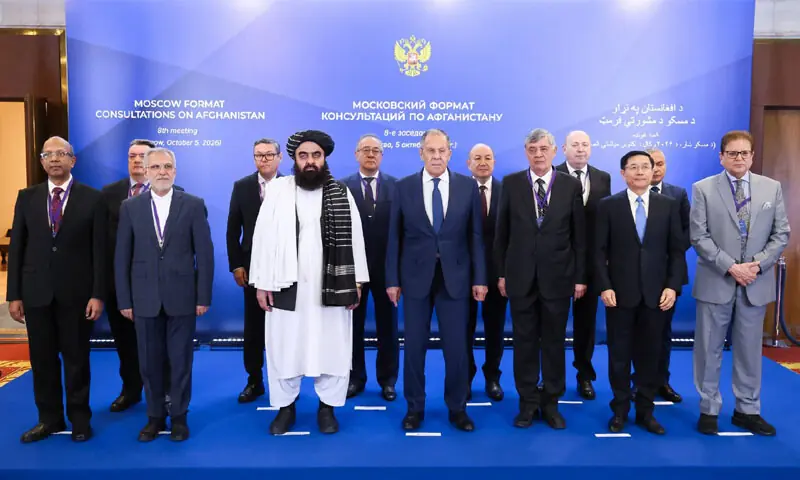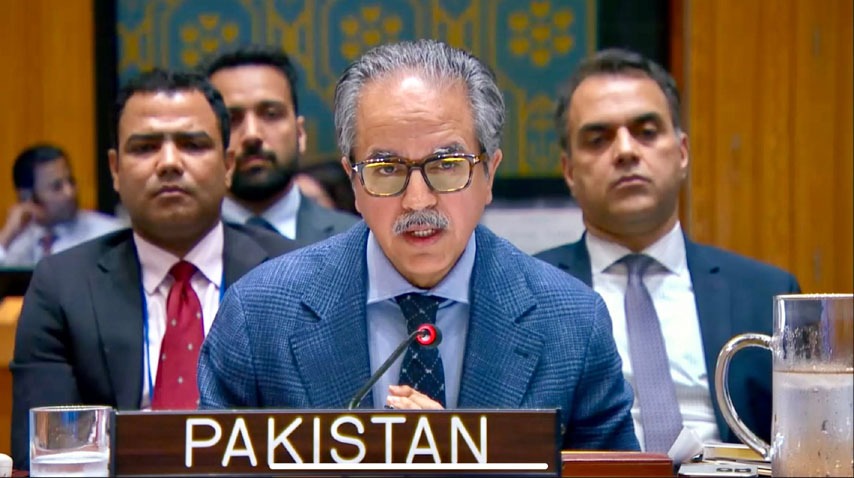
The 10116th meeting of the United Nations Security Council on the situation in Afghanistan on 9 March 2026 once again brought into the limelight the debate surrounding Pakistan’s counterterrorism operations across the Afghan border. During the debate, India accused Islamabad of “flagrant violations of international law,” arguing that Pakistan’s recent cross-border airstrikes constituted a breach of Afghan sovereignty and the principles enshrined in the UN Charter. Pakistan, however, firmly rejected these allegations and defended its actions as lawful measures of self-defense against militant groups operating from Afghan territory.
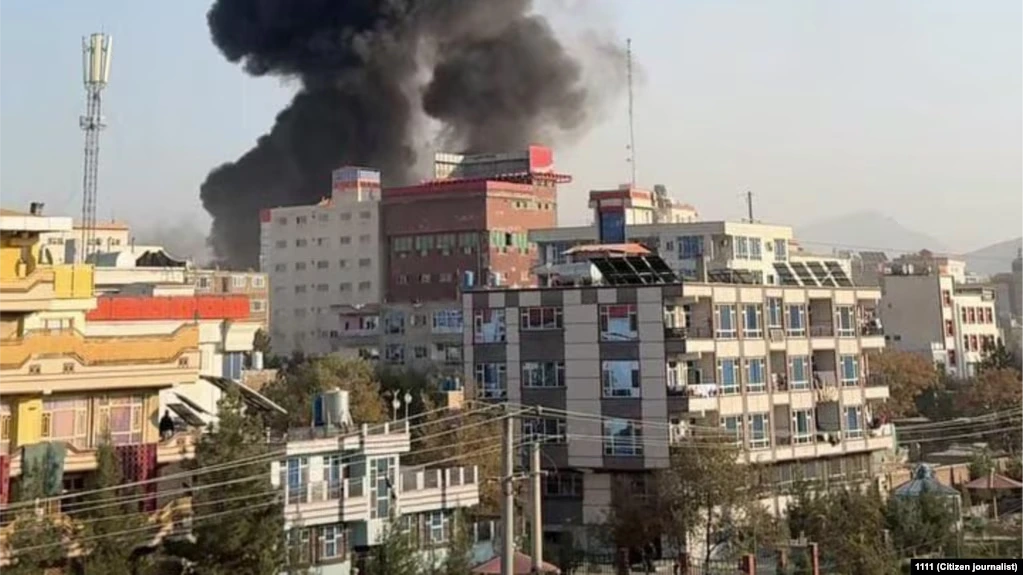
The legal debate surrounding Pakistan’s actions has intensified following the latest round of precision strikes conducted during the night of 12–13 March 2026 under Operation Ghazb-e-Lil-Haq. According to sources, the strikes targeted multiple Tehrik-e-Taliban Pakistan (TTP) facilities and Taliban-linked logistical infrastructure across Afghanistan. Among the key targets reportedly struck were the 313 Corps headquarters in Kabul, where an ammunition depot was destroyed; the Tarawo terrorist training camp in Kandahar, where a high-value target was eliminated; the Sher-e-Nau hideout in Paktia, which was neutralized through air-to-ground munitions; and additional training infrastructure and oil storage facilities in Kandahar. The Pakistani officials described these operations as carefully calibrated precision strikes intended to degrade terrorist infrastructure while avoiding civilian harm and preventing escalation.
The legal debate surrounding such actions must therefore be examined within the broader context of transnational terrorism, state responsibility, and the evolving interpretation of self-defense in international law. Pakistan grounds its military response in Article 51 of the UN Charter, asserting the inherent right of self-defense against imminent and ongoing terrorist threats emanating from neighboring soil. Islamabad frames these actions not as acts of unprovoked aggression, but as a necessary and proportionate response to the “outsourced problems of terrorism” that the interim Afghan administration has fundamentally failed to contain.
Furthermore, the legal standing of the Afghan Taliban complicates their claim to absolute sovereign inviolability. Functioning as a de facto authority rather than a de jure recognized government, the regime’s failure to comply with UN conventions and Security Council resolutions regarding state recognition inherently weakens its diplomatic protections under international law.
Another critical dimension of the debate relates to the Doha Agreement, which was designed to ensure that Afghan territory would not once again become a sanctuary for transnational terrorist organizations. In the context of this agreement, Pakistan rightfully argues that the Taliban’s systemic failure to neutralize groups like the TTP constitutes a profound compliance deficit. In international diplomacy, restraint and adherence to bilateral understandings require reciprocal commitment. Because Kabul has not proactively fulfilled its treaty mandates, the foundational understanding preventing cross-border hostilities has been functionally rendered void. By persistently violating these established international norms, the Taliban regime remains an international outlier, severely undermining its legal standing to protest extraterritorial defensive strikes.
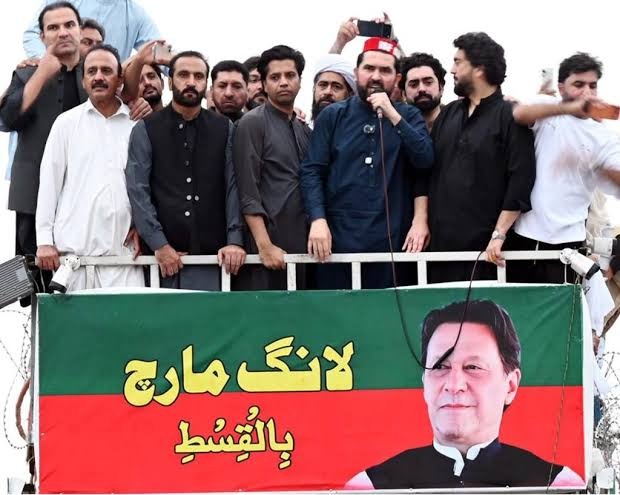
A further dimension complicating the legal debate is the increasingly blurred distinction between the Afghan Taliban and the Tehrik-e-Taliban Pakistan (TTP). While formally presented as separate entities, both organizations share deep ideological, operational, and historical linkages rooted in the same militant Deobandi jihadist worldview. The TTP has openly acknowledged the spiritual authority of the Afghan Taliban leadership, with its leadership repeatedly pledging allegiance to the Amir-ul-Momineen of the Afghan Taliban. Notably, the TTP was among the first militant organizations to celebrate the Taliban’s return to power in Kabul in August 2021 and publicly reaffirmed its loyalty to the movement’s leadership. This relationship extends beyond ideological sympathy to operational facilitation, with numerous intelligence assessments suggesting that TTP elements operate from Afghan territory with varying degrees of tacit tolerance or protection from local Taliban commanders.
From a legal perspective, this overlap significantly complicates Kabul’s claim that TTP activities represent the actions of entirely independent non-state actors beyond the control of the Afghan authorities. When militant groups demonstrate ideological subordination and operational proximity to the ruling authority, the distinction between host-state responsibility and non-state militancy becomes increasingly tenuous. In such circumstances, the doctrine of state responsibility under international law becomes relevant, particularly where a governing authority fails to prevent its territory from being used as a base for armed attacks against a neighboring state. Consequently, the blurred organizational boundaries between the Afghan Taliban and the TTP further strengthen Pakistan’s argument that targeted strikes against militant infrastructure inside Afghanistan constitute a legitimate exercise of self-defense against a persistent cross-border threat.
Ultimately, the debate surrounding Pakistan’s cross-border strikes cannot be reduced to a simplistic question of territorial violation. In an era where transnational militant networks exploit ungoverned or weakly governed spaces, international law is increasingly confronted with the challenge of balancing state sovereignty with the inherent right of self-defense. When a state repeatedly faces armed attacks emanating from across its borders and the host authority either lacks the capacity or the will to neutralize the threat, the legal doctrine of proportional and necessary self-defense inevitably comes into play.
Suffian Zafar is an MPhil scholar of International Relations at the University of Punjab, Lahore. He is currently working as a Research Fellow at the Maritime Centre of Excellence MCE. He can be reached [email protected]