“Mankind must put an end to war before war puts an end to mankind”.
-John F. Kennedy
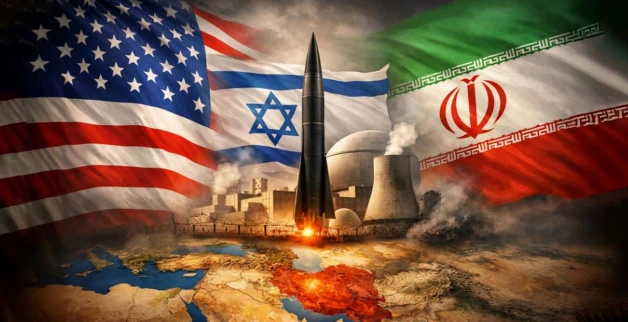
The political, economic, and strategic liabilities that accumulate in international politics are rarely resolved through war. Rather than settling disputes, armed conflict often deepens rivalries and unpredictably reshapes the balance of power. The escalating tensions in the Middle East involving Israel, Iran, and the United States illustrate this enduring reality. Far from being a mere episodic confrontation, the current crisis reflects a deeper contest for strategic dominance and deterrence in a region long characterized by ideological rivalries and intense geopolitical competition. Viewed through the lens of classical and structural realism, the behaviour of states in this environment is driven less by moral considerations and more by the imperatives of power, security, and survival within an anarchic international system. As the classical realist scholar Hans J. Morgenthau argued, international politics is governed by objective laws rooted in human nature, with states consistently seeking power to safeguard their interests. Within this framework, the policies pursued by Israel and Iran appear less as ideological or moral struggles and more as calculated strategic efforts aimed at preserving influence, deterring adversaries, and securing national interests within a volatile regional order.
In an effort to prevent any one state from gaining overwhelming dominance, regional and extra-regional actors constantly alter alliances and strategic positions in the Middle East, which has historically served as a testing ground for balance-of-power politics. According to structural realist theorists like Kenneth Waltz, states must rely on self-help mechanisms in order to survive because the international system is anarchic. Power balancing becomes a logical reaction to perceived threats in such a system, whether through external alliances or internal military strengthening.
This reasoning is demonstrated by the rivalry between Iran and Israel. Israel has viewed Iran’s regional influence through alliances and proxy networks in Iraq, Syria, and Lebanon as a direct security threat, leading to military preparedness and strategic alliances with Western allies. At the same time, Iran and other regional actors are encouraged to counterbalance Israel’s military might and technological prowess. These dynamics support Waltz’s claim that states look for a power distribution equilibrium to avoid a rival’s dominance. Because deterrence and balancing are widely perceived as the most reliable strategies for survival, the regional system becomes progressively more militarized. This militarization does not necessarily stem from an inherent preference for conflict, but rather from the structural imperatives that compel states to enhance their security in an uncertain and competitive strategic environment.
Likewise, this conflict also bears testimony to the relevance of the theory of Offensive Realism as penned down by John. J. Mearsheimer. He famously argued that because restraint is dangerous due to uncertainty about others’ intentions, great powers are naturally motivated to maximize their relative power, leading them to become a hegemon in the given system. Preemptive tactics, technological arms races, and strategic alliances aimed at preserving regional superiority are examples of this reason in the Middle East. Israel believes that maintaining an overwhelming strategic advantage is essential to its survival, which is reflected in its emphasis on military readiness and preemptive security doctrines. In contrast, Iran seeks regional alliances and asymmetric tactics to counteract traditional disadvantages. Security experts refer to this situation as a “security dilemma” because both states defend their actions as defensive, yet each sees the other’s actions as offensive. Moral arguments often give rise to related narratives that justify calculated actions in these situations. In this context, Morgenthau’s observation that moral principles cannot be applied to state actions in their abstract universal formulation becomes especially useful; what one actor perceives as aggression is often seen by another as self-defence. As a result, the region’s instability is sustained by a cycle of suspicion, deterrence, and periodic conflict.
The geopolitical ramifications of the conflict are equally important for nations that are not direct parties. For instance, Pakistan’s strategic cooperation with Western partners, its historical ties to the Gulf states, and its broader regional concerns about South Asia and the Muslim world all contribute to Pakistan’s complex strategic environment. It takes careful diplomatic balancing to move between these conflicting alignments. Pakistan’s foreign policy has historically aimed to avoid direct involvement in Middle Eastern conflicts while maintaining broader relations with Western powers and economic and security ties with Gulf allies.
However, maintaining such neutrality becomes more challenging as Iran-Israel tensions rise and outside powers become more involved. In order to avoid disappointing any major actor, smaller and middle powers frequently try to hedge their strategic commitments from a balance-of-power perspective. This behavior is consistent with realist predictions that states will put economic stability and survival ahead of ideological alignment. In the long run, the Middle East’s developing dynamics show that confrontation or war rarely ends geopolitical rivalry; rather, it reshapes alliances, redistributes power, and creates new strategic uncertainties. The region will continue to be prone to cycles of rivalry and restructuring as long as the international system is anarchic and states continue to seek security through the accumulation of power. Thus, rather than being an unforeseen anomaly, the current tensions are the continuation of a structural pattern that is ingrained in the theory of international politics.
The views expressed in this article are the author’s own. They do not necessarily reflect the editorial policy of the South Asia Times.

Kamran is a graduate in International Relations and is currently working as a research fellow with Dr. Minhas Majeed Khan Marwat. He specializes in Pakistan-US relations and strategic and security affairs