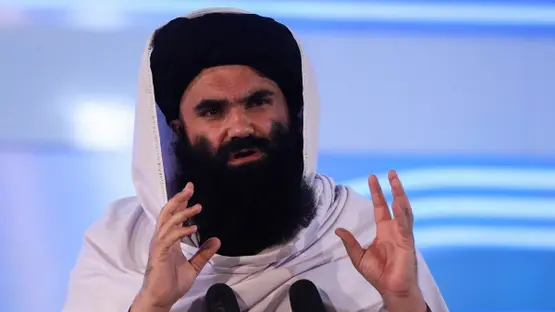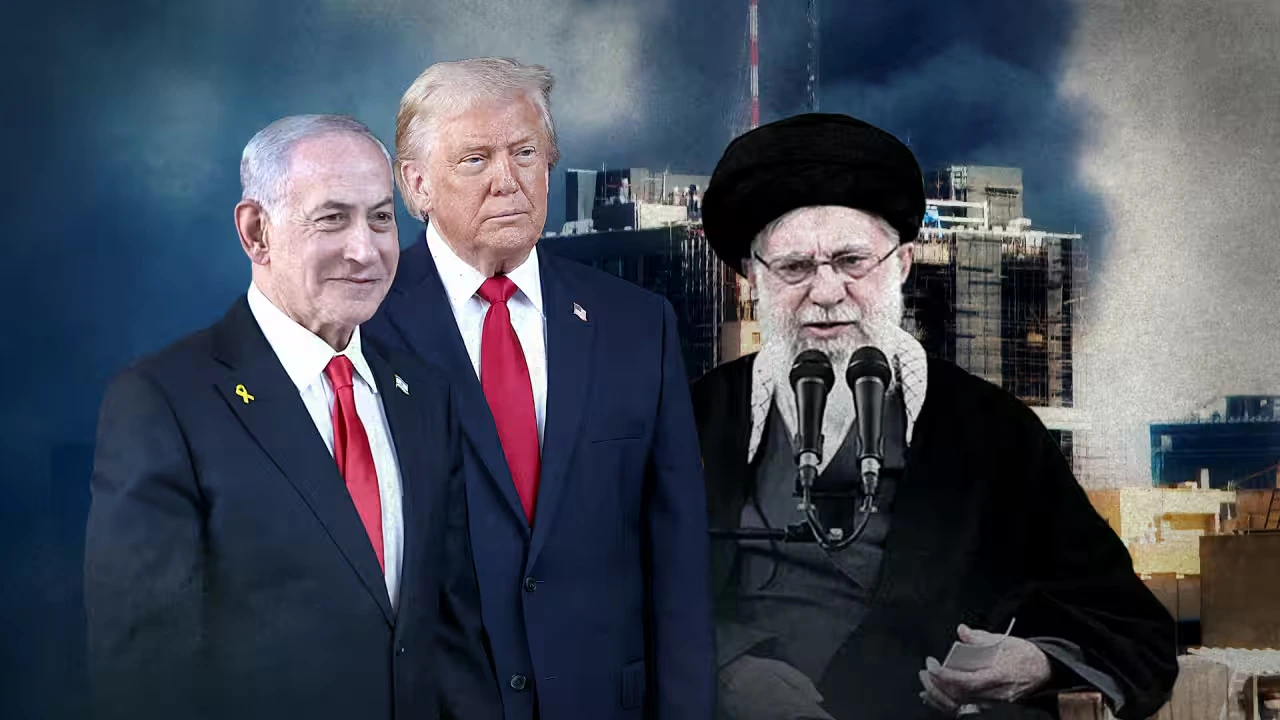
On March 5, 2026, in a podcast, an American conservative political activist and commentator, Tucker Carlson, posed a chilling question: “Could this be a religious war designed to rebuild the Third Temple on the ashes of Al Aqsa? Hope not”. The remark captures a stark unease about Middle Eastern conflicts being driven by something beyond geopolitics. Traditionally, Muslim states engage Israel and its allies through secular diplomacy, viewing conflicts as geopolitical contests over borders, resources, and security: a calculable game of borders, alliances, and national interests, rooted in secular diplomatic traditions assuming rational actors open to compromise.
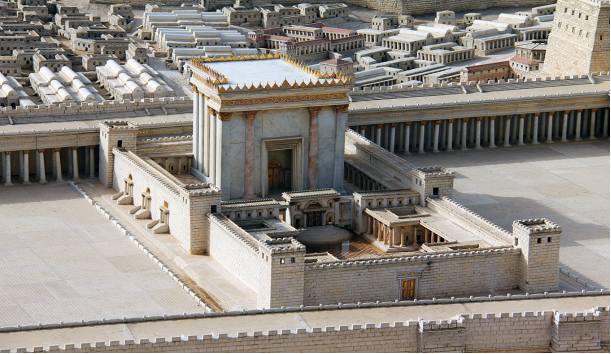
Representative image of the model of the Third Temple
Yet, we increasingly see many Zionist and evangelical actors frame actions as fulfilling apocalyptic prophecies of messianic redemption; their statements increasingly invoke apocalyptic visions, viewing escalations as steps toward messianic redemption and inevitable end-times fulfilment. This disconnect, where one side plays by rational rules while the other follows a scripted divine plan, leaves Muslim responses reactive and fragmented, distracted by nationalism while adversaries advance a divine script. While critics argue that Israeli policies remain driven solely by pragmatic security concerns, as former Prime Minister Yair Lapid described the 2025-2026 actions against Iran as a ‘just war’ necessitated by imminent threats such assessments often overlook how messianic and apocalyptic rhetoric from influential Zionist, rabbinic, and evangelical figures sustains the US-Israeli alliance and shapes their decisions.
To counter this asymmetry and move beyond reactive, fragmented responses, Muslim states should incorporate systematic analysis of religious-ideological drivers, including relevant eschatological narratives from both sides, into their strategic and diplomatic frameworks. This would enable proactive, unified positioning to anticipate faith-motivated escalations, decode deceptive ‘peace’ overtures, and safeguard collective interests against emerging regional dominance
Messianic Narratives and Policy Influence
To start with, key Zionist-aligned voices openly tie current conflicts to messianic prophecy, portraying escalations as steps toward redemption rather than contingent security measures. Tucker Carlson stated on March 5, 2026: “Chabad has been pushing in a pretty subtle way, unless you look carefully, for the reconstruction of the Third Temple,” highlighting evangelical leaders’ focus on it as a primary goal. Likewise, the US Ambassador Mike Huckabee declared in February 2026: “It would be fine if [Israel] took it all,” referring to biblical lands from the Nile to the Euphrates And then there is this US military commander who urged his troops: “This was ‘all part of God’s divine plan’” and “President Trump has been anointed by Jesus to light the signal fire in Iran to cause Armageddon and mark his return to Earth” (The Guardian, 2026).
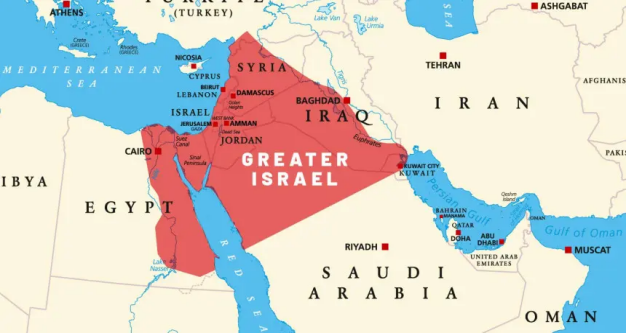
A routinely used map of “Greater Israel”, which extends from the Nile to the Euphrates
Similarly, Rabbi Elyakim Levanon cited Yalkut Shimoni: “The year in which the King Messiah will be revealed,all the kings of the nations of the world will provoke one another. The king of Persia will provoke an Arab king…Then the king of Persia will destroy the entire world…and God will say to them: My children, do not fear…the time of your redemption has come”. Another renowned Rabbi, Jason Sobel, connected recent events: “If you see Persia fall to Rome…expect the footsteps of the Messiah”. Rabbi Yosef Mizrachi speculated: “If it was up to me, the last time they shot hundreds of missiles, I would pretend that one of the missiles came from Iran and shoot it down into the dome of the rock in Al Aqsa”
Analyst Karim Emile Bitar posted on March 4, 2026: “US military commanders have been invoking extremist Christian rhetoric about biblical ‘end times’ to justify involvement in Iran”. Although secular figures like Shlomo Ben-Ami lament the post-1967 rise of ethno-nationalist “Jerusalem Israel” over “Tel Aviv Israel”. These statements from rabbis, commanders, ambassadors, and evangelical influencers, who continue to shape policy networks and troop morale, reveal how religious ideology sustains alliances. These statements, even if not representative of all Israeli opinion, influence policy networks and alliances, demanding recognition of their role beyond surface pragmatism and underscoring the need for systematic analysis of such ideological drivers within strategic intelligence frameworks.
Limitations of Secular Frameworks
Muslim states around the world often interact with both Israel and the US in a secular framework, treating nuclear programs, territorial disputes, and sanctions as negotiable matters of national interest. For instance, Iran’s prolonged JCPOA negotiations offered extensive concessions and international verification in exchange for sanctions relief, yet collapsed amid sabotage and intensified pressure. Additionally, Turkey’s normalisation of diplomatic relations with Israel, which was justified on the basis of trade and shared security concerns, similarly failed to restrain Israeli actions in Syria or curb proxy aggressions. These cases demonstrate how reliance on liberal-realist assumptions, expecting incentives to yield reciprocity, confines Muslim states into defensive postures, divided by internal debates between reformers and hardliners.
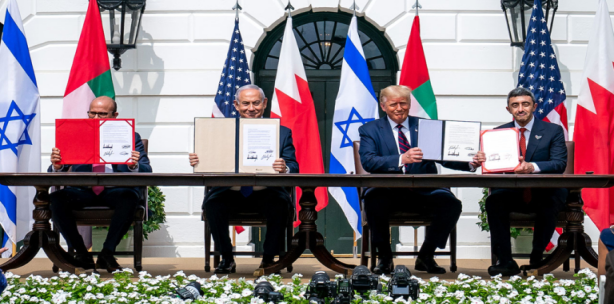
Resident Trump and Benjamin Netanyahu with the UAE and Bahrain officials on the occasion of the signing of the Abraham Accords
While many observers note that Muslim states themselves employ religious rhetoric, such as Iran’s “resistance axis” invoking Shia eschatology for regional influence, this usage is often employed in reaction to the threats rather than proactively shaping strategy. In Sahih Muslim Hadith 2944, descriptions of end-times deception amid apparent peace expose this vulnerability: by focusing on borders, secular diplomacy inadvertently facilitates the prophetic logic driving escalation, turning rational engagement into a tool of inadvertent facilitation.
Hence, systematic monitoring of these parallel eschatological narratives, from both sides, enables leaders to anticipate such deceptions, fostering trans-sectarian solidarity and shifting from fragmented nationalism to a collective lens alert to ideologically motivated patterns. Furthermore, specific operations against Muslim states illustrate this messianic imperative in practice, blending preemption with destiny. The 2025 US-Israeli strikes on Iranian nuclear facilities, justified as non-proliferation, connect to Temple narratives in rabbinic commentary and Carlson’s analysis; post-Assad bombings in Syria clear obstacles to a “Greater Israel” echoing Huckabee’s territorial vision, while pressures on Turkey via Kurdish support neutralise resurgent powers seen as eschatological barriers.
Lapid insists these are preventive security measures: “We couldn’t sit on our hands while Iran is developing a nuclear program” yet evangelical and Chabad influences on decision-makers frame them as prophetic milestones. Even if broader Israeli public opinion leans secular, those in positions of power, advised by messianic networks, advance these actions, underscoring why Muslim states must adopt systematic analysis of religious-ideological drivers to anticipate faith-motivated escalations beyond tactical rationales.
Parallel Eschatologies and Strategic Blind Spots
Islamic and Jewish eschatologies initially converge on expectations of global turmoil preceding a messianic era centred in Jerusalem, yet diverge into irreconcilable opposition that secular analysis cannot fully decode. Jewish sources describe wars involving the “king of Persia” as triggering the Messiah’s revelation. Hadith 2944; 2934 in Sahih Muslim parallel this with chaos before the Mahdi and Jesus: “The Dajjal will emerge from the Jewish quarter of Isfahan…He will be followed by seventy thousand Jews of Isfahan, wearing Persian shawls,” portraying the Dajjal as a one-eyed deceiver with “two flowing rivers, one of which will appear as water and the other as fire,” ultimately slain by Jesus. In contrast, Chabad prayers seek the Mashiach through Temple restoration: “It’s a prayer asking God to return us to the elevated state of spirituality that existed during the time of the Temple, and more importantly, for Him to send ‘Moshiach,’ or the Messiah”. While surveys show varying Jewish attitudes toward the Messiah and Temple, and interpretations differ, influential rabbis and evangelicals tie actions against Iran (Persia) to these sequences. For Muslims, this clash, envisioning the Jewish redeemer as potentially the deceptive Dajjal, necessitates layering analysis of these religious-ideological drivers onto strategy, enabling recognition of Zionist moves as ideologically motivated patterns that a liberal lens misses, and supporting proactive diplomatic positioning.
Towards Strategic Clarity: Integrating Ideological Analysis
The prospect of a Muslim nuclear capability directly challenges this worldview by introducing parity that disrupts scripted dominance. Israel’s preemptive strikes on Iraqi and Syrian reactors, alongside U.S. containment of Saudi enrichment, preserve asymmetry. Evangelicals and rabbis view a “Muslim bomb” as blocking redemption in its messianic timelines. It is not just Trump contemplating strikes to halt Iran’s nuclear program, states like Pakistan are also seen invoking religious narratives for their arsenal despite their declared India-centric nuclear doctrine, for the same reason.
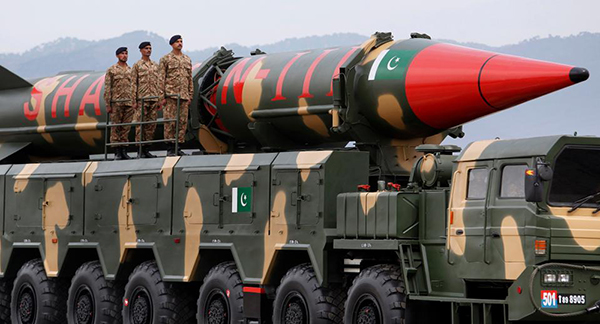
Pakistan’s nuclear-capable Shaheen-III Ballistic Missile
Awareness of these eschatological pressures positions such deterrence as essential strategic armour, urging a shift from purely technical negotiations to a framework incorporating ideological analysis to counter existential fears. The path forward lies in practically integrating textual analysis of religious rhetoric into statecraft: through ummah-centric summits blending secular and ideological intelligence, think tanks analysing religious rhetoric (e.g., Fiqh Council of North America), and interfaith dialogues on shared eschatologies. Risks of over-reliance, as seen in ISIS’s misinterpretation of the Hadiths, can be mitigated through scholarly oversight. Anticipating faith-driven moves through systematic monitoring and fostering solidarity against fitnah shifts our approach from reactive to proactive. Recognizing this interplay before it shapes outcomes allows for a more thoughtful approach, turning potential vulnerabilities into opportunities for strategic clarity and resilience.