Foreign policy rarely remakes itself by design. It remakes itself under pressure, when circumstances produce a state, whose utility cannot be ignored, whose assets cannot be replicated, and whose absence from the table would make the table itself impossible. That is precisely what Pakistan did in April 2026. When the United States and Iran sat across from one another in Islamabad for the first time since the Islamic Revolution of 1979, it was not American pressure or Iranian willingness that made it happen. It was Pakistani architecture, five decades of quiet, structural positioning that no other state in the world could offer. The Islamabad Talks did not merely demonstrate Pakistan’s diplomatic skill. They demonstrated that U.S. foreign policy toward Pakistan had been operating on a false premise for most of the preceding decade. And that premise is now broken.
The false premise was simple: that Pakistan was a problem to be managed rather than a partner to be engaged. By 2021, the bilateral relationship had contracted to agency-level counterterrorism exchanges. President Biden never called his Pakistani counterpart. Project 2025, the policy blueprint that shaped the Trump administration’s early thinking, described Pakistan’s military-led government as ‘intensely anti-American and corrupt.’ Congressional voices were drafting sanctions legislation targeting military leaders. Washington had, in effect, decided that Pakistan was a peripheral irritant in a South Asia policy built primarily around India. It was a strategic miscalculation of historic proportions, and Pakistan’s mediation of the 2026 Iran war is what exposed it.
The reassessment began before the Iran war. In March 2025, President Trump publicly praised Pakistan’s counterterrorism cooperation during a national address, a signal, in retrospect, of a policy mind already beginning to shift. That same month, Pakistan’s intelligence services delivered a high-value ISIS-K operative responsible for the 2021 Kabul airport bombing that killed 13 American soldiers. Then came May 2025 and Marka-e-Haq, Pakistan’s calibrated military response to India’s strikes, which demonstrated a level of military discipline and strategic precision that, by multiple accounts, exceeded Washington’s expectations. The Washington Times described 2025 as a ‘turning point,’ noting that the ‘India-first era in Washington’ had effectively ended. What produced the turn was not Pakistani lobbying, though Islamabad spent approximately $5 million annually on Washington-based firms by late 2025. It was Pakistani performance, demonstrated, under pressure, on the ground.
Performance, however, is only half the explanation. The deeper reason Pakistan could host the Islamabad Talks, and the reason Iran agreed to attend, is structural. Pakistan shares nearly 1000 kilometres of border with Iran. It hosts the world’s second-largest Shia Muslim population. Since the Islamic Revolution, the Pakistani Embassy in Washington has permanently housed Iran’s Interests Section, making Islamabad a discreet but continuous conduit between Tehran and Washington for nearly five decades. No other state in the world holds that specific combination. When Iran’s ambassador to Pakistan stated that Tehran would ‘do talks in Pakistan and nowhere else, because we trust Pakistan,’ he was not expressing personal sentiment. He was describing a structural reality that took five decades to build and that no diplomatic sprint could have manufactured in its absence. This is what made Pakistan’s mediation irreplaceable, and what makes Washington’s previous indifference to Pakistan not merely a policy error but a failure of structural intelligence.
Pakistan’s urgency as a mediator was sharpened by economic self-interest, and that self-interest was, in this instance, perfectly aligned with regional stability. Pakistan’s total workers’ remittances surged to a record $38.3 billion in fiscal year 2024–25, the highest annual figure in the country’s history, marking a 26.6 percent increase from $30.3 billion in FY24 with more than half of those inflows originating from the Middle East, which hosts approximately six million Pakistani workers. Each year, between 700,000 and 800,000 Pakistanis travel to Gulf countries for employment, with Saudi Arabia absorbing the largest share, followed by Oman, Qatar, and the UAE. PIDE warned in March 2026 that the ongoing conflict could block approximately 500,000 new workers from migrating to the Middle East in 2026, while forcing a further 500,000 existing migrants to return home, a combined disruption affecting one million workers, with remittances facing a decline of $3 to $4 billion annually. This economic exposure did not compromise Pakistan’s credibility as a mediator. It reinforced it. A state with existential stakes in the outcome is a state with genuine investment in the process. Both Washington and Tehran understood this. Pakistan’s necessity and its neutrality operated, unusually, in the same direction.
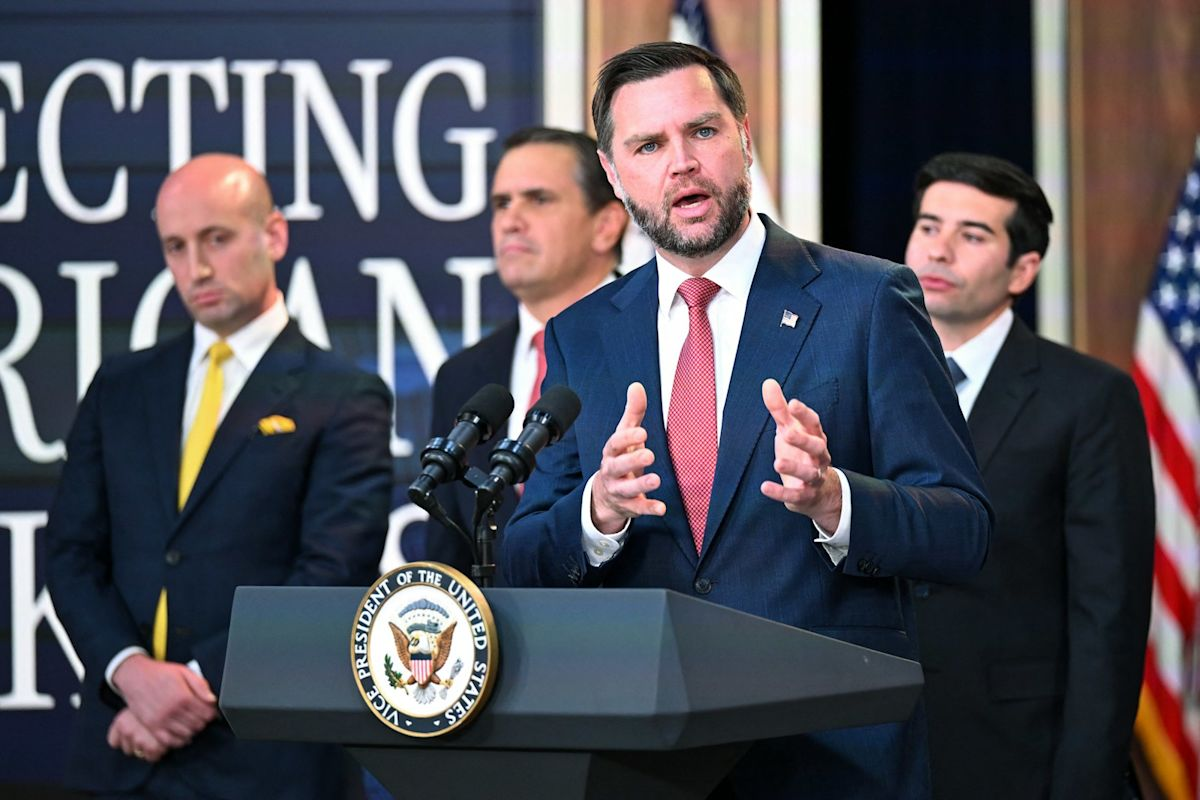
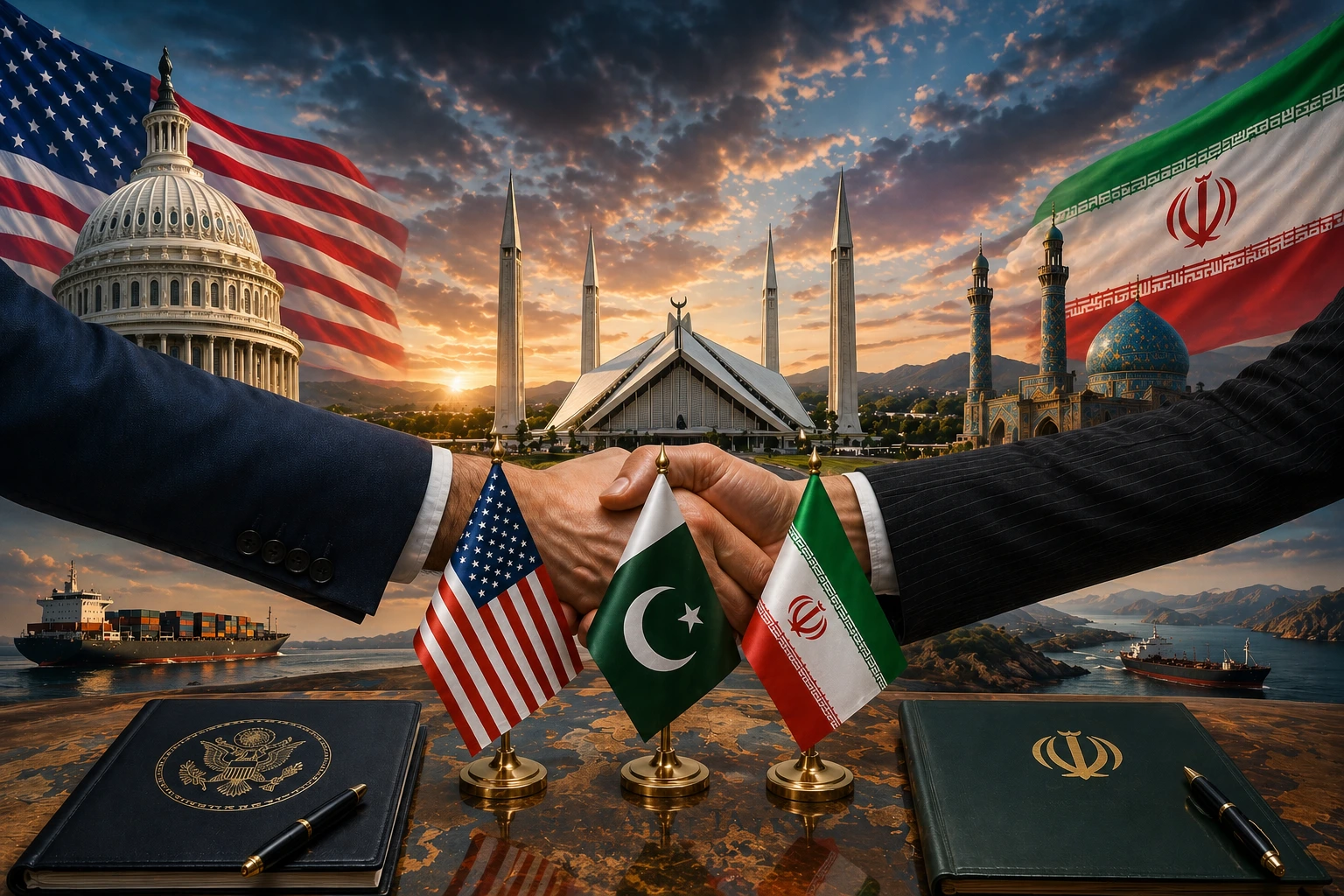
The Islamabad Talks of April 11–12, 2026 were the culmination of this convergence. The 300-member U.S. delegation, led by Vice President JD Vance alongside envoys Steve Witkoff and Jared Kushner, and the 70-member Iranian delegation headed by parliamentary speaker Mohammad Bagher Ghalibaf and Foreign Minister Abbas Araghchi, met on Pakistani soil, anchored by a Pakistani mediation team led by Prime Minister Sharif, Field Marshal Munir, and Deputy Prime Minister Ishaq Dar. The talks lasted 21 hours across three rounds. They ended without a deal, but that is the wrong metric. The right metric is what they represented: the first direct U.S.–Iran engagement since 1979, made possible solely by Pakistani structural positioning. The historical parallel with 1971 is not decorative. When Pakistan served as the back channel for Henry Kissinger’s secret visit to Beijing, that role reshaped the entire architecture of U.S. foreign policy for a generation. The Islamabad Talks carry the same structural weight. The question is whether Washington will recognise the parallel before the opportunity expires.
What has already materially changed in U.S. foreign policy toward Pakistan is substantial and partially irreversible. By June 2025, President Trump had invited Field Marshal Munir to a private White House lunch, the first time an American president hosted a Pakistani army chief unaccompanied by civilian officials. In September 2025, U.S. Strategic Metals signed a $500 million memorandum with Pakistan’s Frontier Works Organization for critical mineral extraction in Balochistan. A defence agreement with Saudi Arabia, Pakistan’s deepening Gulf partnerships, and its participation in the Gaza summit alongside President Trump in October 2025 collectively repositioned Pakistan from diplomatic periphery to active participant in U.S.-led regional architecture. The Hudson Institute, in a June 2025 policy paper, called explicitly for the U.S. to engage Pakistan as a ‘capable middle power’ and a supply chain partner in sectors where Washington seeks to reduce dependence on China. The think tank community in Washington had, by the time the Iran war began, already begun reframing Pakistan in its analytical vocabulary. The Islamabad Talks accelerated that reframing into policy.
And yet the contradiction at the heart of U.S. policy toward Pakistan has not been resolved, it has only been exposed more clearly. The naval blockade of the Strait of Hormuz, imposed by Washington two days after the first round of Islamabad Talks, came within hours of destroying the very diplomatic process the United States was simultaneously asking Pakistan to sustain. Trump’s Truth Social posts claiming Iran had agreed to provisions that remained unfinished caused visible damage to Pakistan’s credibility with Tehran, prompting Iranian officials to publicly reject his characterisations. Pakistan is, in effect, being asked to guarantee the integrity of a diplomatic process while its principal partner actively undermines the conditions that make that process credible. This is not a sustainable arrangement. It is the defining unresolved tension in the remaking of U.S. foreign policy toward Pakistan, the gap between Washington’s recognition of Pakistan’s utility and its willingness to restructure its own behaviour to protect that utility.
The remaking of U.S. foreign policy toward Pakistan will be genuine only if it moves from recognition to architecture, from acknowledging Pakistan’s utility in a crisis to building the institutional structures that make Pakistani centrality a permanent feature of American strategic planning, not a temporary convenience. Four reorientations are necessary, and they are necessary now, while Pakistani leverage is at its peak and Washington’s attention is held.
First, Washington must formally recognise and legally anchor Pakistan’s mediation role. The ‘Islamabad process’, as Pakistani observers have begun framing it, must not remain an informal track dependent on personal rapport. The United States should support a UN Security Council resolution formally endorsing Pakistan’s facilitation role and co-sponsor an ICJ advisory opinion on the legality of the Strait of Hormuz blockade. Both actions serve American interests directly: they create a multilateral framework that constrains Iran’s ability to walk away and raises the reputational cost of American policy contradictions. A U.S. that supports international legal legitimacy for Pakistan’s mediation is a U.S. that has made a structural commitment, not merely a transactional one.
Second, the U.S.–Pakistan relationship must be elevated from transactional to treaty-level. The minerals deal and the World Liberty Financial memorandum are entry points into a relationship, not the relationship itself. A formal Strategic Partnership Framework, covering defence cooperation, technology transfer, and access to U.S. capital markets for Pakistani sovereign bonds, would lock the bilateral relationship into binding institutional form before the current administration’s transactional interest shifts or expires. More consequentially, the United States must open negotiations on a civilian nuclear arrangement with Pakistan analogous to the U.S.–India 123 Agreement of 2008. The logic is now available: a Pakistan that brought Iran and the United States into direct engagement for the first time in 47 years is a state deserving of the same framework Washington extended to India on the basis of strategic trust. Nuclear asymmetry in South Asia, a policy that has served Indian interests more than American ones, must now be reconsidered in light of what Pakistani strategic value has actually demonstrated.
Third, Washington must align its military posture with its diplomatic commitments. The naval blockade of Iranian ports, imposed unilaterally while Pakistani mediators were in the room, is the clearest example of U.S. policy working against itself. American credibility as a negotiating partner in the Islamabad process depends on Washington’s willingness to coordinate military pressure with diplomatic timing. A state that asks its mediator to hold the room while it sets fire to the curtains will eventually find itself without a mediator. Pakistan absorbed the damage in April 2026. It cannot be expected to do so indefinitely without a structural commitment from Washington that its military actions will be sequenced in coordination with, not in contradiction of, Pakistan’s diplomatic role.
Fourth, and most fundamentally, the United States must invest in Pakistan’s institutional capacity rather than merely exploiting its current credibility. Pakistani think tanks, universities, and foreign policy institutes remain chronically underfunded. Pakistan’s mediation of the 2026 Iran war has been theorised predominantly by Western and Arab analysts. Pakistani voices, Pakistani frameworks, Pakistani theories of the case, are largely absent from the global conversation about a crisis Pakistan itself contained. A U.S. that is serious about Pakistan as a long-term partner must invest in Pakistani institutional depth: funding joint research programmes, expanding Fulbright and scholarly exchange, and engaging Pakistani academic institutions as intellectual partners rather than policy recipients. A Pakistan with serious analytical infrastructure is a more predictable, more legible, and ultimately more reliable partner than one that can only respond to crises it did not help to theorise.
The remaking of U.S. foreign policy toward Pakistan is already underway. What remains uncertain is whether Washington understands what it is remaking, and why. Pakistan’s mediation of the 2026 Iran war was not a favour rendered to the United States. It was the demonstration of a structural reality that American policy had spent a decade refusing to acknowledge: that Pakistan’s geography, its civilisational relationships, and its rare capacity to hold contradictory alliances simultaneously make it not merely useful but irreplaceable in the architecture of Middle Eastern and South Asian stability. The states that endure as partners in the international order are those whose value is embedded in institutions, not just in moments. Pakistan has produced the moment. The question, for both Islamabad and Washington, is whether either capital has the strategic imagination to build something that outlasts it.

Dr Minhas Majeed Khan is a scholar-practitioner specialising in geopolitics, diplomacy, and Pakistan’s foreign policy. She is the author of Divine Diplomacy (Palgrave Macmillan).