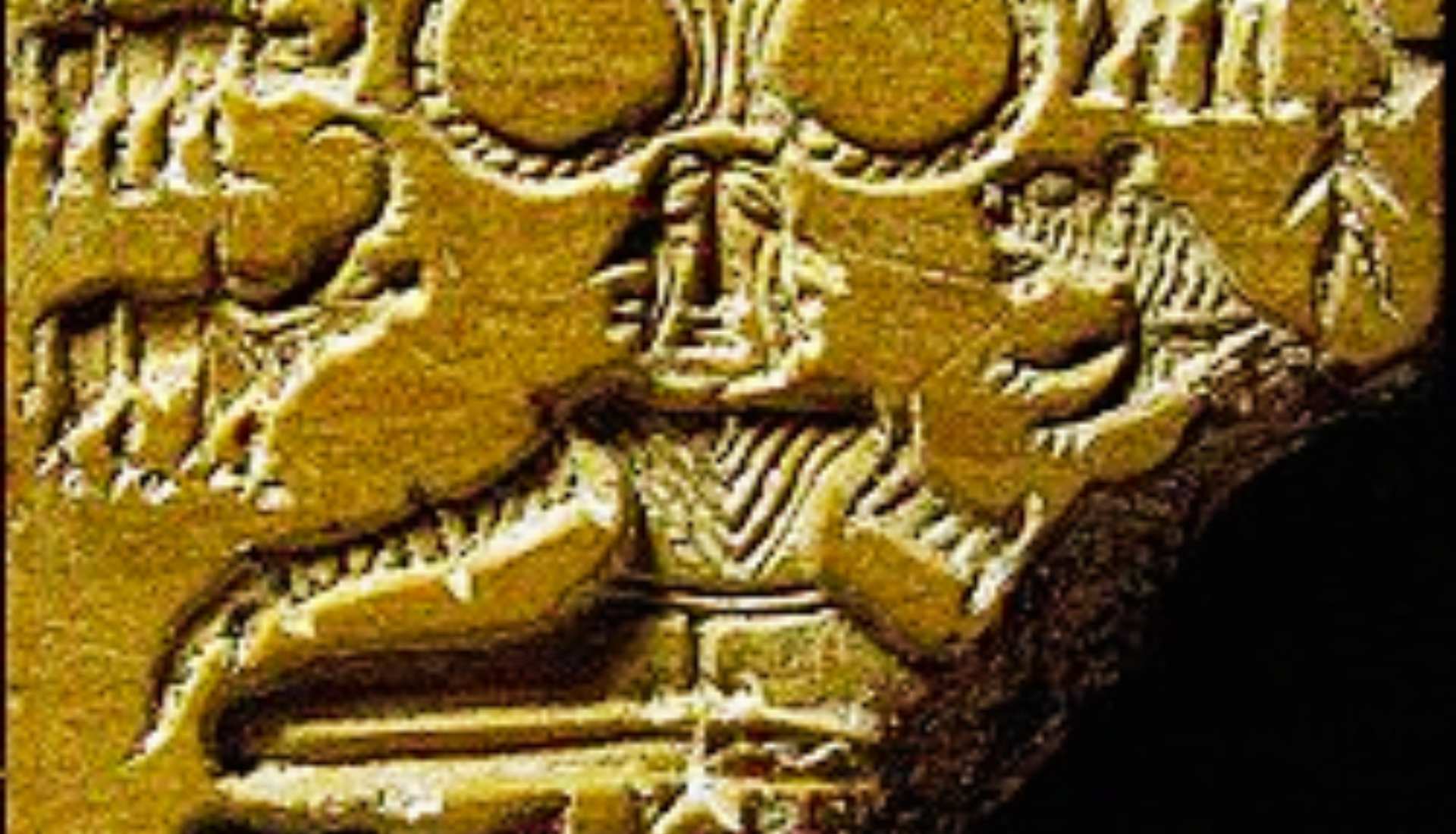
India’s Quest for Civilizational Legitimacy
India keenly wants the status of great power for itself. One of the prerequisites that can legitimize its aspiration is its connection to ancient civilization. Indian media initiated a new debate focused on renaming the Indus Valley Civilization as the Sindhu-Sarasvati Civilization. Sarasvati is a mythical river mentioned in holy books of Hinduism the “Vedas”. The struggle for renaming Indus Valley Civilization has started a new debate on regional identities. Hence, if India succeeds in changing the name of this great ancient civilization as per its aspiration, it will have domestic and regional consequences.
India wants to rename Indus Valley Civilization for two purposes. First, since Sarasvati river is mentioned in the holy books of Hindus, people who lived around Sarasvati river were the real inhabitants of this region and true inheritors of Sarasvati civilization. Second, it will give ideological support to Hindutva ideology of Hindu Nationalists who see all other religious and ethnic groups of India as outsiders. Nonetheless, it will give a renewed ideological support for Hindutva’s mission, the Ghar Wapsi (Go back to your home) movement which is primarily focused on Muslim minorities. The introduction of the Indian Citizenship Amendment Act 2019 which deny Muslim minority citizenship rights was also rooted in Hindutva Ideology.
Scientific and Historical Challenges
India wants Sarasvati to be proven as a glacial-fed river that somehow changed its course over the centuries. If proven, it has domestic as well as regional implications for India’s foreign policy and, it will give a civilizational foundation to RSS’s Hindutva ideology of expansion of Hindu Kingdom (Akhand Bharat), and purification of India, which considers all the dwellers of Indian subcontinent as outsiders and migrants. This is the reason that Indian Prime Minister Narendra Modi has long couched his party’s brand of Hindu nationalism in terms of a civilizational state. So far, history and scientific research have put some challenges to India’s mission of the Hinduization of Indian subcontinent.
Indus Valley Civilization was one of the oldest civilizations of world whose remains are found in modern-day Pakistan, India, and Afghanistan. As per Tony Joseph, famous Indian Journalist and Historian, Harappa (an archeological site present Sahiwal, Pakistan) is a suitable name for Indus Valley civilization. It is because people of Moen Jo Daro did not just live on the banks of Indus but were scattered around different rivers of Indian Subcontinent including Indus, Ghaghar-Hakro, Ganges and Yumna. He also rejects the call for calling Indus valley civilization as Sarasvati civilization because it was only a small settlement in the gigantic civilization of Indus Valley.
Furthermore, Liviu Giosan, a marine geologist and who studies interaction between climate, landscapes and humans, has published two scientific studies on Indus Valley or Harappan Civilization. First he concluded that this great civilization was destroyed due to change in climate instead of any flood or foreign invasion, neglecting the Hindu nationalist’s claim of Aryan’s invasion, who founded Vedic Civilization. Secondly, he has scientifically proved through the study of sediments of Indus river and remnants of Ghaghar-Hakro (Sarasvati) river that it was not glacial fed but a seasonal river that dried up over the centuries due to the weakening of winter monsoon in Indian subcontinent. The remnants of this river are also found in Cholistan, Sindh and Rajasthan areas of both Pakistan and India and lead to Dhola Vera site where an effective system of flood management was unearthed in modern-day India.
Regional Implications and Cultural Politics
India is trying to claim its ancestral connection and roots with Indus Valley or Harappa Civilization based on exclusivity and superiority. In a recent article published in International Affairs Journal, Andrew Ehrhardt has argued that “the usage of term civilization conjures up perceptions of superiority, exclusivity or progress”. An appeal to ancient world civilizations provides modern nation-states with a platform to showcase historical continuity and unity of their respective geographical unit in historical context. However, Indian government under Narendra Modi and Bharatiya Janta Party are trying to reinforce exclusivity and superiority within the ancient civilization of Indian subcontinent.
The people in the south of India are Dravidians and they also speak Dravidian languages. After Indian government struggled to rename Indus Velley civilization, India’s south put a bet on deciphering old scripture of Indus Valley civilization to protect their identity. The Chief Minister of the southern state of Tamil Nadu M.K. Stalin has announced a handsome amount of $1 Million US dollars for anyone who deciphers the ancient script of Indus Valley Civilization. It is part of a cultural war. Unlike Hindus, who claim that the Aryan race that brought the Vedic religion of Hinduism to India are true natives of the subcontinent, Tamil Nadu’s ruling party believes that Dravidians of southern India were natives and Aryans were northern invaders. They believe that script was written in Dravidian and some famous linguistics like; Asko Parpola endorse their claim.
BJP-led Indian government is silently rewriting the identity of South Asia by buttressing history. Early examples of it were changing the names of cities and places, particularly with Muslim roots, to replace them with Hindu names. They were already changing the names of cities and places, particularly with Muslim roots, to replace them with Hindu names. Now, they are trying to rename the Indus Valley Civilization. Christopher Coker warned in 2021 that some civilizations including India are setting dangerous precedents by sugarcoating their current foreign policies in certain mythical notions of civilizational righteousness. It is imperative to correct the history before it’s too late and it should be based on scientific knowledge and pragmatism instead of religious notions.
India cannot and should put an exclusive claim to Indus Valley Civilization at the expense of other regional countries with sites of civilization. Where ancient civilizations should be leveraged to work on problems of common goods like; regional connectivity, trade and commerce, free movement of ideas and people, and regional environmental changes, unfortunately, Indian government is trying to rewrite the history of one of the great civilizations of world Indus Valley to align with its nationalistic agenda of BJP government which is mostly fed by the extremist ideology of RSS. Ancient civilizations should be leveraged as the common heritage of entire region instead of being weaponized as tools of otherization and seclusion of particular groups of people or countries from the region.