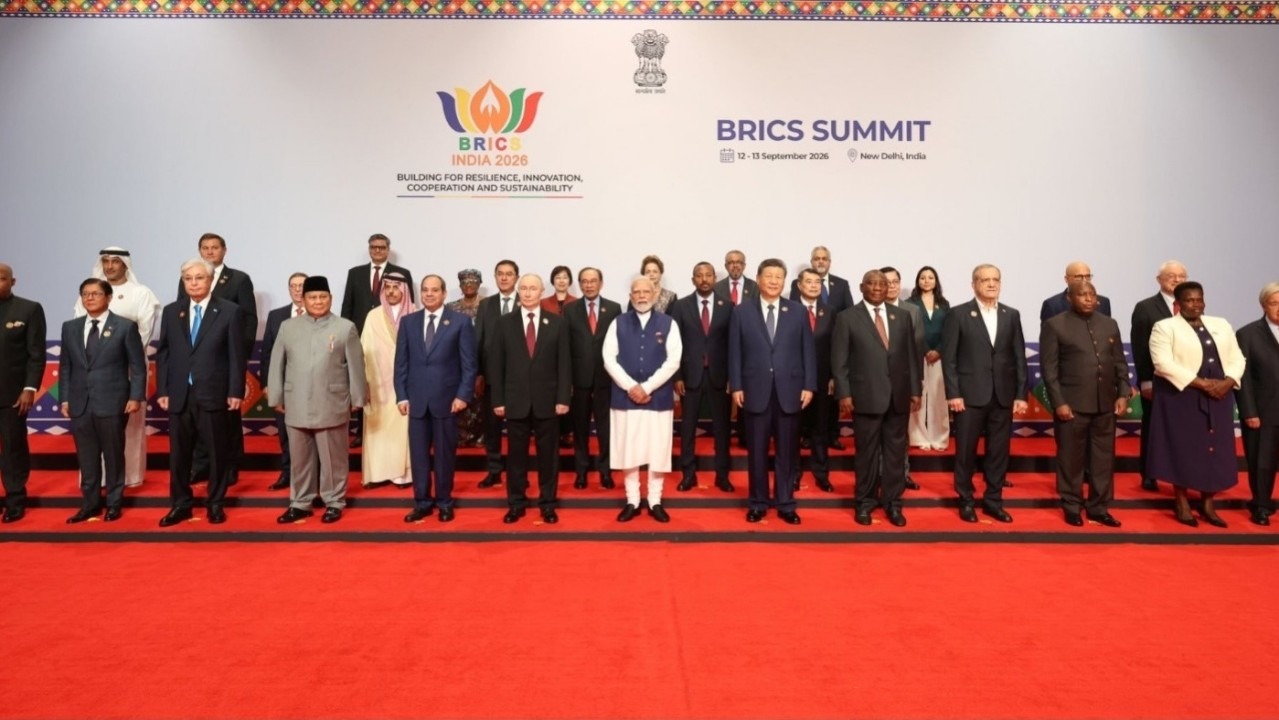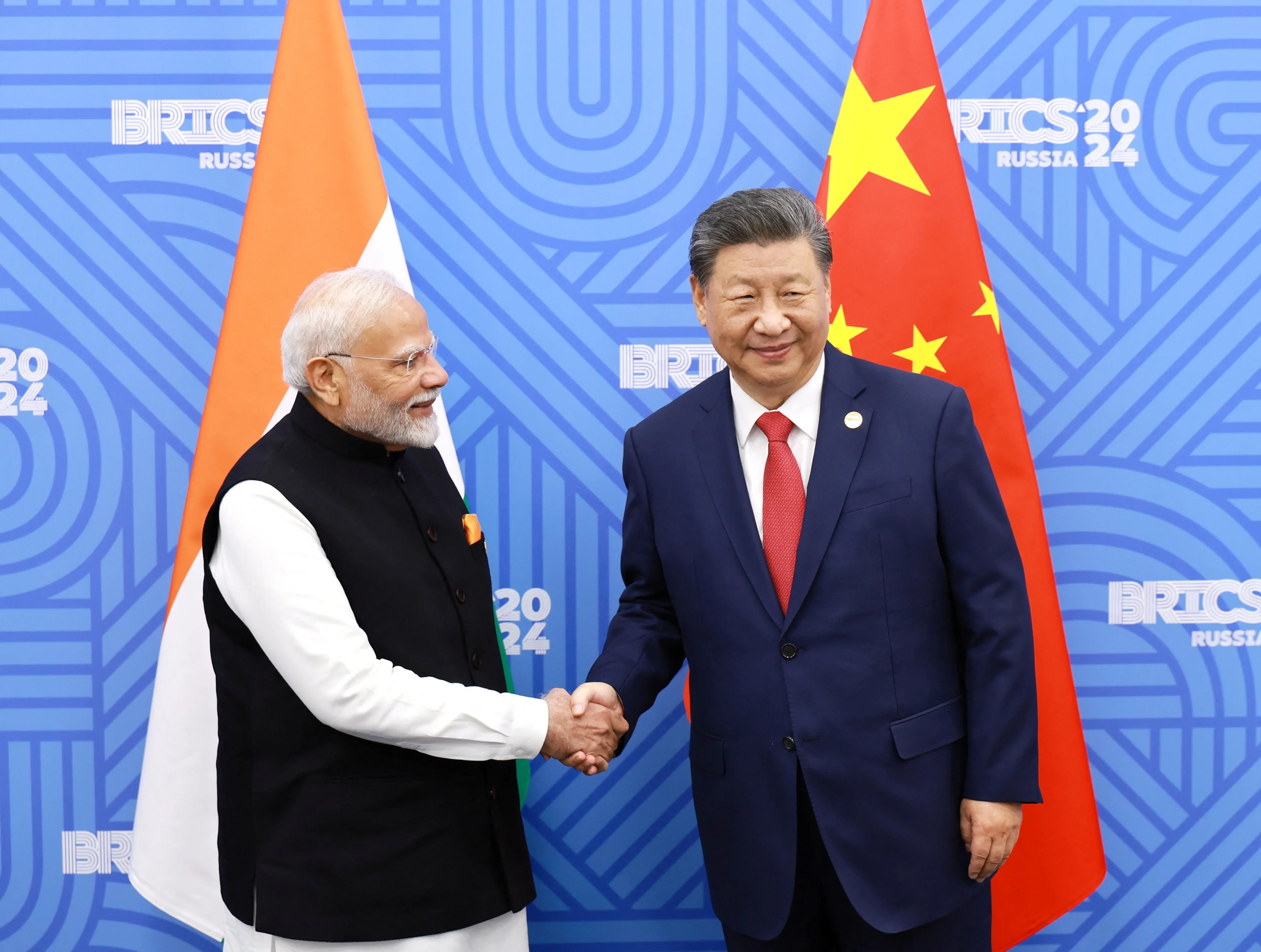
Chinese President Xi Jinping and Indian Prime Minister Narendra Modi agreed on Wednesday to enhance communication and cooperation between their countries. They also agreed to resolve conflicts to improve ties that were damaged by a deadly military clash in 2020.
The two leaders met on the sidelines of the BRICS summit in Russia for their first formal talks in five years. This meeting signals that ties between the Asian giants have begun to recover. The recovery comes after the diplomatic rift caused by the clash along their disputed Himalayan frontier.
India and China, two of the world’s biggest economies, have maintained strong trade ties despite the military and diplomatic tensions. The rapprochement is expected to boost Chinese investment in India.
India said the two leaders have directed their officials to take further steps to stabilise all aspects of bilateral ties.
Steps to Enhance Bilateral Relations
The Xi-Modi meeting in the city of Kazan occurred two days after New Delhi announced a deal with Beijing. This deal aims to resolve the four-year military stand-off in the Himalayan region of Ladakh. However, neither side has shared details of the pact.
The two sides should strengthen communication and cooperation. They need to resolve conflicts and differences. Additionally, they should realize each other’s development dreams, Chinese state broadcaster CCTV reported Xi as telling Modi.
Modi put forward ideas for improving and developing bilateral relations, emphasizing the importance of communication and cooperation, to which Xi agreed in principle, CCTV added without elaborating.
In response, Modi told Xi that peace, stability, mutual trust and respect were crucial for relations.
“We welcome the agreement on the issues that had come up over the last four years,” Modi told Xi in comments aired on India’s state broadcaster Doordarshan.
“It should be our priority to maintain peace and tranquillity on the border. Mutual trust, mutual respect and mutual sensitivity should be the basis of our relationship,” Modi said.
Also See: India, China reach pact to resolve border conflict
PATH TO IMPROVING TIES
The clash between troops from the world’s two most populous nations—both nuclear powers—strained relations along the largely undemarcated frontier in the western Himalayas. In 2020, the confrontation left 20 Indian soldiers and four Chinese soldiers dead.
The neighbours have added tens of thousands of troops and weapons along the icy frontier over the last four years.
Modi and Xi had not held formal bilateral talks since then, although both participated in multilateral events. Their last bilateral summit talks were held in October 2019 in the southern Indian town of Mamallapuram.
The two spoke briefly on the sidelines of the G20 summit in Bali in November 2022. They spoke again on the sidelines of the BRICS summit in Johannesburg in August 2023 but released different versions of the conversation, suggesting they didn’t see eye to eye.
Xi skipped the G20 summit hosted by New Delhi the following month, a decision seen as another setback to relations.
Diplomatic efforts gained momentum in recent months after the two countries’ foreign ministers met in July and agreed to step up talks to ease the border tensions.
India had made improving the wider political and damaged business ties contingent upon finding a solution to the border stand-off.
New Delhi had increased the scrutiny of investments coming from China, blocked direct flights between the two countries and had practically barred issuing any visas to Chinese nationals since the Ladakh clashes.
Speaking in Kazan, Indian Foreign Secretary Vikram Misri said there was hope for better India-China relations.
“As we have maintained during the last four years, the restoration of peace and tranquillity on the border areas will create space for … normalisation of our bilateral relations.”
This news is sourced from Reuters and is intended for informational purposes only.

Your trusted source for insightful journalism. Stay informed with our compelling coverage of global affairs, business, technology, and more.