India, China reach pact to resolve border conflict

India and China reach a pact to resolve border conflict, paving the way for improved ties ahead of the BRICS summit.

India and China have reached a pact to resolve border conflict on patrolling their disputed frontier, thus ending a four-year military stand-off, said the Indian foreign minister on Monday. Consequently, this paves the way for improved political and business ties between the Asian giants.

The news came on the eve of Indian Prime Minister Narendra Modi’s visit to Russia for an Oct. 22-24 summit of the BRICS regional grouping, during which he could hold talks with Chinese President Xi Jinping, Indian officials said.

Also See: India, China agree to resolve border dispute peacefully

Agreement Reached but Tensions Remain

Clashes between troops from the world’s two most populous nations—both nuclear powers—strained relations. The largely un-demarcated frontier in the western Himalayas resulted in the deaths of 20 Indian and four Chinese soldiers in 2020, Reuters reported.

The two sides had since stopped patrolling several points along the border in the Ladakh region to avoid new confrontations. Meanwhile, they moved tens of thousands of new troops and military equipment closer to the freezing highlands.

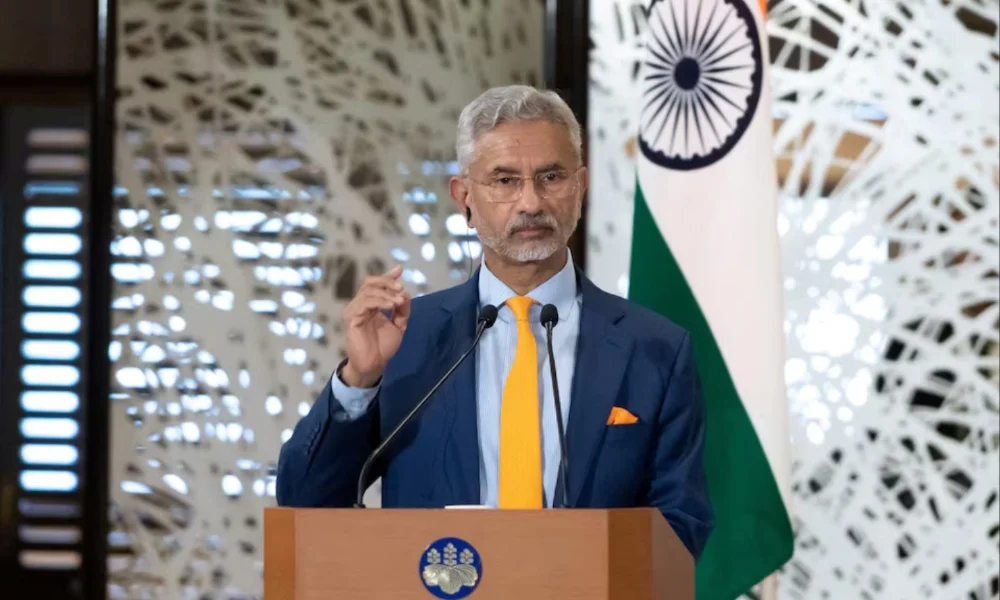
Indian Foreign Minister Subrahmanyam Jaishankar stated at a NDTV media conclave, “We reached an agreement on patrolling. This agreement brings us back to the situation in 2020. We can say that we have completed the disengagement process with China.” He emphasized that this pact to resolve border conflict allows both nations to move forward in their relationship.

He stated, “We reached the understanding only today,” and added, “We always said that if you disturb the peace and tranquility, how can the rest of the relationship move forward?”

To avoid clashes, the two militaries will patrol contested points along the border according to an agreed schedule, a senior Indian military officer aware of the details told Reuters.

Both sides will monitor the area in Ladakh to ensure that there are no violations, the officer added.

Authorities in Beijing offered no immediate response to India’s remarks.

Officials in New Delhi said the pact clears the path for a likely bilateral meeting between Modi and Xi on the sidelines of the BRICS summit, which will be their first since 2020.

This news is sourced from Ariana News and is intended for informational purposes only.

News Desk

Your trusted source for insightful journalism. Stay informed with our compelling coverage of global affairs, business, technology, and more.

Recent

Broken Promises: The Taliban’s Betrayal of Global Commitments

Broken Promises: The Taliban’s Betrayal of Global Commitments

Nearly three years after seizing power, the Taliban’s systematic violation of their international commitments under the 2020 Doha Accord has transformed Afghanistan into a sanctuary for terrorism, entrenched an autocratic regime, and institutionalized gender apartheid. Beyond moral failure, this deceit poses a grave threat to regional stability, international counterterrorism efforts, and the credibility of global diplomacy. Holding the regime accountable is now a strategic necessity, not a choice.

Read More »
Do You Remember 6/11/ 1947?: A Forgotten Jammu Genocide and the Continuing Erasure of Kashmiriyat

Do You Remember 6/11/ 1947?: A Forgotten Jammu Genocide and the Continuing Erasure of Kashmiriyat

On November 6, 1947, one of South Asia’s earliest genocides unfolded in Jammu, where hundreds of thousands of Muslims were massacred or forced to flee. Yet, unlike other global tragedies, this atrocity remains buried in silence. The Jammu Genocide not only reshaped the region’s demography but laid the foundation for India’s ongoing campaign of identity erasure in Kashmir. From demographic engineering to cultural censorship, the spirit of Kashmiriyat continues to face systematic annihilation.

Read More »
India’s Climate Policy after COP28: Net Zero 2070 — A Fair Promise or a Risky Postponement?

India’s Climate Policy after COP28: Net Zero 2070 — A Fair Promise or a Risky Postponement?

India’s Net Zero 2070 target reflects a delicate balance between development equity and climate urgency. While progress in renewables, green finance, and adaptation is visible, the absence of clear interim milestones risks turning ambition into delay. The real challenge lies in translating a distant horizon into measurable, near-term climate action before 2030.

Read More »
The Tehreek-e-Hijrat of 1920 and Its Parallels with Contemporary Refugee Politics

The Tehreek-e-Hijrat of 1920 and Its Parallels with Contemporary Refugee Politics

The Tehreek-e-Hijrat of 1920 saw thousands of Indian Muslims migrate to Afghanistan, only to be turned away when Kabul could no longer cope. A century later, Afghan officials criticise Pakistan’s refugee policies while ignoring their own historical refusal to host Muslim migrants. The parallel reveals not just irony, but the enduring challenge of compassion, capacity, and collective responsibility.

Read More »
Playing the Victim: How the Taliban Endorse and Amplify Online Propaganda Against Pakistan

Playing the Victim: How the Taliban Endorse and Amplify Online Propaganda Against Pakistan

Following the October 2025 border clashes, the Taliban have shifted their battlefield online, using propaganda, selective history, and digital disinformation to paint Pakistan as the aggressor. Through controlled media releases, colonial-era references, and victimhood narratives, Kabul seeks to manipulate regional perception and deflect blame for its own failures.

Read More »