In the bustling streets of India, amidst the diversity of cultures and religions, a storm brews—a storm of political maneuvers and ideological shifts that threaten to reshape not just the nation itself, but the entire South Asian region. Recent developments orchestrated by the Indian government under Prime Minister Modi’s leadership have sent ripples of concern throughout the international community, particularly among neighboring Muslim-majority countries.
From the rebranding of historical events to the enactment of discriminatory laws, India’s trajectory is raising questions about the country’s path and its implications for regional stability.
One such development is the declaration of September 17th as Hyderabad Liberation Day—a move that celebrates the annexation of Hyderabad by Indian forces in 1948. While framed as a celebration of national unity, it glosses over the complex history of the region and stirs tensions among communities. Similarly, the renaming of cities like Ahmednagar to Ahilyanagar and the ban on organizations like the Jammu Kashmir National Front reflect a trend towards centralizing religion for the sake of nationalist fervor.
![Students protesting against the CAA in Guwahati, Assam [Anupam Nath/AP]](https://southasiatimes.org/wp-content/uploads/2024/03/AP24072285701592-1710232986.webp)
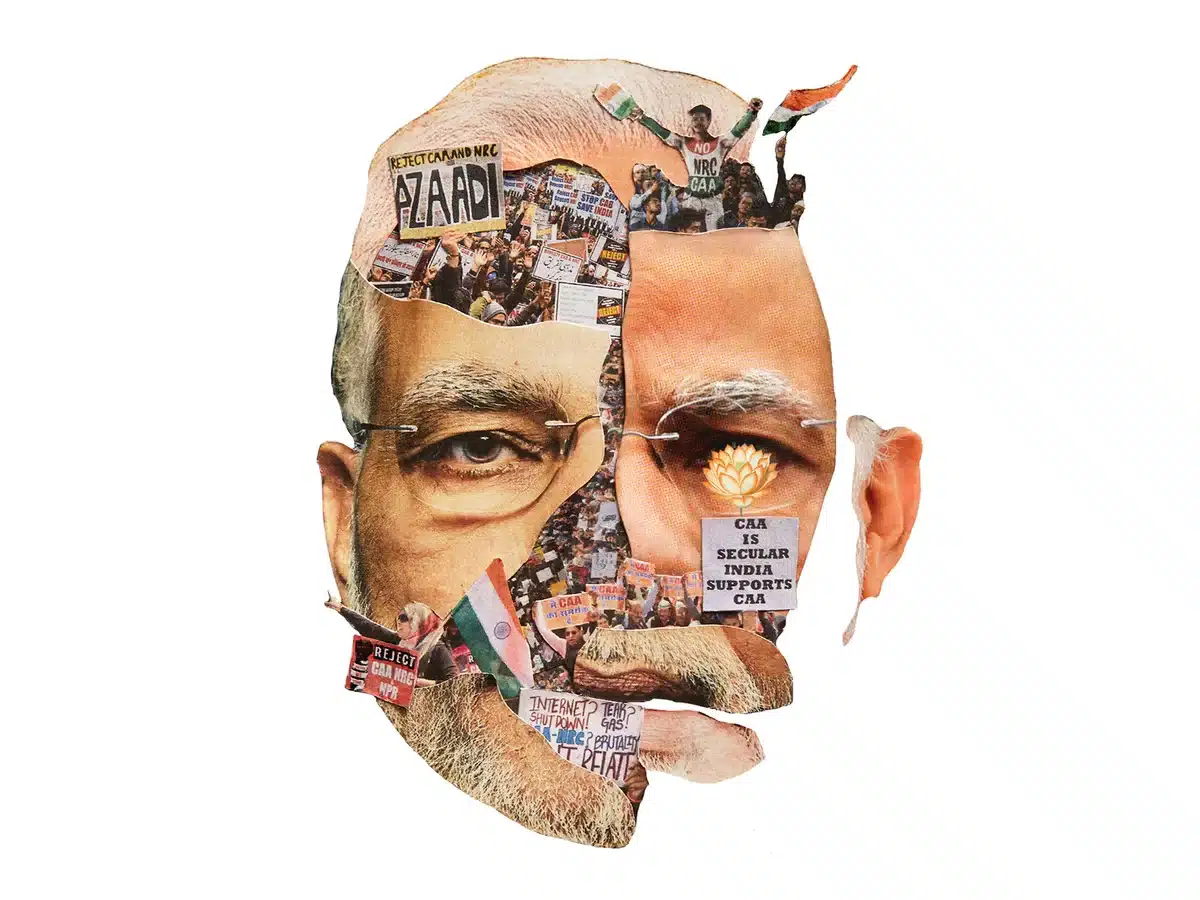
At the heart of India’s shifting trajectory lies the Citizenship Amendment Act (CAA) of 2019—a law that introduces a religious test for citizenship, favoring persecuted minorities from neighboring countries while excluding Muslims. This blatant discrimination undermines the secular fabric of India and exacerbates communal tensions both domestically and regionally. The rationale provided by Home Minister Amit Shah, invoking the concept of “Akhand Bharat,” only adds fuel to the fire, evoking historical grievances and fueling fears of expansionist aspirations.
The CAA, coupled with the government’s rhetoric and actions in Kashmir, paints a troubling picture of India’s approach to minority rights and regional stability.
Collectively, these developments paint a troubling picture of India’s path, one characterized by a blend of nationalist fervor, territorial ambitions, and exclusionary policies. While India’s internal affairs are its prerogative, the ripple effects of its actions extend far beyond its borders, impacting regional dynamics and stability.
Read More: India – From Republic to Ram Rajya
The disputed region of Kashmir, in particular, stands as a nuclear flashpoint between India and Pakistan—a powder keg ignited by India’s unilateral decisions and heavy-handed tactics. The international community cannot afford to remain passive spectators to these developments. India’s trajectory poses a threat not just to its own stability but to the entire South Asian region.
As tensions escalate and the risk of conflict looms large, diplomatic intervention becomes imperative because the centralization of religion for the sake of hyper-nationalism sets a dangerous precedent.
Had it been Pakistan, Afghanistan, or Bangladesh engaging in similar actions, the outcry from the international community would be deafening. Yet, when it comes to India, economic gains and geopolitical interests often overshadow concerns about human rights and regional stability.
To underscore India’s accountability, it’s essential to draw parallels with another country whose unchecked trajectory has raised alarms globally: Israel. Like India, Israel has faced criticism for its treatment of minorities and its actions in disputed territories. The Israeli government’s policies towards Palestinians, including settlement expansion, military occupation and an on-going Genocide, have long been condemned by the international community.
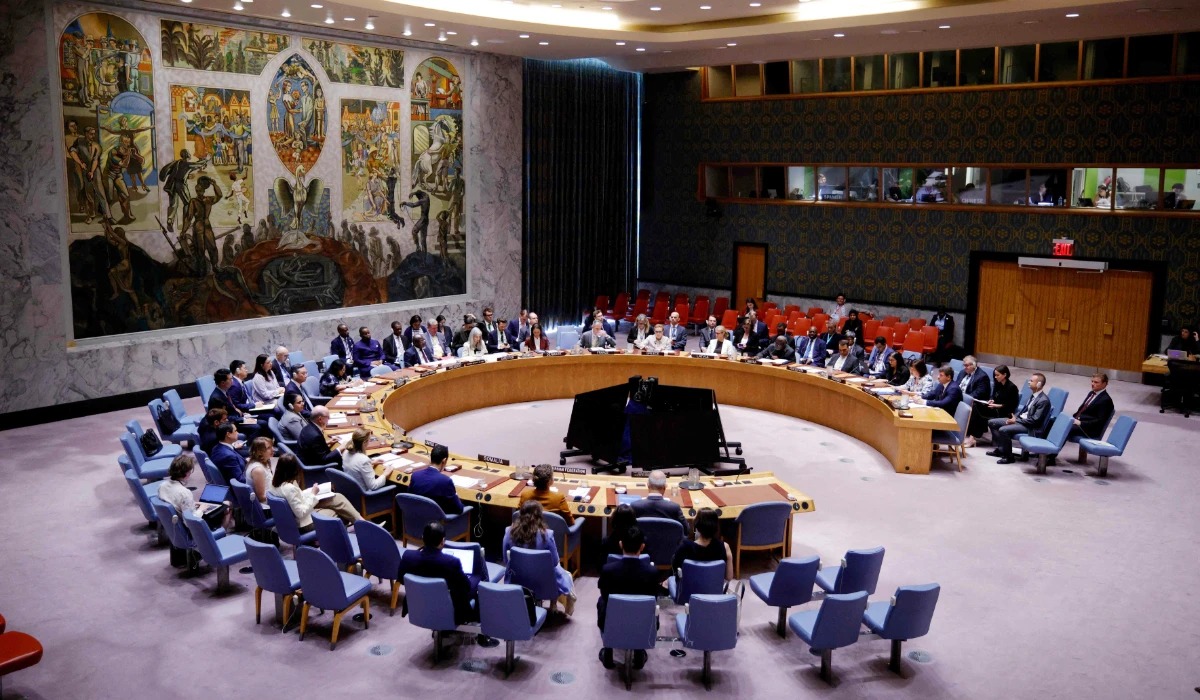
However, despite calls for accountability and adherence to international law, Israel has enjoyed significant support from powerful nations, particularly the United States, even recently in the United Nations Security Council (UNSC). Economic and military aid continue to flow to Israel, despite its controversial actions, and being engaged in Palestinian Genocide since October 7th, 2023, highlighting the prioritization of strategic alliances over human rights concerns.
![Palestinian children sit amid rubble as others search a building destroyed by Israeli air raids in Khan Younis in the southern Gaza Strip [Mohammed Salem/Reuters]](https://southasiatimes.org/wp-content/uploads/2024/03/2023-10-17T065735Z_1792802358_RC24U3A2P7NH_RTRMADP_3_ISRAEL-PALESTINIANS-1697538665.webp)
Read More: On FATF and India: The Accountability Conundrum
Similarly, India’s actions in Kashmir, a United Nations-declared disputed territory where Indian state laws often do not apply, alongside the enactment of discriminatory laws like the Citizenship Amendment Act, have been met with insufficient condemnation from key allies and international organizations. Despite clear violations of human rights and democratic principles, economic interests, trade partnerships, and geopolitical alignments frequently take precedence over principles of justice and equality.
This imbalance in international response highlights a troubling trend where strategic interests outweigh moral imperatives.
The parallel with Israel serves as a sobering reminder of the dangers of unchecked power and the need for consistent and principled foreign policy. Failure to do so not only undermines the credibility of global institutions but also emboldens authoritarian regimes and perpetuates injustice. In light of these parallels, diplomatic intervention in India’s trajectory is not just a matter of moral obligation but a strategic imperative for regional stability.
The international community must leverage its influence to pressure India to uphold the principles of democracy, secularism, and human rights. This includes advocating for the reversal of discriminatory laws, respecting the rights of minorities, and engaging in meaningful dialogue to address the root causes of conflict in regions like Kashmir. The time for diplomatic intervention is now, before the situation escalates further and the consequences become irreversible.

Your go-to editorial hub for policy perspectives and informed analysis on pressing regional and global issues.