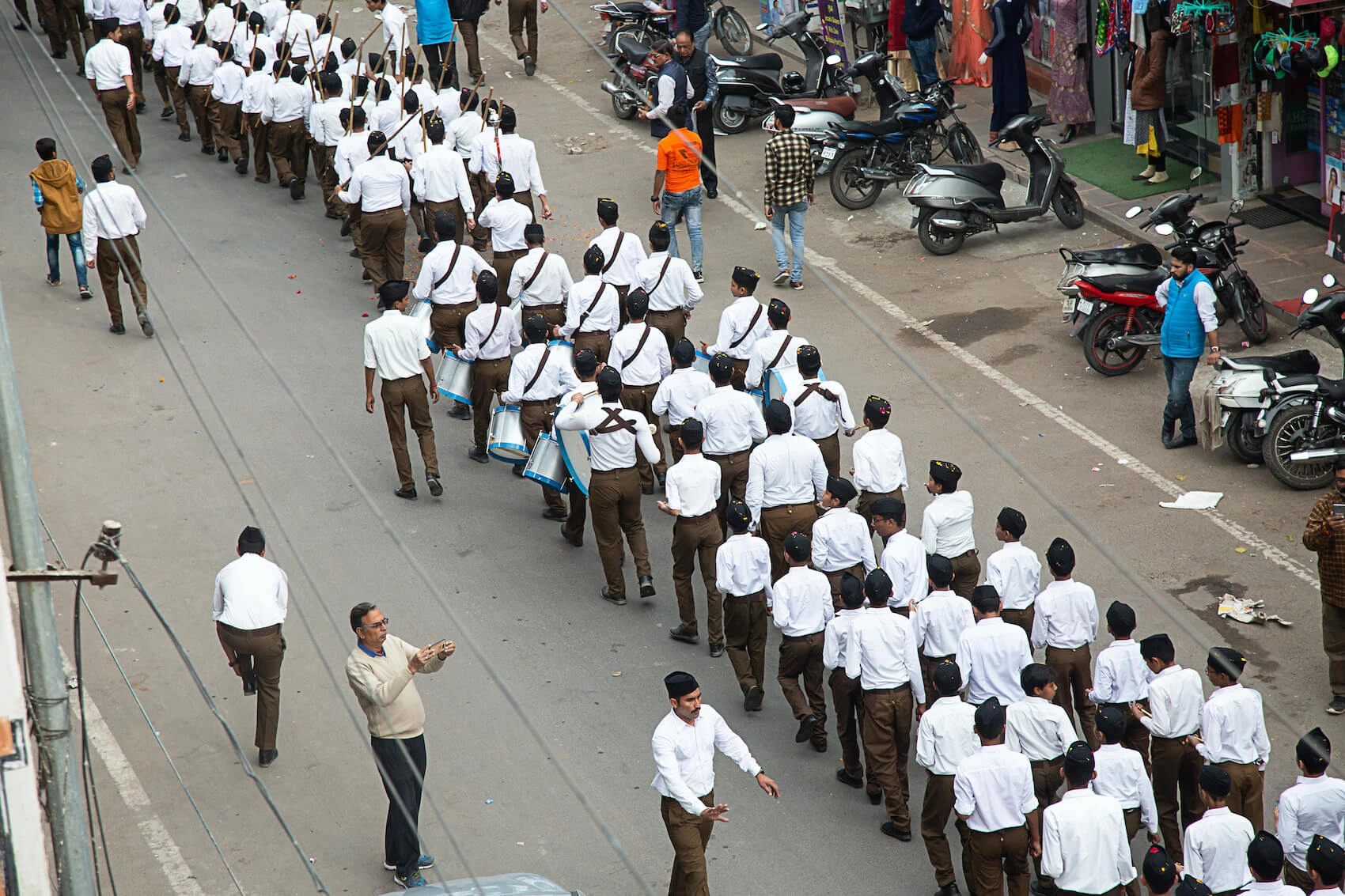
Political mobilization in South Asia is characterized by a unique intensity that defies standard democratic analysis. Unlike the transactional relationship seen in Western constituencies, the bond between leader and follower here is not based on policy platforms but on devotion. Whether in the mass rallies of Varanasi for Narendra Modi or the fervent gatherings in Peshawar for Imran Khan, the underlying dynamic is identical. This is not merely political support. It is a rejection of the gradualism of the state in favor of a desire for immediate, total transformation. It signals a deep-seated preference not to be governed by institutions, but to be saved by individuals.
For decades, political analysts have viewed the volatility of South Asian politics through the lens of economics, corruption, or post-colonial identity. These lenses, however, fail to explain the central paradox of the subcontinent: India and Pakistan inherited the “steel frame” of the British Raj, a robust bureaucracy, a judiciary, and a parliamentary model designed for continuity. Yet, for seventy-five years, the electorate has consistently, violently, and joyously voted to dismantle this steel frame in favor of individuals.
We are witnessing a phenomenon that transcends standard populism. It is a “Messiah Complex.” Deeply influenced by a cultural programming that craves millenarian transformation, the South Asian voter rejects the boredom of institutional incrementalism.
We do not want a functional democracy because democracy requires compromise. Instead, we want a Savior who promises a total reset of reality, a transition to Amrit Kaal (The Era of Elixir) or Haqeeqi Azadi (True Freedom).
The Iron Cage and the Magician
To understand why South Asians loathe their own institutions, we must turn to the German sociologist Max Weber. Weber distinguished between three types of authority, but two are pertinent here: Legal-Rational Authority and Charismatic Authority.
Legal-Rational Authority is the foundation of modern liberal democracy. It is authority derived from rules, offices, and procedures. In this system, you obey the Prime Minister not because he is a holy man or a genius, but because he won a legally certified election. It is, by design, impersonal, bureaucratic, and incredibly boring. Weber famously feared that this form of organization would trap humanity in an “Iron Cage” (stahlhartes Gehäuse) of efficiency, stripping the world of mystery and magic.
South Asia, however, has never accepted the Iron Cage. While our constitutions are written in the language of Legal-Rational authority, our political culture operates almost exclusively on Charismatic Authority.
For the South Asian voter, the System, the courts, the election commissions, the parliament, is not a safeguard against tyranny. It is an impediment to destiny. When a leader is viewed as a Charismatic Sovereign, the checks and balances of democracy are seen as bureaucratic hurdles preventing the Chosen One from delivering the promised land. The voter does not want the leader to follow the rules. They want the leader to break the rules because the rules are perceived as the tools of the corrupt old guard. We do not want a manager to maintain the cage. We want a magician to break the bars.
The Psychology of Deliverance
This rejection of institutionalism is not just political; it is theological. The subcontinent is the cradle of the concept of the Avatar, the deity who descends to earth to restore cosmic order when chaos prevails. In Islam, similar concepts also exist.
The underlying psychological framework here is Millenarianism: the belief that the current society is so fundamentally corrupt and decayed that it cannot be fixed by gradual repairs. It must be destroyed and replaced entirely by a sudden, supernatural, or revolutionary event.
In this worldview, reform is a dirty word. Reform implies that the existing structure is salvageable. It involves fixing sewage lines, balancing budgets, and debating tax codes, the boring work of governance. The Messiah, however, does not offer reform. He offers Redemption.
This is why the political vocabulary of South Asia is so heavily drenched in the language of purity and pollution. Opponents are rarely described as merely wrong on policy. They are “termites,” “thieves” (chor), or “anti-nationals.” They are not political rivals. They are pollutants in the sacred body of the nation. The leader’s job is not to negotiate with them but to exorcise them.
This creates a dangerous feedback loop. If the leader is an Avatar sent to cleanse the nation, then any institution that stands in his way, be it a Supreme Court verdict or a parliamentary procedure, is inherently evil. The destruction of institutions becomes a moral duty for the mob, justified as the necessary purging of the old order to make way for the new.
We see this theoretical framework playing out in real-time across the border, in mirror images.
India: The Vishwaguru
In India, Narendra Modi has successfully transitioned from a political administrator to a civilizational figurehead. In his early years, the pitch was the Gujarat Model, a claim to Legal-Rational efficiency. However, as his tenure progressed, the narrative shifted from Vikas (development) to Vishwaguru (World Teacher) and Hindu Hridaysamrat (Emperor of Hindu Hearts).
The genius of the Modi project lies in the concept of Amrit Kaal. It bypasses the grit of parliamentary debate and economic stagnation by focusing the nation’s gaze on a mythical future-past. The BJP is no longer just a political party. It is the vehicle for a civilizational restoration. When the Prime Minister performs religious rites at the inauguration of the new Parliament building, he is signaling that the source of his authority is no longer the Constitution, but the sacred sanction of culture.
Consequently, questioning the leader becomes synonymous with questioning the nation itself. To critique the government’s economic data is to be”anti-India. The personality cult has subsumed the party and the state to such an extent that the System is indistinguishable from the individual.
Pakistan: The Martyrs and the Kaptaan
In Pakistan, the dynamic is even more volatile. The country has a long history of seeking saviors, a pattern that found its first major expression in Bhuttoism. Zulfikar Ali Bhutto was the archetype of the tragic hero in Pakistani politics. He did not merely campaign, he galvanized the masses with a raw, electric connection that bypassed the bureaucracy entirely. His slogan of Roti, Kapra, Makaan (Bread, Clothing, Shelter) was revolutionary, but the true appeal was the man himself.
His supporters, the jiyalas, were devotees willing to immolate themselves for their leader. The narrative of his martyrdom, and later that of his daughter, Benazir, became a religious passion play. To this day, in the rural heartlands of Sindh, this dynastic messianism persists. The slogan Zinda hai Bhutto (Bhutto is alive) defies the finality of death, maintaining a spiritual hold that transcends poor governance. However, at the national level, this legacy eventually routinized into traditional patronage politics, leaving a vacuum for a new Savior.
Enter Imran Khan, who represents the complete crystallization of this Messiah Complex in the digital age. Khan’s narrative has never been about policy. It has always been about Haqeeqi Azadi (True Freedom). He frames the political struggle not as a debate over economics, but as a cosmic battle between Good (himself) and Evil (The Two Families and the Establishment). His rhetoric is explicitly religious, invoking the Rayaasat-e-Medina (State of Medina) as the goal.
By framing his opponents as morally illegitimate, Khan makes compromise impossible. In a democracy, you negotiate with the opposition. In a holy war, you do not negotiate with the devil. This belief system manifests in a state of perpetual agitation. We see constant protests that frequently spill over into violence, fueled by a relentless social media frenzy that operates in a 24/7 news cycle. It is the Iron Cage clashing with Charismatic Authority. The followers are not just protesting a policy. They are physically attacking the bureaucratic shackles that dare to imprison their Savior.
Why Messianism Kills Democracy?
The tragedy of the Messiah Complex is that it renders functional democracy impossible. Democracy is, at its core, a system of organized skepticism. It is rooted in debate and compromise.
Messianism, conversely, relies on the premise, that the messiah is the truth, and everyone else is the Falsehood. A Messiah cannot compromise. If he compromises with the corrupt opposition to pass a budget or form a coalition, he dilutes his sanctity. He ceases to be the Avatar and becomes just another politician.
Therefore, to maintain his aura, the Charismatic Leader must constantly escalate the conflict. He must find new enemies (internal or external) to fight. He must keep the populace in a state of permanent revolution. This is why South Asian politics feels like a perpetual emergency. Stability is the enemy of the Messiah, because in a stable, boring system, the people might start asking about inflation rates rather than the glory of the nation.
Furthermore, this reliance on individuals destroys the steel frame of institutions. When a court rules against the Savior, the mob delegitimizes the court. When the media critiques the Savior, the mob silences the media. Over time, the institutions atrophy. They lose their ability to function independently, becoming mere extensions of the ruler’s will.
The final stage of the Messiah Complex is the inevitable crash. Weber noted that Charismatic Authority is unstable. It must eventually be routinized into institutions, or it will fail. In South Asia, we refuse to routinize.
Because the Messiah promises a miracle, a sudden transformation of reality, he is destined to fail. Economics is math, not magic. Poverty cannot be eradicated by a speech, and corruption cannot be ended by a single arrest. When the miracle fails to materialize, the followers do not blame the concept of the Messiah.
Instead, they conclude that this specific individual was a False Prophet. They turn on him with the same ferocity with which they once worshipped him, and they immediately begin scanning the horizon for the next Savior. The cycle resets. The hope for the Great Man remains undimmed, ensuring that the system remains unbuilt.
The Luxury of Being Boring
Dr. B.R. Ambedkar, the architect of the Indian Constitution, foresaw this peril with chilling clarity. In his final speech to the Constituent Assembly, he warned:
“Bhakti in religion may be a road to the salvation of the soul. But in politics, Bhakti or hero-worship is a sure road to degradation and to eventual dictatorship.”
South Asia has ignored Ambedkar’s warning. We have conflated spiritual devotion with civic duty. The persistence of the Messiah Complex is, ultimately, a refusal to grow up. It is a refusal to accept the heavy, dull responsibility of self-governance.
The region will only find stability when it stops falling in love. We need to stop waiting for the Avatar to descend and fix the sewage. We need to realize that the system, cold, impersonal, and frustratingly slow, is not the enemy, but the only viable vessel for progress. The day South Asian politics becomes boring, the day a rally is just a meeting and a leader is just an employee, is the day we will finally be free.